The Kindest Bread Recipe: A Homemade Yeasted Sandwich Bread from the Tassajara Bread Book circa 1970

When it comes to describing great bread recipes, they tend to take on a variety of accolades based on specific attributes. Best flavor. Best texture. Best no-knead. Best whole wheat. Best no wheat. Best gluten-free. Easiest to make. Fastest to bake. Biggest loaf. Smallest effort. Best. Fastest. Easiest. Again and again, over and around, brilliant bakers everywhere boast.

No one that I’ve encountered yet, though, has ever described their favorite bread recipe as the kindest. There’s no Google search for the best kindest bread. Kind isn’t really the type of word that generally pairs well with food descriptions and a you-have-to-make-it recipe. Baking or otherwise. But the recipe I’m sharing here in this post today can really only be, first and foremost, described that way. It is, of course, delicious and healthy and not complicated to make and contains simple ingredients, but above all, the best part of this recipe is its core, standout attribute… its kindness.

Without fully embracing that trait, you won’t be able to make this recipe as intended. And in not being able to make this recipe as intended, you’ll miss out on a truly delightful experience. One that is calming, relaxing, and joyful. You don’t need to be an expert baker or a seasoned bread maker to enjoy the fruits of this labor. You don’t even need to be a well-versed cook. In order to achieve the desired outcome of this recipe, you just need to be kind to it. To treat the ingredients and the process gently from start to finish.

Yeast is a living, breathing, growing life. Therefore, in order to make a marvelous loaf of bread, you need to treat the yeast gently and handle the dough tenderly, in the same way you would handle a newborn baby. This recipe is not about rushing or shortcuts or pre-made, pre-packaged substitutes. You don’t want to begin this culinary adventure with a scattered mind, an irritable mood, or perfection-induced pressure and motivation. This recipe is about showing kindness to yourself, the baker. It’s about showing respect for the ingredients involved, and about showing genuine care and consideration for the process of turning piles of fine and powdery specks into two golden loaves of substantial, nourishing bread.

Simply called Yeasted Bread, the recipe comes from The Tassajara Bread Book, first published in 1970 by Edward Espe Brown. At the time of publication, Edward was in his mid-20s, newly married and running the kitchen at Tassajara, a Zen spiritual center located in the remote Ventana Valley in Central California.

Edward Espe Brown

Opened in the 1960s, Tassajara was the first Zen spiritual center in the United States, and also the only Zen monastery outside of Asia. There in the Los Padres National Forest, students and guests from all over the world came to practice Zen philosophies and Buddhist principles in order to gain a more gentle approach to life. One that focused heavily on kindness, compassion, and thoughtfulness.

Los Padres National Forest. Photo credit: National Fish & Wildlife Foundation.

Due to its remote location, food for the guests, students, and staff was grown on-site at Green Gulch Farm, part of the Zen Mountain Center campus. Edward saw firsthand the time and care it took to grow the vegetables and fruits that eventually wound up in Tassajara’s kitchen for him and his helpers to prepare. With every chop and slice, simmer and slow roast, he continued that same level of care and attention in his cooking. He looked at every single ingredient as if it were a gift that he in turn would make into another gift of a satisfying meal for his friends, family, and guests at Tassajara to enjoy.

The kitchen at Tassajara. Photo credit: Bradley Allen.

“When I cook, I feel nurtured, sustained, like there’s energizing going on. It makes me feel the preciousness of life,” Edward shared in a 1985 Peninsula Times Tribune interview.

It’s that level of care and appreciation for the act of cooking and baking that established Edward’s reputation as a helpful coach in The Tassajara Bread Book. In this cookbook, as well as the other Tassajara books that followed, Edward wasn’t interested in telling home cooks how to make perfect food. He knew the act of cooking itself was too frenetic and ever-changing to prescribe a set of strict rules and guidelines that would be automatically applicable each and every time you came to the kitchen. Instead, he was interested in offering an understanding on how to approach cooking. He was interested in placing focus on intention and gratitude. Appreciating the life of the vegetable, the sharpness of the knife. Appreciating the aromatic steam from a bubbling broth, the flavors created when one ingredient combined with another, and the presence of the people sitting around the table. Good food would follow via the care put into its preparation.

Apart from being the first kind bread recipe that I’ve ever encountered, Edward’s bread book was also the first cookbook I’d ever run across that opens with a two-page poem of sorts that he wrote himself about working in the kitchen. It reads more like a spoken word piece than a traditional poem, but it has lovely sentiment and turns of phrase and sets the whole tone for the Tassajara cooking and breadmaking experience. Here’s an excerpt about mid-way through…

The place where everything connects. That’s how Tassajara’s Yeasted Bread can best be described. A combination of person, plant, preparation, and product. Rest assured, you are following a recipe with step-by-step instructions and a definitive end result, but you are also following your heart, your intuition, and your awareness of the process in equal measure.

Breadmaking can be tricky. There are a lot of factors that can intervene and mess with the process – humidity, air conditioning, hard water, soft water, oven temperatures, inactive ingredients, bacteria, a hot atmosphere, a cool environment. All components that may or may not be within your control. I found it to be very calming to read about a breadmaking process that begins by telling you, first and foremost, to relax.

An excerpt from The Tassajara Bread Book.

This was the first sandwich bread recipe I have tried to make since moving to New England. I didn’t know how my oven was going to act, or if our coastal air would make a difference, or if the summer heatwave temperatures on the day I first made it would help or hinder the process. Was it luck that made the bread turn out so well on the first try? Or was it the recipe and Edward’s call to action to treat every step along the way with care and kindness?

Edward called this recipe the basis from which all other bread recipes in the book are created. A springboard for later adding in additional flavorings or flours, as well as a solid resource for further experimentation and exploration of your own making. I’m not an expert breadmaker in any sense of the word and have had many failed experiments using other recipes from other places over many years, but none of those recipes ever mentioned baking with kindness and appreciation, nor stated anything close to Edward’s it-is-what-it-is philosophies. That might just be the winning equation to a good loaf of bread.

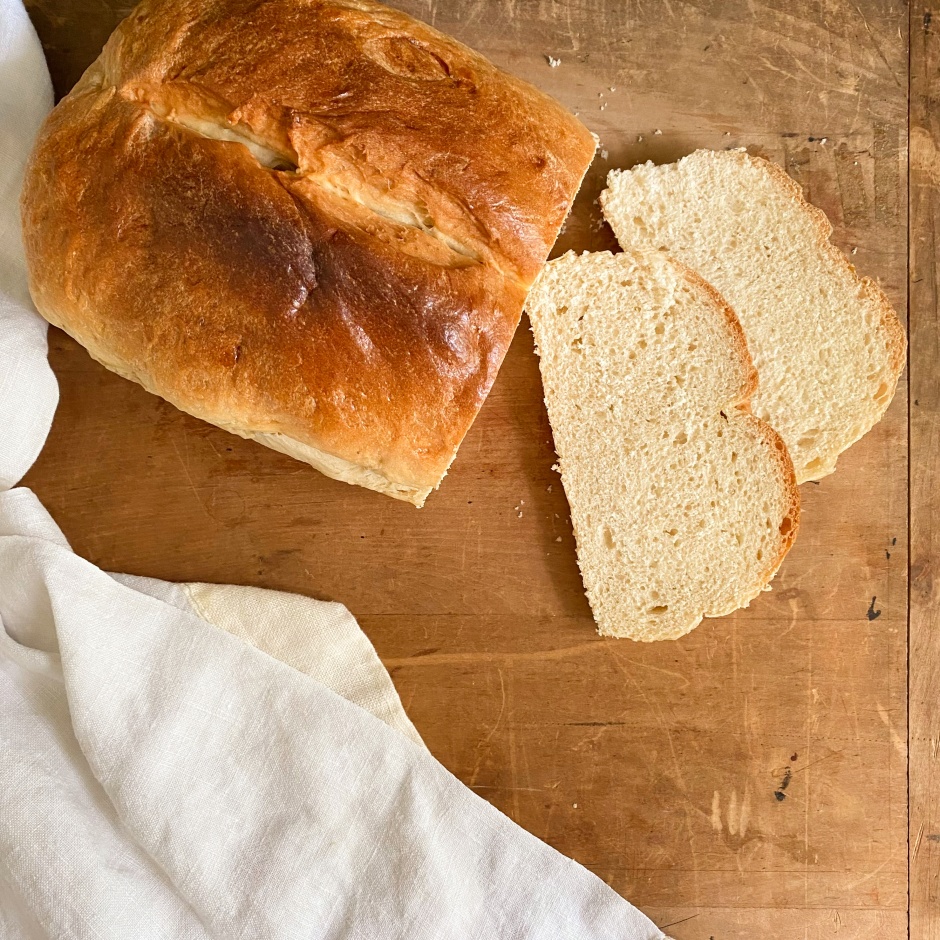
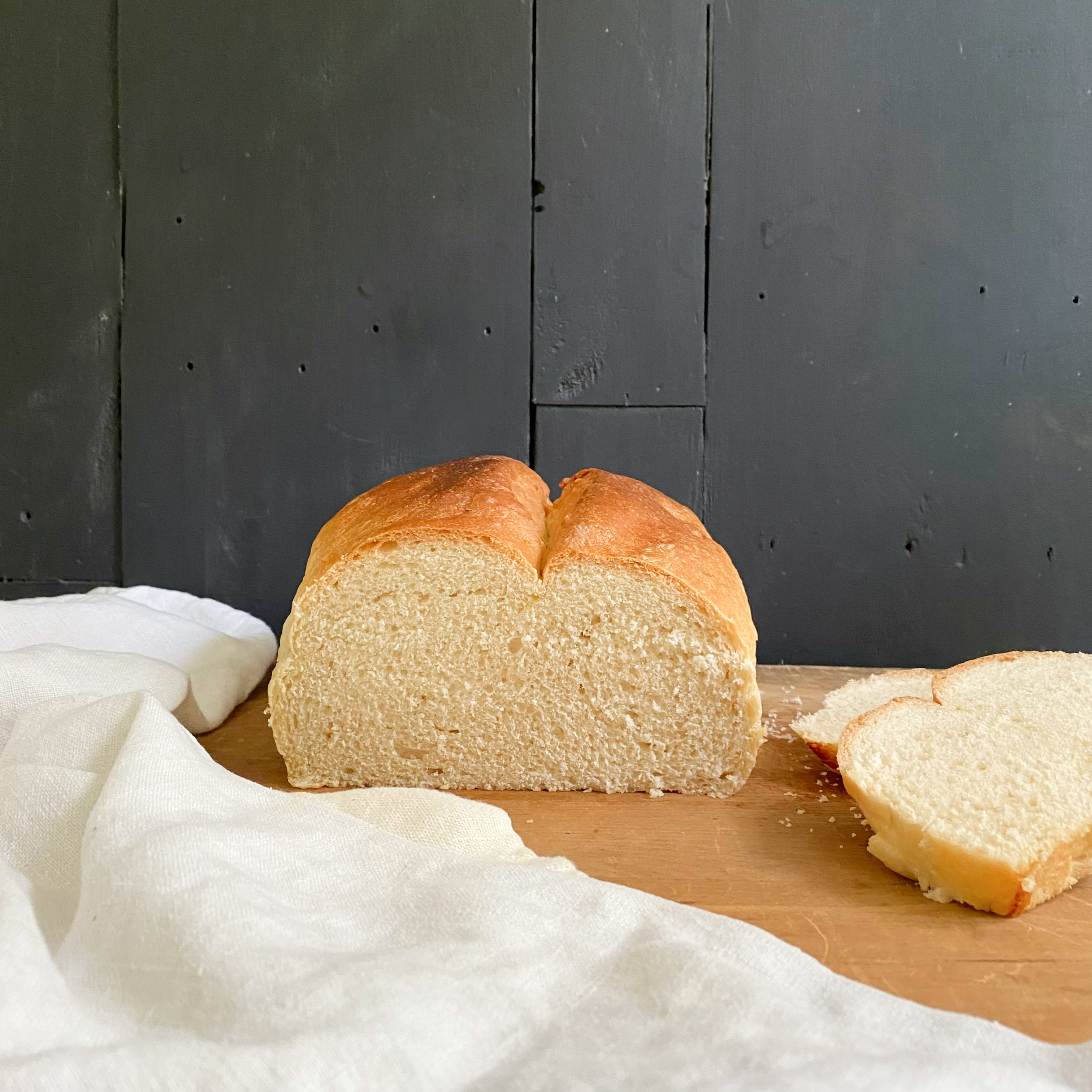
In case you have ever struggled, like me, with making homemade bread that winds up turning out flat, flavorless, or weighing twenty pounds, then this recipe will show you how to avoid all three. There’s a small amount of brown sugar that adds a hint of sweetness to the dough and also helps feed the yeast, but other than salt and butter, there are no other flavor enhancers. It produces two simple loaves that are ideal for sandwiches or toast with butter and jam. And it makes the type of bread meant to work in collaboration with other toppings, not compete with them. The loaves are of medium density with a light but substantial weight that makes you feel like you’ve eaten something nutritious, packed with good-for-you carbs and protein on a level that will sustain you for hours instead of just a few minutes. It’s not light and fluffy like a croissant nor is it hard and heavy like a peasant loaf. It’s somewhere in between. Spongey but firm with a texture that holds it shape and won’t fall apart when you cut it. I found it to be such a great, delicious, simple all-around bread. A best bread. Baked with kindness.

By 1973, three years after The Tassajara Bread Book was published, Edward had gained quite a following. The book at that point had sold over 150,000 copies, and racked up accolades from food critics, professional chefs and home cooks around the country. Edward went on to write Tassajara Cooking and then The Complete Tassajara Cooking, each featuring vegetarian recipes along with favorites from the bread book. In 1995, The Tassajara Bread Book celebrated its 25th anniversary with a reprinting and emphatic praise from the Washington Post, deeming it “the bible of breadmaking.” As it turns out, there is something about baking with kindness and gratitude, after all. Edward was right. The good food follows.

I can see why breadmaking is such a fulfilling form of baking. It’s a calming act. An encouraging endeavor. A delicious result. In our busy modern-day world that is grappling with so much unrest, noise, and difficult situations, it’s the serenity of this baking endeavor that I found to be most appealing. Baking in this Tassajara way is an act of love on all accounts…. thoughtfulness, acknowledgment, gratefulness, gratitude, and not just for the food but for yourself in the present moment too.

Tassajara Yeasted Bread

(makes 2 loaves)

3 cups lukewarm water (Note: lukewarm registers between 85 degrees F – 105 degrees F and does not feel warm or cold when splashed on the inside of your wrist).

1 1/2 tablespoons dry yeast (2 packets)

1/4 cup sweetening (honey, molasses or brown sugar) (I used brown sugar, loosely packed.)

1 cup dry milk (optional) ( I did not use it)

4 cups whole wheat flour or substitute unbleached white flour

4 teaspoons salt

1/3 cup oil or butter

3 cups additional whole wheat flour or unbleached white flour

1 cup additional flour for the kneading process

Dissolve the yeast in the water. Stir in sweetening and dry milk, if using. Stir in four cups of flour, one cup at a time, stirring briskly after each addition to form a thick batter. Scrape down the sides of the bowl occasionally as you mix. After the fourth cup of flour is incorporated, mix well with a wooden spoon for 100 strokes until the batter is very smooth.

Cover bowl with a damp cloth and let rise for 45 minutes in a spot that is between 85-100 degrees in temperature. If the spot is cooler than this temperature the dough will take longer to rise.

After 45 minutes, fold in the salt and oil or butter. Fold in the additional three cups of flour, mixing until the dough comes away from the sides of the bowl.

Using the final fourth cup of flour spread out on a board, knead the dough for about 10 minutes or until it no longer sticks to the board. Knead the dough by flattening it with your hands and then folding it in half by pulling the top half down to meet the bottom. Use the heels of your hands to push the dough down and forward, rocking your whole body forward with each push, not just your hands and arms. Rotate the dough a quarter of the way around and repeat each previous motion, flattening, folding down, and pushing the dough forward. Keep rotating and repeating these steps for the entire 10 minutes until the dough is smooth.

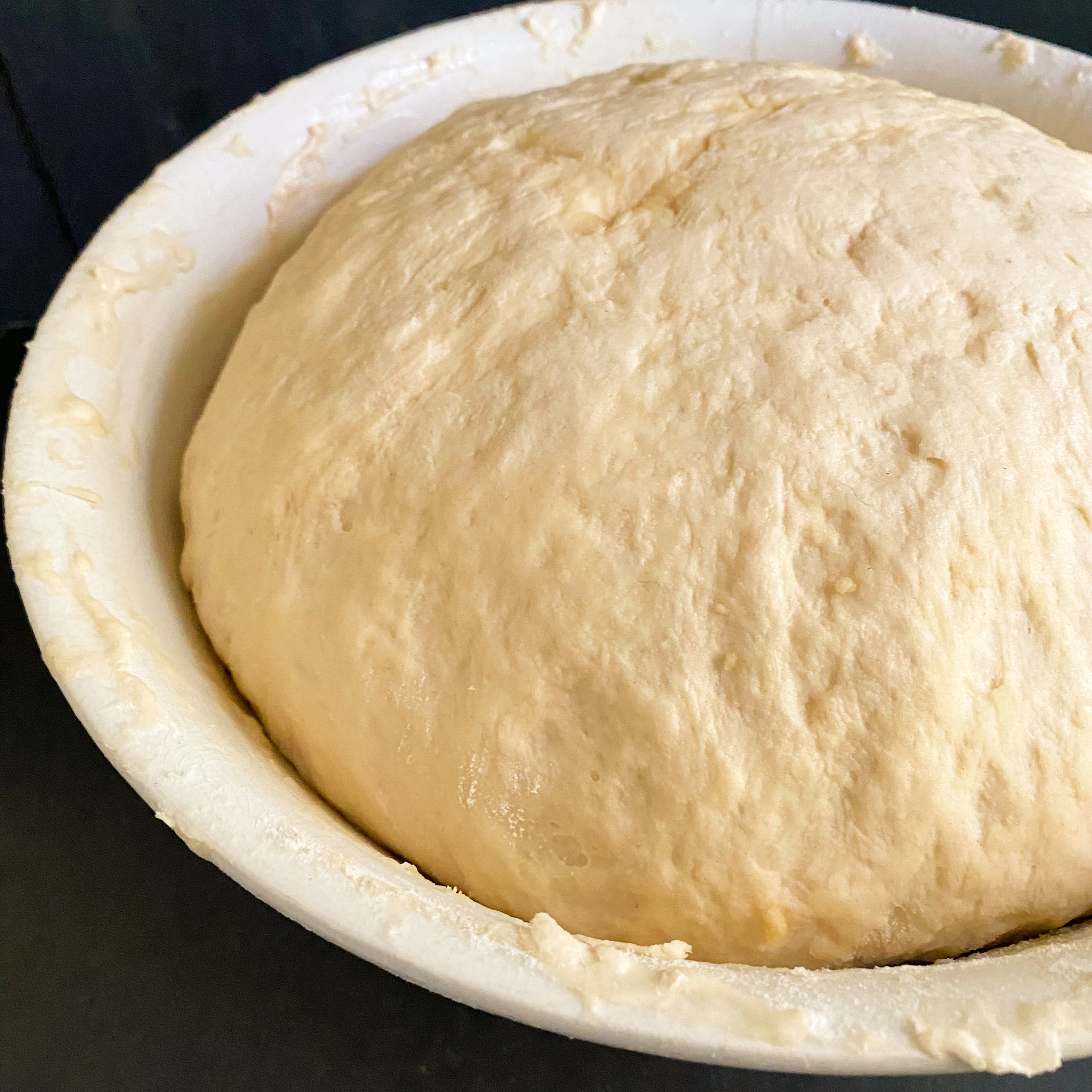
Put the dough back in the bowl, cover it with a damp cloth, and let it rise 50-60 minutes until doubled in size.

Punch down the dough by placing your fist into the center of the dough and then all over it about 15-20 times.

Let it rise in the same bowl for 40-50 minutes again until doubled in size.

Preheat the oven to 350 degrees. If using an electric oven, preheat it to 325 degrees.

Shape the dough into a round ball and cut into two equal pieces. Shape each piece into a ball and let them rest for 5 minutes.

Knead each ball in your hand five or six times. Shape the dough into logs. Oil two bread pans and then place a dough log in each pan.

Let the dough rise 20-25 minutes in the pans.

Cut the top of each loaf with a 1/2″ inch slit to allow steam to escape. For a golden brown, shiny top, brush the surface of each loaf with an egg wash made of 1 egg beaten with 2 tablespoons water or milk. (I used milk.)

Bake for 50-60 minutes or until golden brown.

Remove from the pans and let the loaves cool on a rack.

Although it took about 6 hours to make from start to finish, the time passed quickly and was peppered with little moments of surprise and delight as the dough bubbled and popped, rose to magical heights, and filled the house with the warm, inviting scent of a bakery. It’s pretty lofty to say that a slice of homemade bread can cure the world of all its harms, but cooking with kindness, appreciation, and an open heart is a good start.

Delicious enjoyed still warm from the oven, at room temperature the next day, or toasted slice by slice, I didn’t encounter any situation in which this bread did not taste wonderful. The only thing I haven’t tried yet is freezing it. As fast as I can make the loaves, they seem to disappear pretty quickly. I’m making a new batch this weekend though, so I’ll freeze a loaf and update the post with details on how that turned out.

In the meantime, if you find yourself stressed out or overloaded this summer, take a break, bake this bread and think about all the wonderful things there are to be greatful for in this world starting with your own two hands, the mixing bowl you’ll use, and the yeast and the sugar that will you get you started. By activity’s end, you’ll feel like you have embarked on a mini-vacation.

Cheers to Edward for helping us focus our intentions on kindness and gratitude in our cooking, instead of fast-made food and pressure-filled perfection. Cheers to the yeast, flour, butter, sugar, water, and salt. To the antique bread board, the 1930s mixing bowl, and the modern-day oven that made this post possible. And cheers to the beautiful, delicious loaves they produced. I hope you love this best kindest bread recipe just as much.

Learn more about Tassajara here.

Find vintage Tassajara cookbooks in the shop here.

Celebrating Mom: Homemade Chocolate Sauce & The Power of Passed Down Recipes

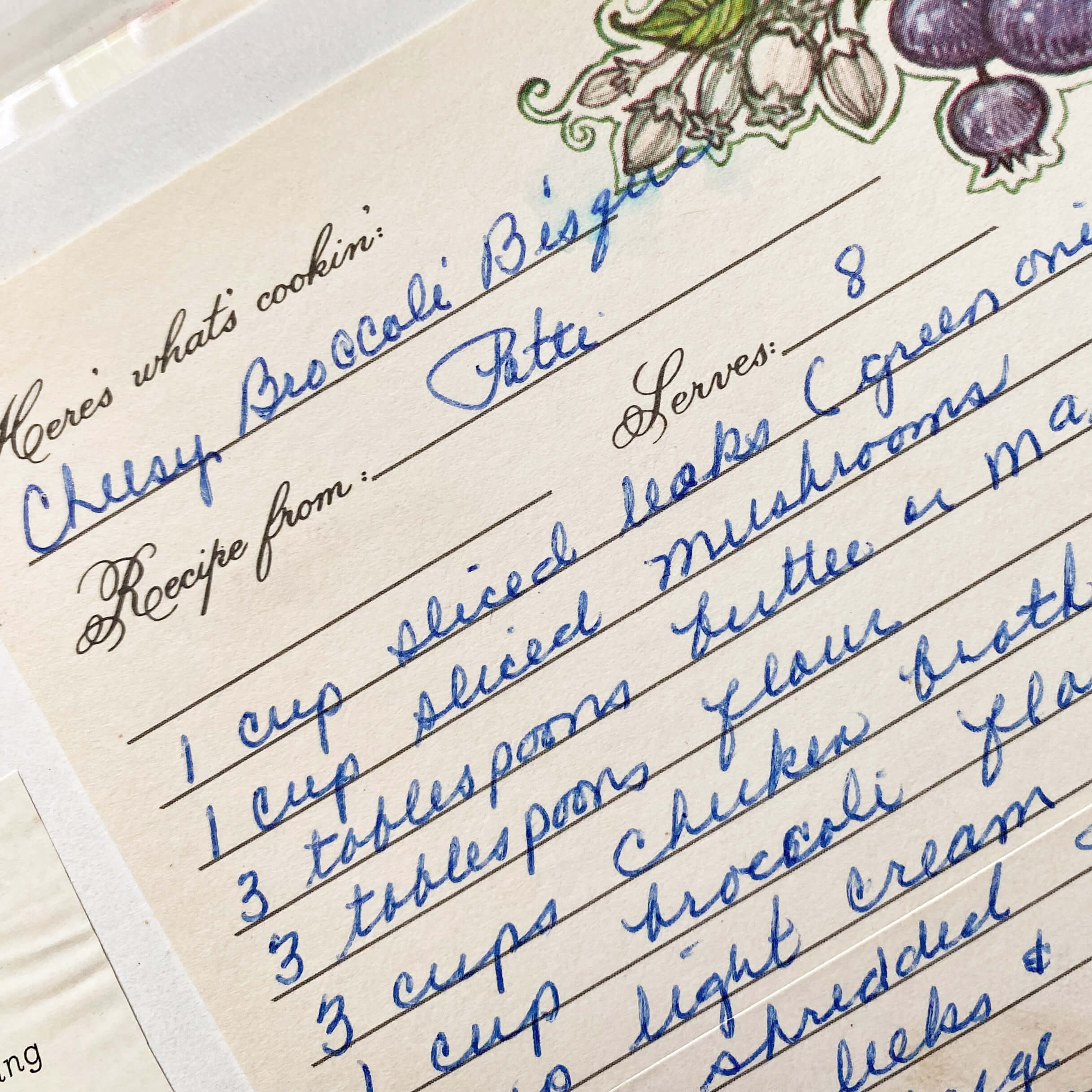
There it is. In all the swoops and swirls, the dips, the flourishes, the misspellings, the slanted letters, the shaky hand. There’s the story and the memory. There’s the cook. There’s the guy, the gal, the friend, the aunt, the spouse, the sister, the dad, the mom. There’s the he, the her, the who, the what, the when. There’s the life.

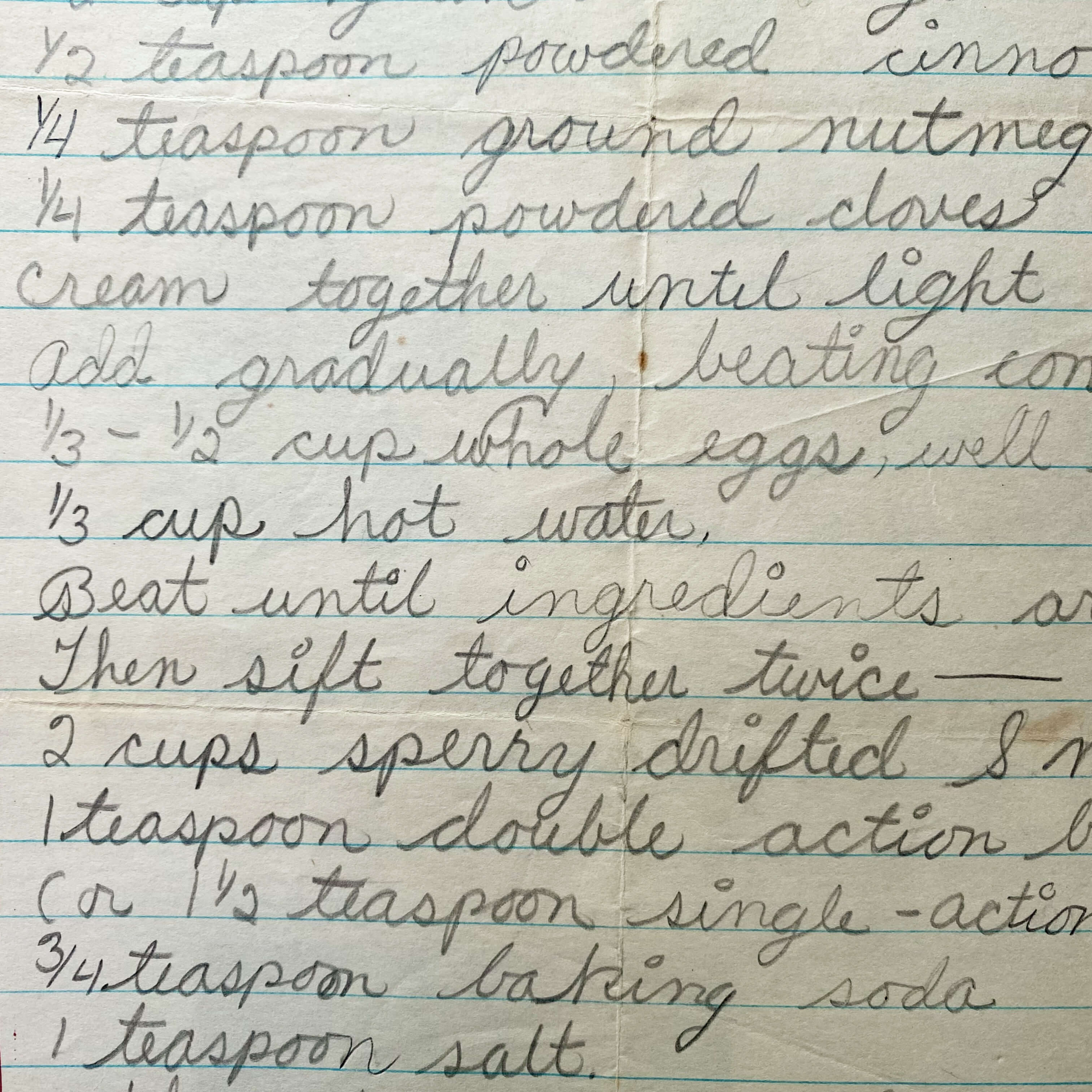
Handwritten recipe cards and cooking scrapbooks are the heartbeat of the kitchen. They are the record keepers of culinary explorations. The physical testaments of good times and good food. The guardians of memories that ensure that loved ones long gone remain present and that favorites stay afloat.

On a handwritten recipe card, no one ever dies or moves away or leaves the friendship or the family. With every dot of an i, cross of a t, loop of an o, handwritten measurements, ingredient lists, and instruction guidelines pass over illnesses and arguments, ignore long distances and intermittent communications, rise above world events and traumatic upsets. They defy decades and borders, cities and languages, personality clashes and cultures. Hands down, there is no better way, and definitely no more delicious way, to get closer to a memory or a person than through food made from a recipe that has been passed down from one cook to another.

Whip up Aunt Louisa’s banana bread, Grandpa Gordon’s hot fudge cake or Cousin Camilla’s corn chowder soup. Put on a pot of Paula’s poblano chili or Theresa’s heirloom tomato sauce. Mix up a casserole of Betty’s baked brown rice or Sarah’s cheesy egg souffle, and these cooks suddenly appear in exactly the way you remember them. It doesn’t matter if the recipe is two years old, 28 years old, or 200 years old; magic still surrounds the very foods that once made the making of them so memorable.

In the late 1990s, my mom made a slim binder for each of her kids filled with all of our favorite family recipes. At the time, she was just learning how to use a computer, so instead of handwriting each one, which she normally would have done if there wasn’t so many recipes and four sets of copies to be made, she typed them out page by page, category by category, and printed them out. One copy for each binder.

I don’t recall how long it took her to type these recipes into the computer, nor exactly how many she included, but I do remember the excitement that I felt when the binder arrived. My mom grew up in a small town in the Pacific Northwest during the 1940s and was raised on food she often describes as wholesome and nutritional. Her parents valued hard work, resourcefulness, outdoor activities, and homemade food always made from scratch.

My mom and grandmother.

My grandmother would be the first to say that she did not think of herself as a great cook, but everything she ever made that I remember was delicious. Pot roast, twice-baked potatoes, homemade bread… those were some of her specialties. My mom learned the basics of cooking not so much from her mom but from her home ec class in school. When my mom became a mom herself and moved to California, my oldest sister remembers simple recipes and a lot of health food coming from the kitchen while she was growing up in that same from-scratch manner that my grandmother championed too. Fifteen years later, when I came along and the whole family was living in New York, my mom was traveling the world with my dad, courtesy of his airline executive career. Her culinary palate and pursuits expanded to include more international cuisine from the places she was often visiting. France, Italy, Germany, Egypt, Greece, Africa, Asia, the Mediterranean all influenced what she was making at home in one way or another.

My mom in Monte Carlo in the 1980s, shortly before we enjoyed a spectacular dinner of homemade risotto aboard our friend’s boat. Sadly, much to my whole family’s disappointment, we never collected that recipe to share.

Like my grandmother, my mom wouldn’t openly boast that she herself is a great cook. Even though the food she prepares has always been, and still is, undoubtedly delicious, and she’s well known among her friends and family for making lovely meals. But what she lacks in confidence or personal recognition, she more than makes up for in wholeheartedly promoting a good recipe when she sees one.

While I was growing up she was a devout reader of magazines like Sunset, Food & Wine, Bon Appetit, and Gourmet. My parents entertained quite a bit, often treating their NYC restaurant-regular-eating friends to a home-cooked meal at our family house located in a sleepy suburb along the Hudson River. And because my dad did a lot of dinnertime/cocktail party networking, my mom was always trying out new recipes on us kids that would be suitable for party fare or hosting my dad’s European colleagues.

So when her slim binder arrived in the mail just after I finished with college and was ready to start throwing my own dinner parties, it felt like the best, most dependable gift in the world. Thanks to her binder, I had all the good recipes in hand. The ones that always brought comfort, the ones that always received rave reviews, the ones that traveled well for potlucks and picnics, and the ones that looked especially pretty on a plate. The ones that came from her sister’s kitchen (also a wonderful cook) and the ones that came from her mom and dad and their parents. And the ones that my mom had perfected over years of revisions. In the binder were all my favorites… Thanksgiving stuffing, Grandma’s casserole, all the fruit pie recipes, the Israeli chicken, Aunt Patti’s chocolate layer cake, the tortellini summer salad, the three bean casserole, the German-style chicken with the creamy noodle sauce, the much-loved potato salad.

Not long after the binder arrived, my grandmother passed away at the age of 97. One of the things I asked my mom if I could have was some of my grandmother’s handwritten recipes from her recipe box. Back home, I taped each one, a little over two dozen in total, into the blank areas that separated one typed recipe from another in the binder. Those early additions of Grandma’s recipes led to further cutting and pasting inclusions as I, too, discovered and collected recipes from various sources. Friends, food magazines, newspapers, on-loan cookbooks, my brother and sisters, their spouses, their families, my husband, his family and a whole host of people I’ve had the joy of sharing a meal with along the way over these past decades all have a presence via a recipe or two or twenty in the binder.

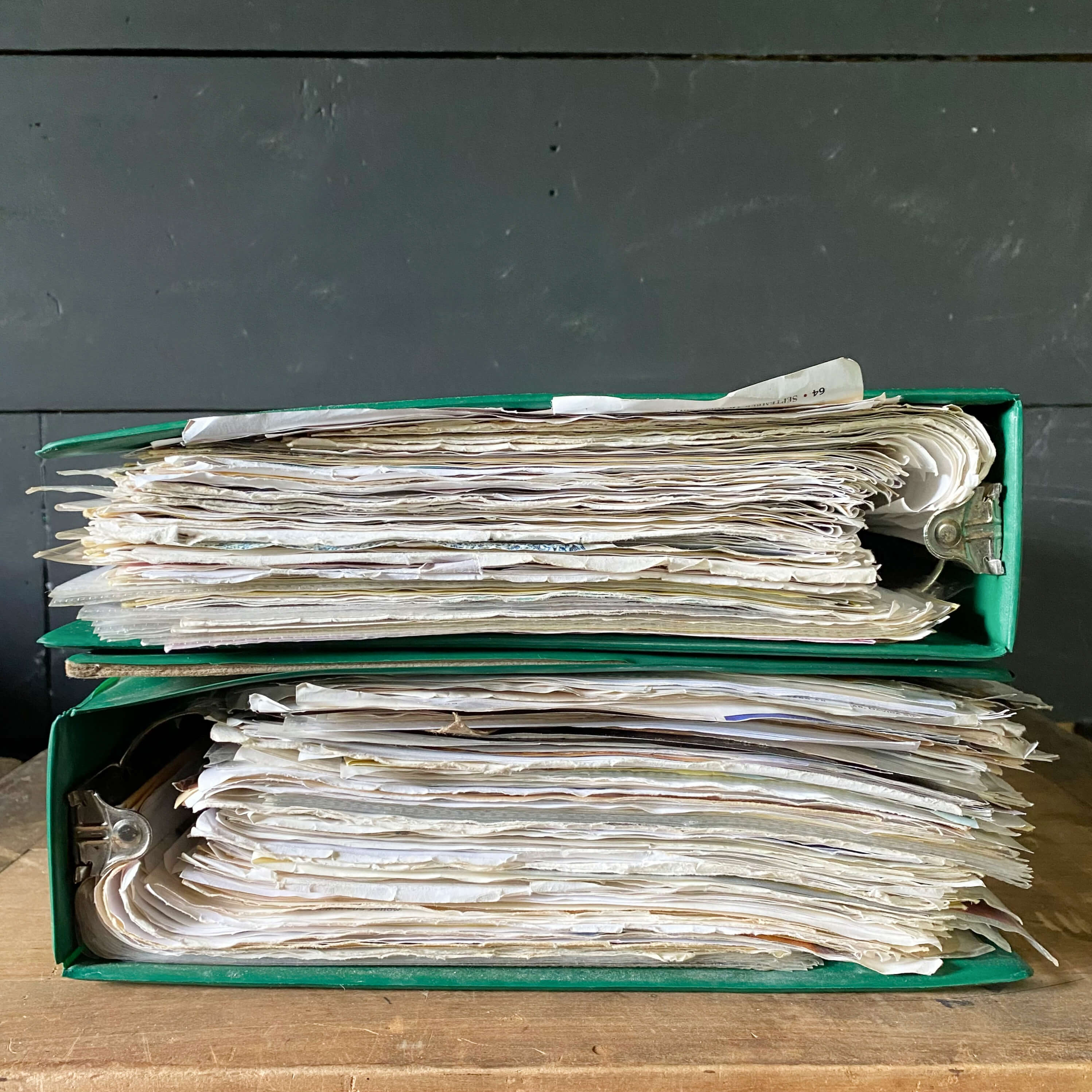
With each new recipe addition, my enthusiasm for cooking grew and grew. The binder grew and grew too. Eventually, it outgrew the slim size that my mom initially packaged the favorites in, and I transferred everything to an extra-large 3-inch binder. Quickly enough, that one filled up and overflowed, too. So a second extra-large 3-inch binder was acquired, and I divided half of my mom’s original categories into one binder and the other half into the second binder, thinking that I had arrived at the ultimate storage solution. But my enthusiasm for cooking and recipe collecting has yet to calm down, and the two binders are now stuffed full to bursting once again.
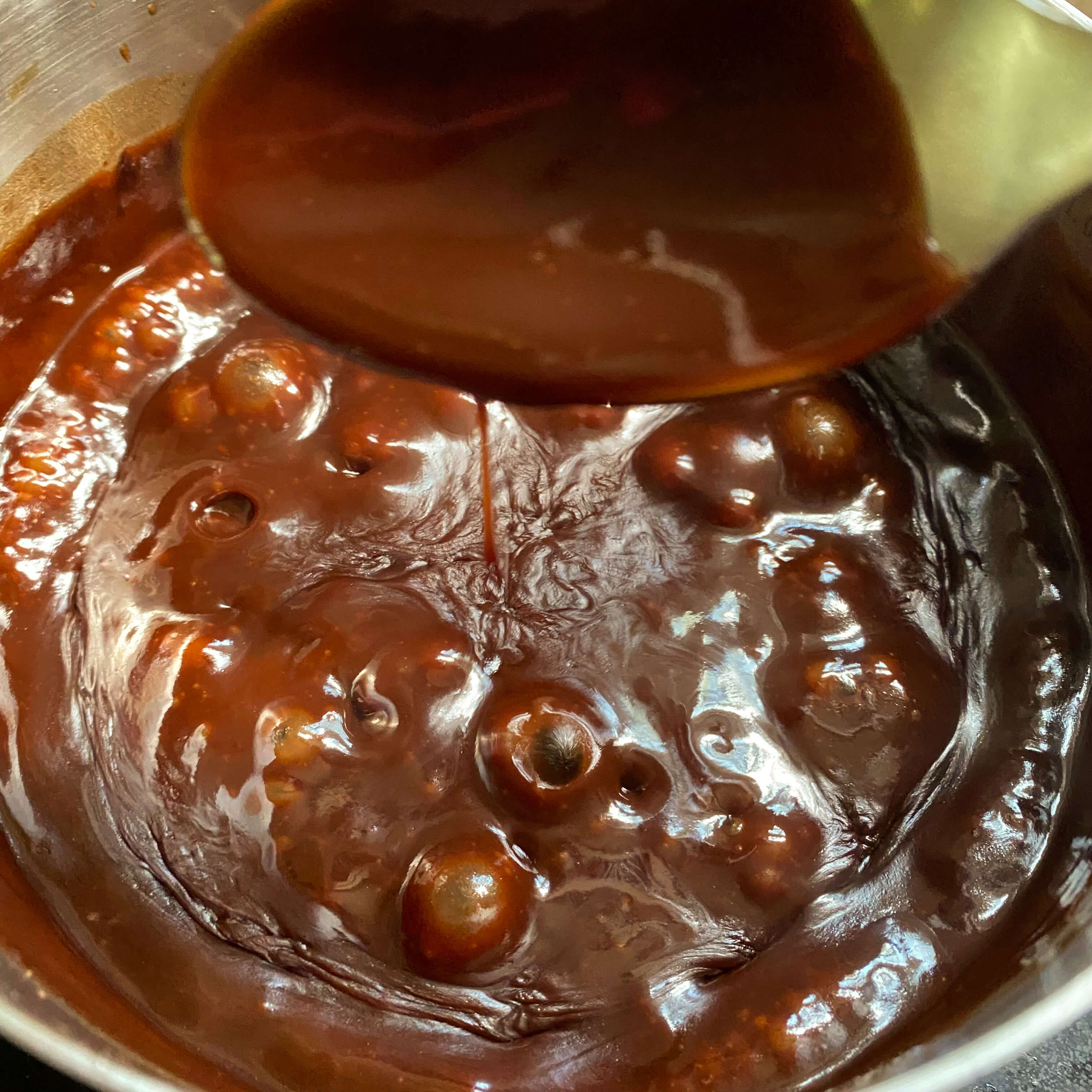
Despite their stuffed sausage appearance, now when I flip through these two binders, I see nothing but joy in years and years of memories. I see my mom’s handwriting in the original recipe category tabs.

I see my husband’s handwritten recipes for his pork pie inventions.

I see my sister-in-law’s slightly charred recipe card for baking powder biscuits that accidentally got stuck to the bottom of the baking sheet and cooked right along with the biscuits. I see the handwriting of my dearest friend, whom I’ve known since kindergarten, on a recipe for oven-roasted leeks that marks the first Thanksgiving that we cooked together.

There’s a recipe from my dad’s ex-wife written on his airline office stationery taped into the casserole section. There’s my grandmother’s delicate and lacy penmanship, my aunt’s large and loopy handwriting, midcentury recipe cards, tanned newspaper clippings from up-and-coming chefs featured in the New York Times, and hundreds of hand-cut recipes from all the great cooking magazines before they went online, before they created paywalls to access them, or before they folded for good. Recipes from Saveur, Bon Appetit, Gourmet, Southern Living, Cooking Light, Martha Stewart Living, Food & Wine all fill these binder pages, making them like my own homemade version of epicurious.com

The gift that my mom gave me years ago is the gift that has literally and figuratively kept on giving day in and day out. And it just keeps on encouraging more cooking and more collecting. That’s the power of a good passed-down recipe. I have my mom to thank for all this collecting and curiosity. For my love of old recipes and the memories they represent. My mom and I don’t always see eye to eye on everything, but when it comes to cooking, we have a shared interest and a mutual understanding surrounding food and meal-making that can always bring us together.

A lot of people inspire me when it comes to cooking, but it’s my mom’s slender binder of a book that was the original muse that started all this recipe collecting to begin with. I don’t think she could have known the depths to which I would eventually come to love her gift while she was typing away at those recipes on the computer all those years ago. How much her act of recording them would come to mean so much to my culinary journey. But now those recipes are among my most prized treasures. So it’s with a sincere heart on this Mother’s Day, that I wanted to say thank you to my mom for the joy she created in passing down our family favorites.

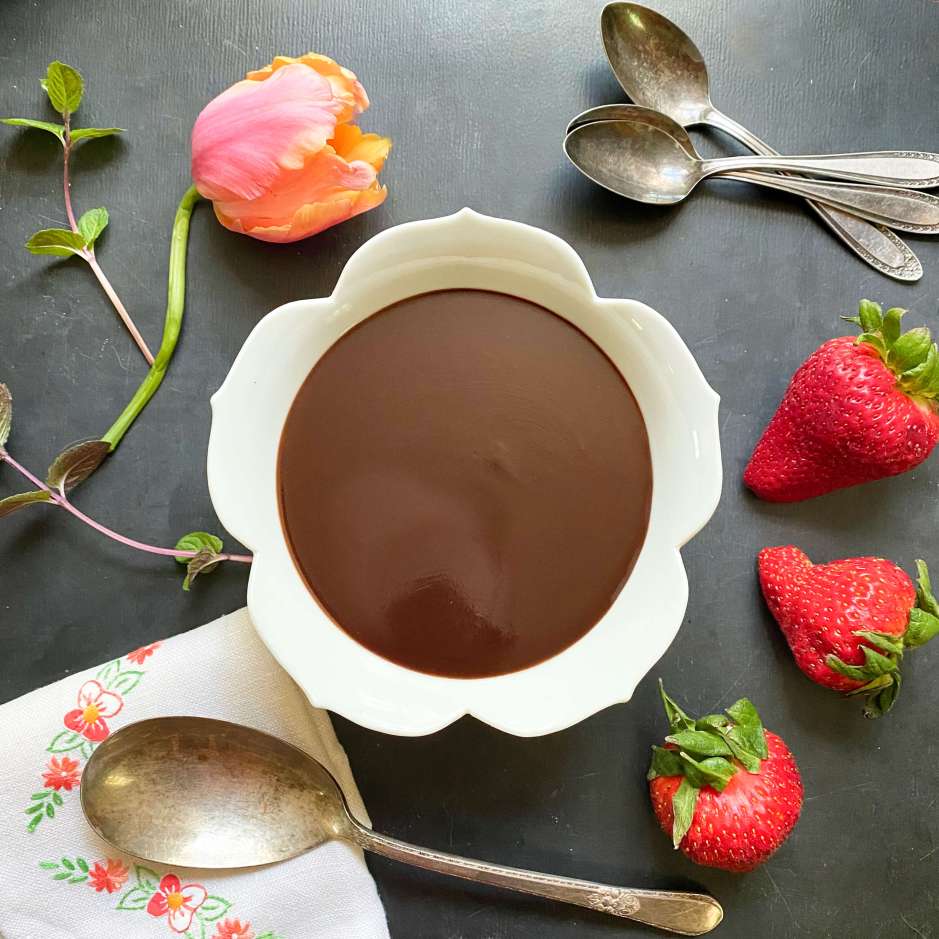
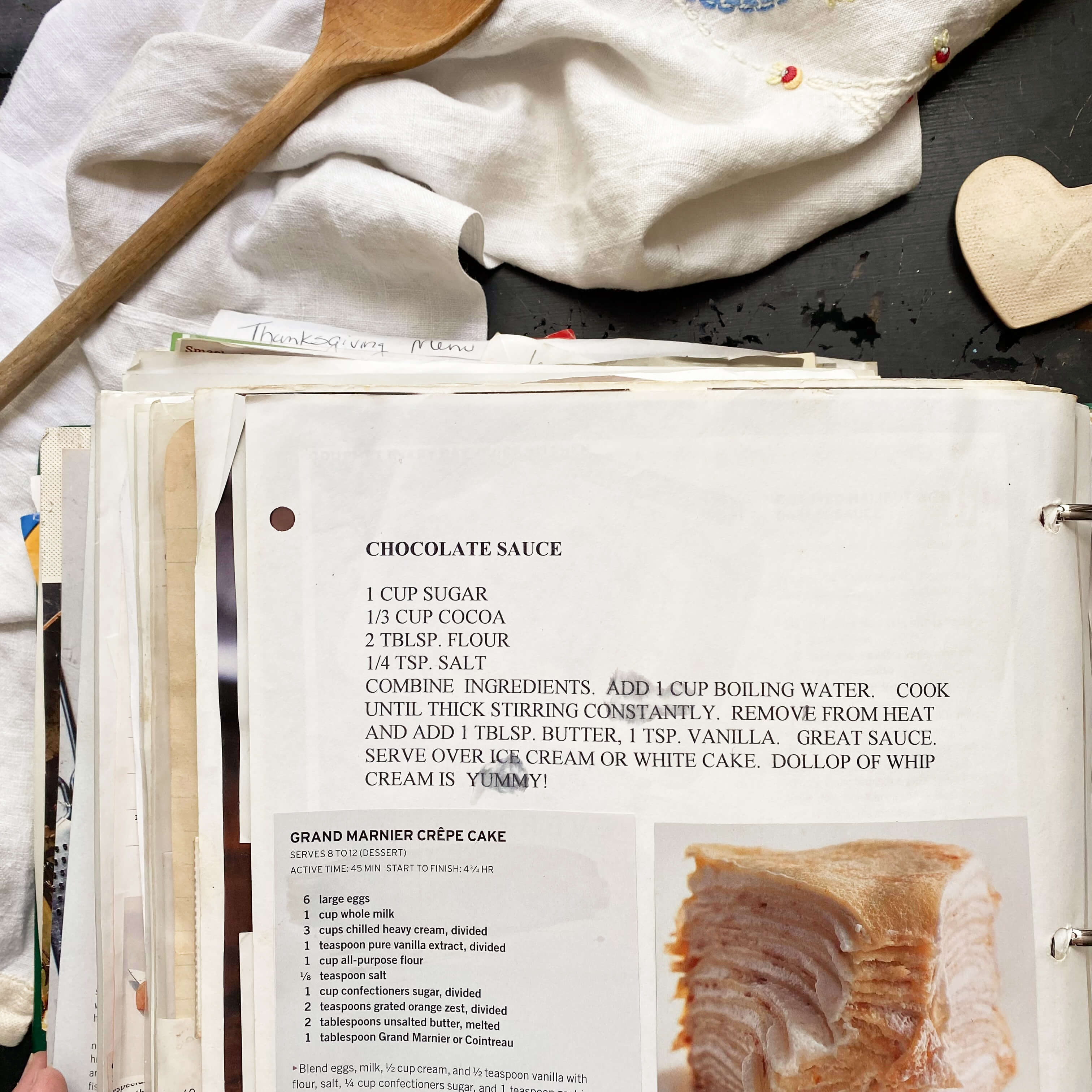
To celebrate the day and the occasion, I’m so happy to share one of the recipes from my mom’s family favorites collection. The recipe is for homemade chocolate sauce. A sweet treat companion that both inspires and complements so many other desserts.

Quick to make (less than 15 minutes) and lovely for all sorts of foods, it is thicker than syrup, yet thinner than frosting in consistency. It can be poured over ice cream like a hot fudge sundae, drizzled over a simple sheet cake like frosting, layered in clear glass stemware for parfaits, or served like a dipping sauce for fresh fruit.

Always a winner in my book, I have made this recipe so many times for so many different holidays from Valentine’s Day to Christmas and every season in between. I’m not sure where my mom got the recipe from – if it was truly a family recipe that was passed down to her or if it was just a favorite that she picked up somewhere along her culinary adventures. I could Google these ingredients and probably find the source pretty quickly, but for once, the provenance doesn’t interest me. I’ll always think of it as my mom’s homemade chocolate sauce. And in turn, whenever I make it, I always think of my mom and her gift of good food. Tried and true.

Chocolate Sauce

Makes 2 cups

1 cup sugar
1/3 cup unsweetened cocoa powder
2 tablespoons flour
1/4 tsp salt
1 cup boiling water
1 tablespoon butter
1 teaspoon vanilla

Mix together the sugar, cocoa powder, flour, and salt in a medium saucepan.

Add in 1 cup of boiling water and stir constantly over medium-high heat while the mixture comes to a slow boil.

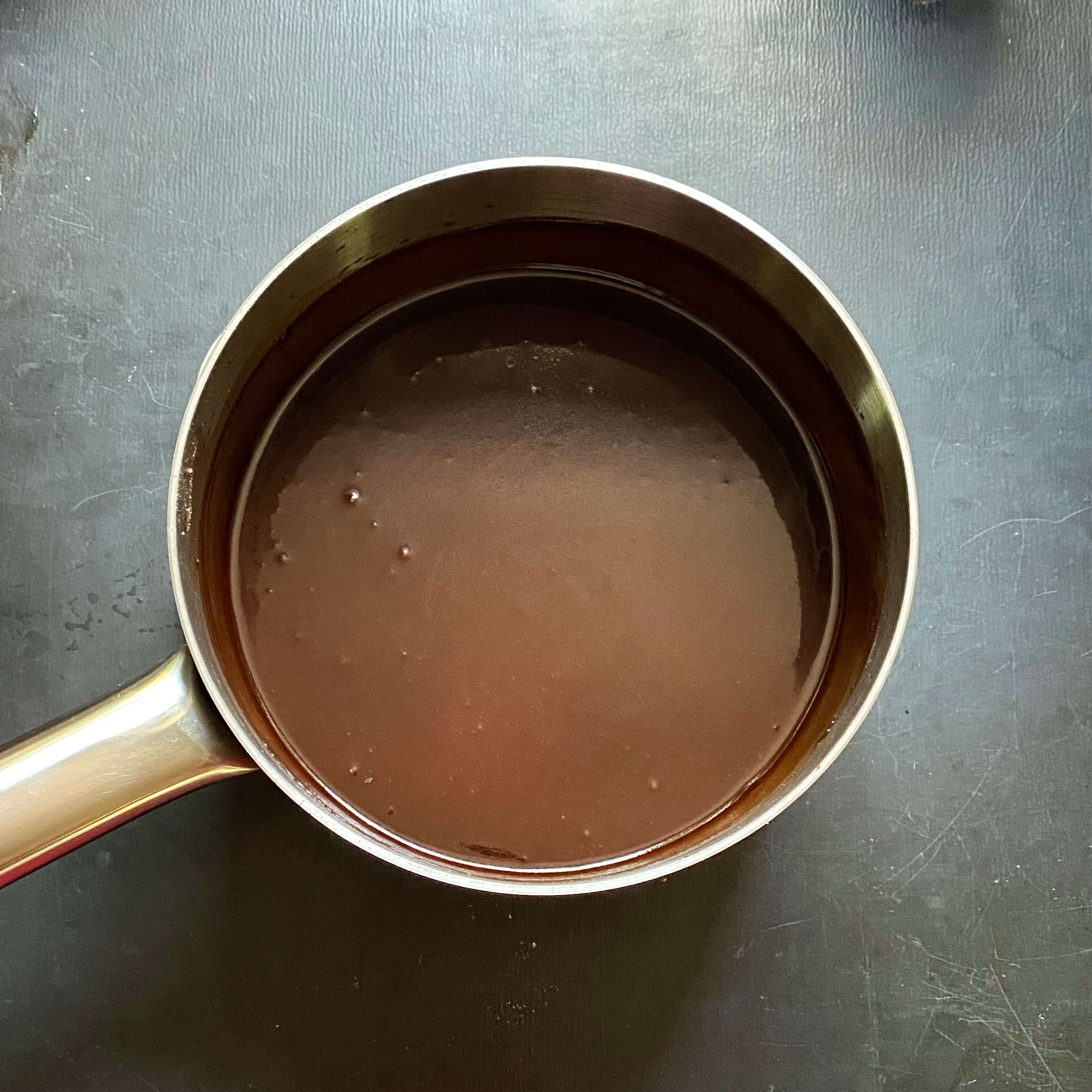
When the consistency thickens enough to coat a spoon but still drips off the spoon in a slow, steady stream, drop by drop, it’s ready to be removed from the heat. This consistency level usually takes about five minutes to achieve. Stir in the butter and vanilla. Serve hot or let cool to room temperature. If you have any leftovers, it stores well in the fridge in an air-tight glass jar for up to five days.

If you serve this as a dipping sauce with fruit, in a parfait, or over ice cream, let it cool to room temperature. If you are serving it over cake, serve it hot. There’s also room to add your own additional accompaniments too in the form of chopped nuts, coconut flakes, or a dollop of whipped cream as my mom suggested in her original recipe. However you choose to enjoy it, I hope it becomes a new favorite family recipe in your kitchen too.

Happy Mother’s Day to all the moms out there who inspire kitchen adventures in more ways than one. And cheers to my mom, for every single home-cooked meal, every single shared recipe, and every single family favorite that was recorded in the marvelous, magical gift that has now become my most treasured memory-keeper in the kitchen.

Advice from Adelma: How to Create an Herb Garden in Partial Shade

In the words of New England herbalist Adelma Grenier Simmons (1903-1997), “the most difficult garden to maintain is an unplanned one.” If you are joining us on this year’s Greenhouse Diaries adventures, you’ll recall that Adelma is our horticultural teacher, creative muse, and gardening inspiration for 2025 as we embrace her expertise in building and establishing an herb garden here at 1750 House.

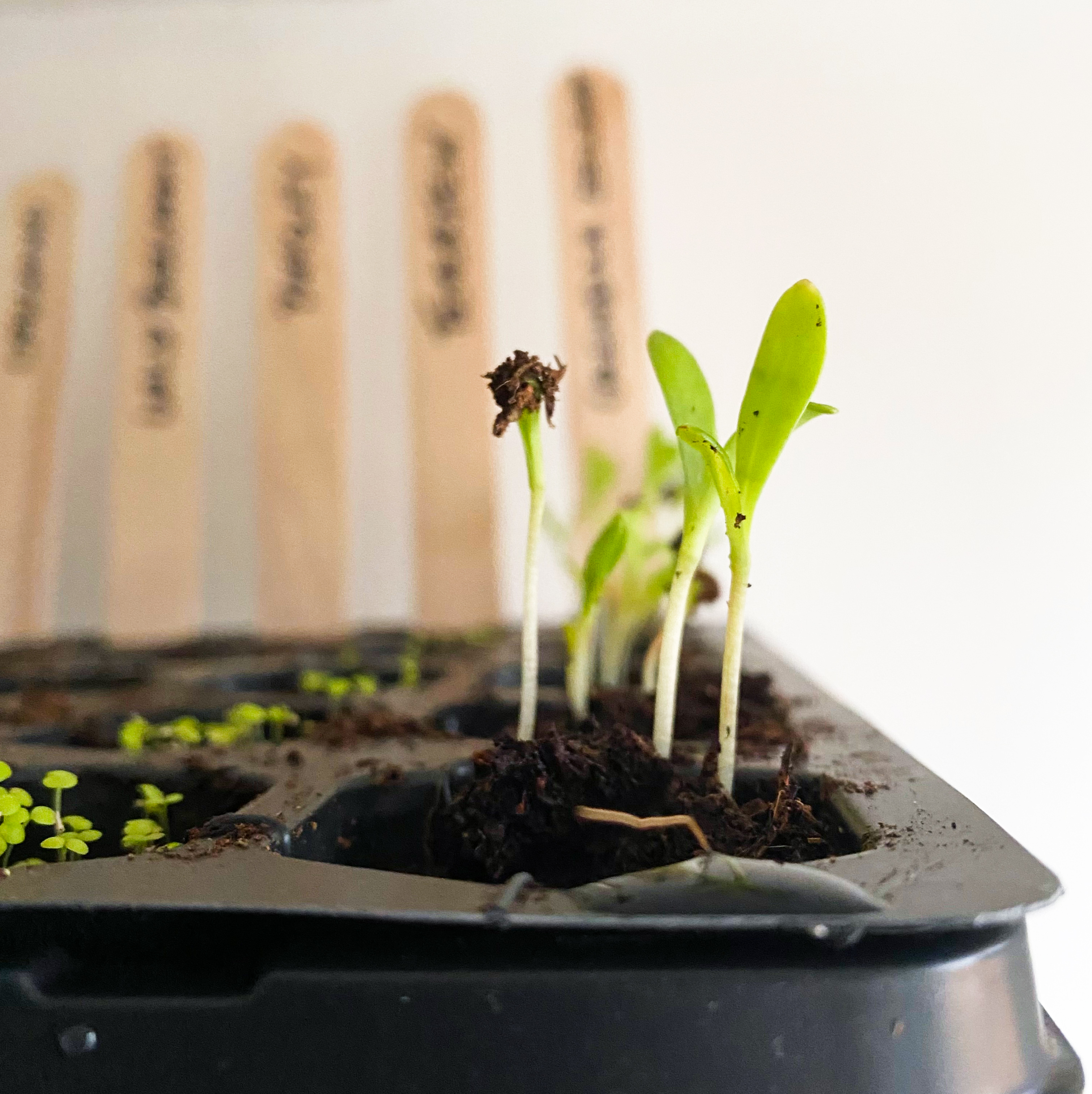
Calendula seedlings.

Although I’ve never met Adelma, she passed away in 1997, and I’ve never had a chance to visit her beloved Caprilands Herb Farm, I do have several things in common with her that makes me feel like we are kindred spirits. We both purchased 18th-century houses in Connecticut that needed an extra bit of care and attention. We both embraced a desire to create heirloom gardens made from scratch. And we have both indulged our passions for history, cooking, and hands-on gardening.

Adelma’s 18th-century Connecticut home – Caprilands.

Ever since my husband and I moved into 1750 House, I’ve had my mind set on building a proper kitchen garden that includes plentiful bouquets of vegetables, fruit, herbs, and edible flowers. I laid out our initial plans in a 2022 post about colonial kitchen gardens, but as we keep digging and discovering, growing and gathering, year by year, we keep refining and expanding plans to fit our abilities, interests, lifestyle, and landscape. Every year, the garden design plans seem to get better and better.

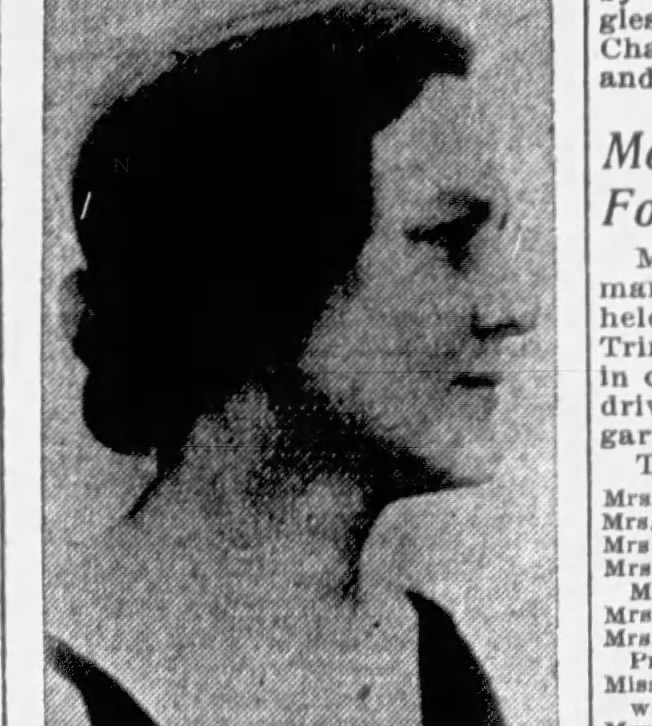
Adelma Grenier Simmons circa 1935. Photo courtesy of the Hartford Courant, Aug 01, 1935

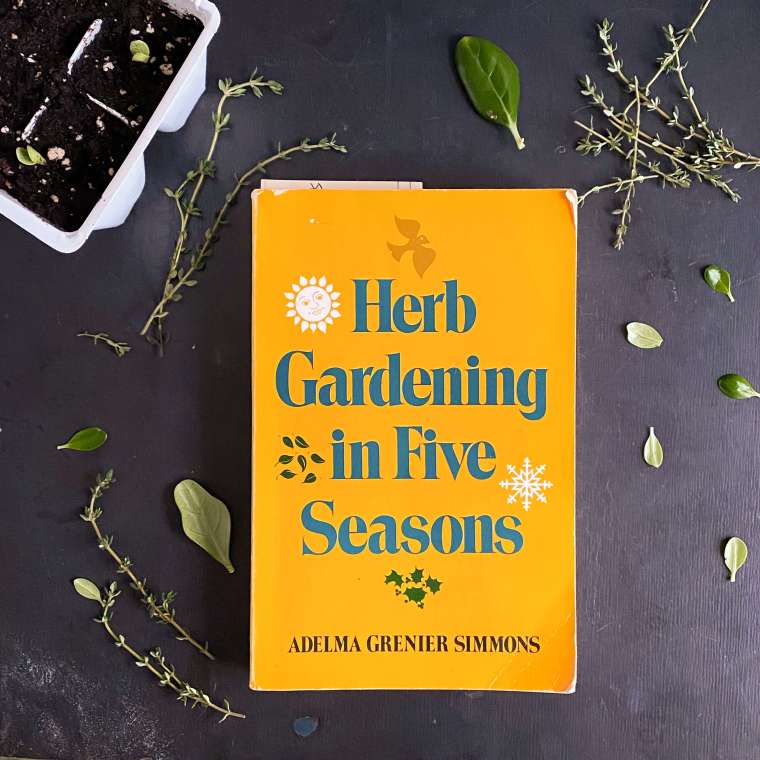
Always interested in tips and techniques that will make my endeavors more successful, when I first discovered Adelma’s book at a local library book sale last year, I had a feeling I was going to be in the good hands of an expert gardener. This is the 1964 book that inspired the project…

Read more about Adelma and her contributions to horticulture in our first post here.

In Herb Gardening in Five Seasons, Adelma lays out how to build, cultivate, create, design, grow, and care for an herb garden utilizing decades of practical, hands-on knowledge learned over her long, enthusiastic career as a gardener, herbalist, lecturer, and horticultural scholar.

Throughout the entirety of 2025, season by season, I’m taking her words to task and building an herb garden from scratch that I hope will continue to remain a stalwart and sustainable feature of the landscape at 1750 House for years to come. Since this is new gardening territory for me, both literally and figuratively, I thought it would be fun to share, along with my experiences, Adelma’s advice, in case you, too, might be interested in building an herb garden of your own. This way we can all experiment together.

In our first Greenhouse Diaries post of 2025, I introduced Adelma and her gardens at Caprilands, which attracted botanical enthusiasts from all over the world. The info I’ll be sharing here in the series this year, although based on my own Connecticut garden, will hopefully prove useful to all of our ITVK readers around the globe, too, who might face similar challenges when it comes to limited sunlight and space constraints. I’m excited to see how successful we can be using gardening knowledge from a 62-year-old book, and I’m also very interested to see just how bountiful a partial-shade herb garden can be.

There’s no way to find out unless we start, so here it goes. Advice from Adelma back then put into practice by me today.

Step One: Choose A Design and Figure Out What You’d Like to Grow…

Thoughts from Adelma: Whether the herb garden is small or large, it needs to be exquisitely neat and weedless, with wide paths and compact borders, the same plant often repeated to make a good showing. (Page 3)

In keeping with Adelma’s advice, I spent most nights in February and March studying stacks upon stacks of gardening books, in addition to hers, to gather ideas and inspiration from real-life examples – all so that our garden here at 1750 House would not fall into that aforementioned “difficult,” “unplanned” territory. Through the winter, I learned about prairie gardens, dry gardens, meditation gardens, bog gardens, dooryard gardens, shade gardens, kitchen gardens, formal gardens, cottage gardens, cutting gardens, woodland gardens, and native gardens in pursuit of coming up with some interesting layouts. What I kept admiring over and over again in book after book was a traditional square garden with pathways, some sort of architectural feature in the middle, and herbs arranged in a balanced fashion around the edges. A timeless design, I liked its simple and tidy scale, which is very much in keeping with our simple 18th-century colonial farmhouse.

In Herb Gardening in Five Seasons, Adelma also offered a variety of her own designs specifically tailored to herb gardens. There were eight in total, each ranging in theme and aesthetic. Had I the space and the sunlight, I would have replicated this one exactly…

Culinary and Knot Garden Design Layout – Adelma Grenier Simmons, 1964

The one challenge that presents itself at 1750 House is a limited amount of full sun spaces. Basically, we have two areas that receive about eight hours of sun a day and the rest is made up of dappled shade or towards the very back, deep shade of the woodland variety. Not every part of the full-sun area is appropriate for garden beds, so our limited sunshine spots are reserved strictly for growing vegetables and flowers in those areas.

One of our full sun spots is a raised bed that we built from rocks collected from around the property. Pictured growing here are peas, tomatoes, pole beans, zucchini, basil, and spinach from the summer 2023 garden.

While a shady garden is a challenge for growing many types of plants, the thing that first drew me to Adelma’s book last year was that she included a long list of herbs (29 of them) that grow well in sun-filtered shade. This was inspiration enough to start thinking about a new gardening experiment in 2025 to see what was possible in the way of a partial-shade garden using her expert advice.

The only compromise to a somewhat shady garden, Adelma noted in her book, is that some of the herbs might grow taller than they would normally in a sunny location, and that they might not be 100% as flavorful as their sun-bathed counterparts. Tall plants are my favorite kind, and while I am growing these herbs for cooking and, of course, would want them to be as flavorful as possible, I figure it’s best to understand their growing conditions and flavor intensity first in order to see what we can improve later.

Step Two: Determine The Location

Thoughts from Adelma: I think of the “perfect” herb garden as about 12 x 18 feet. Well organized, it will not require back-breaking labor once the soil has been prepared, walks laid, a center motif clearly stated, and borders planted with favorite but often miscellaneous plants set out in orderly beauty. (page 4)

The location of the 2025 perennial herb garden

Eight hours of full sun is ideal for herb gardens, but if that amount of sunlight is not possible when it comes to choosing a site, Adelma at least recommends situating your garden in a well-drained location with a slight slope so that plant roots are not swimming in puddles long after it rains or the garden is watered.

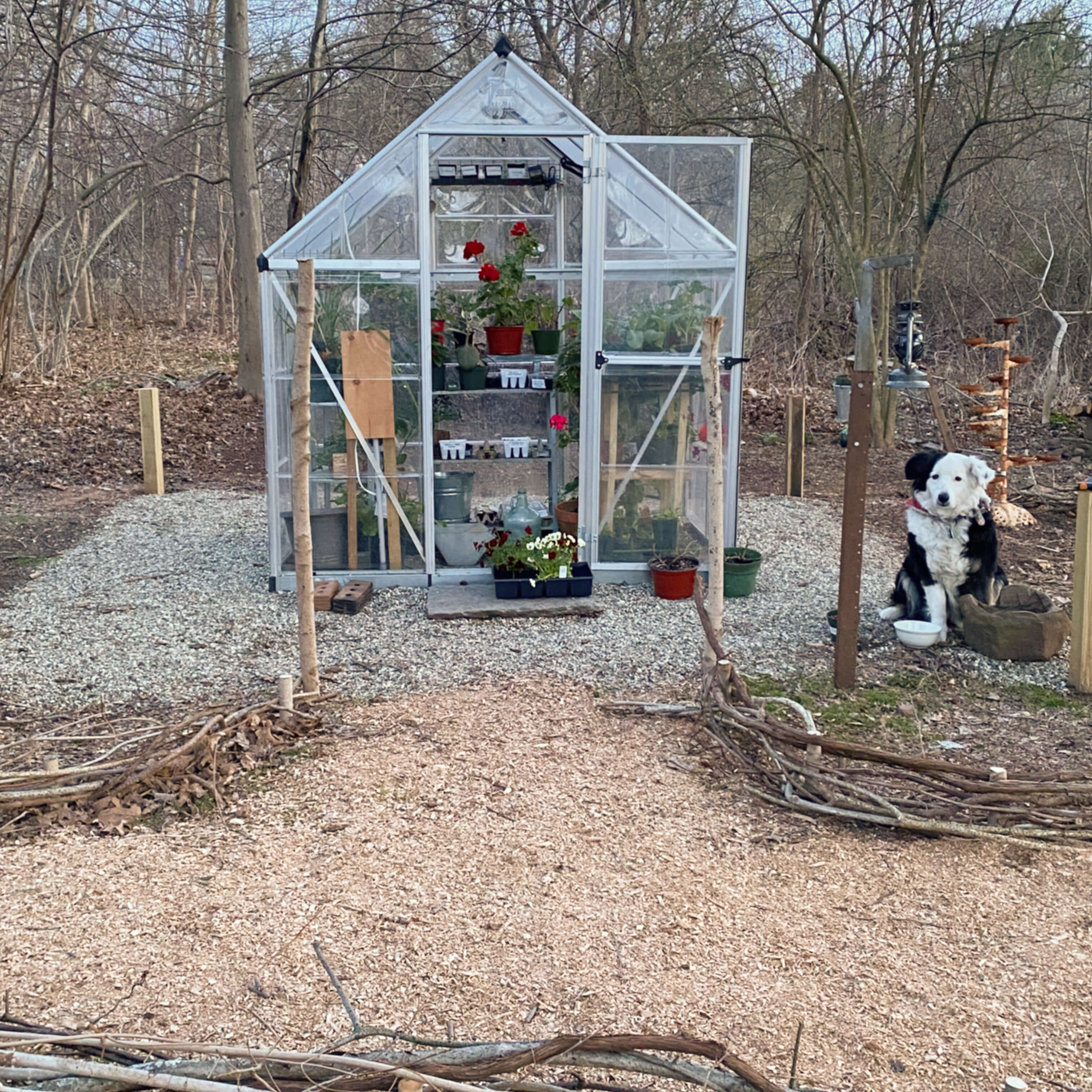
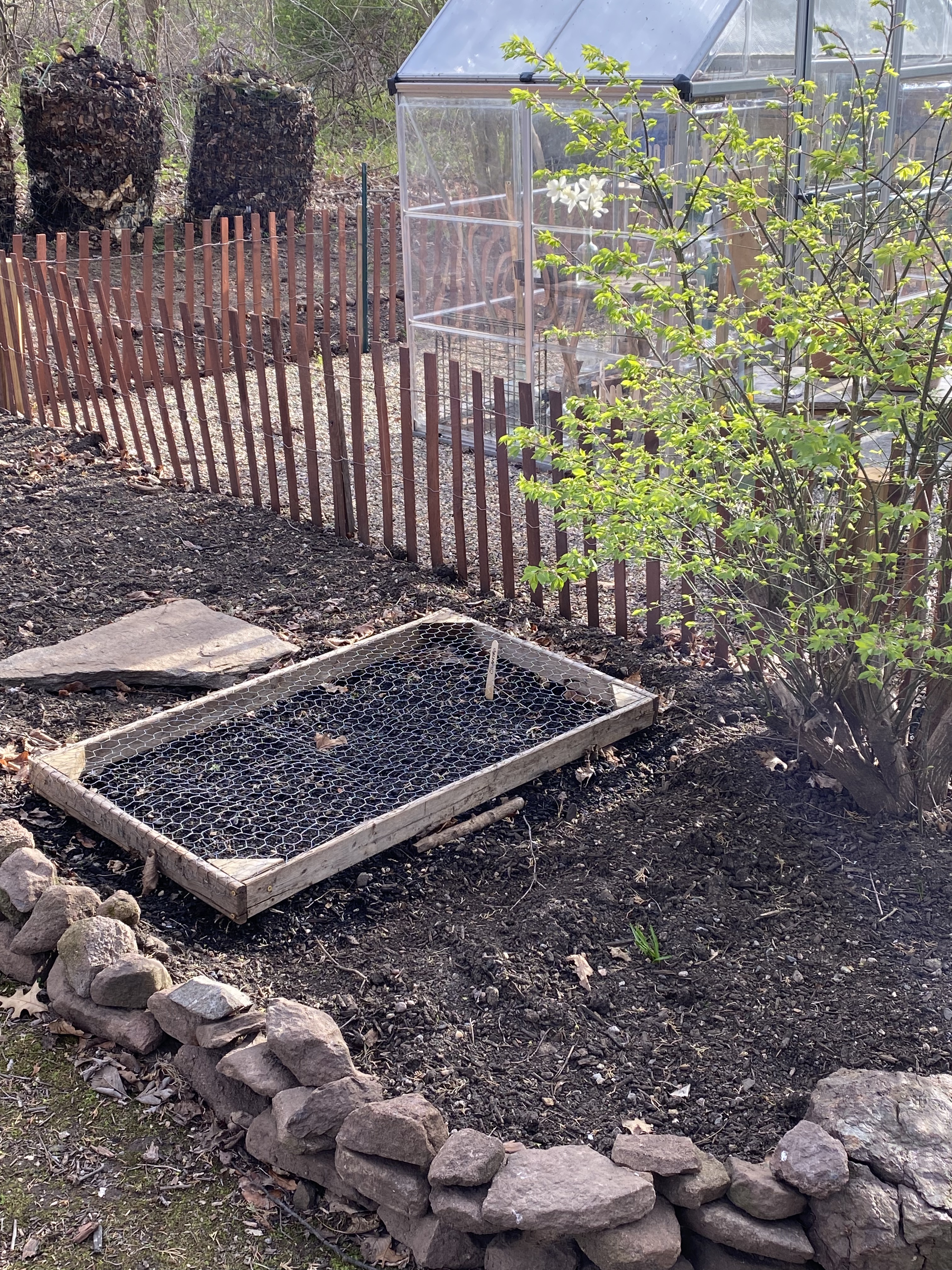
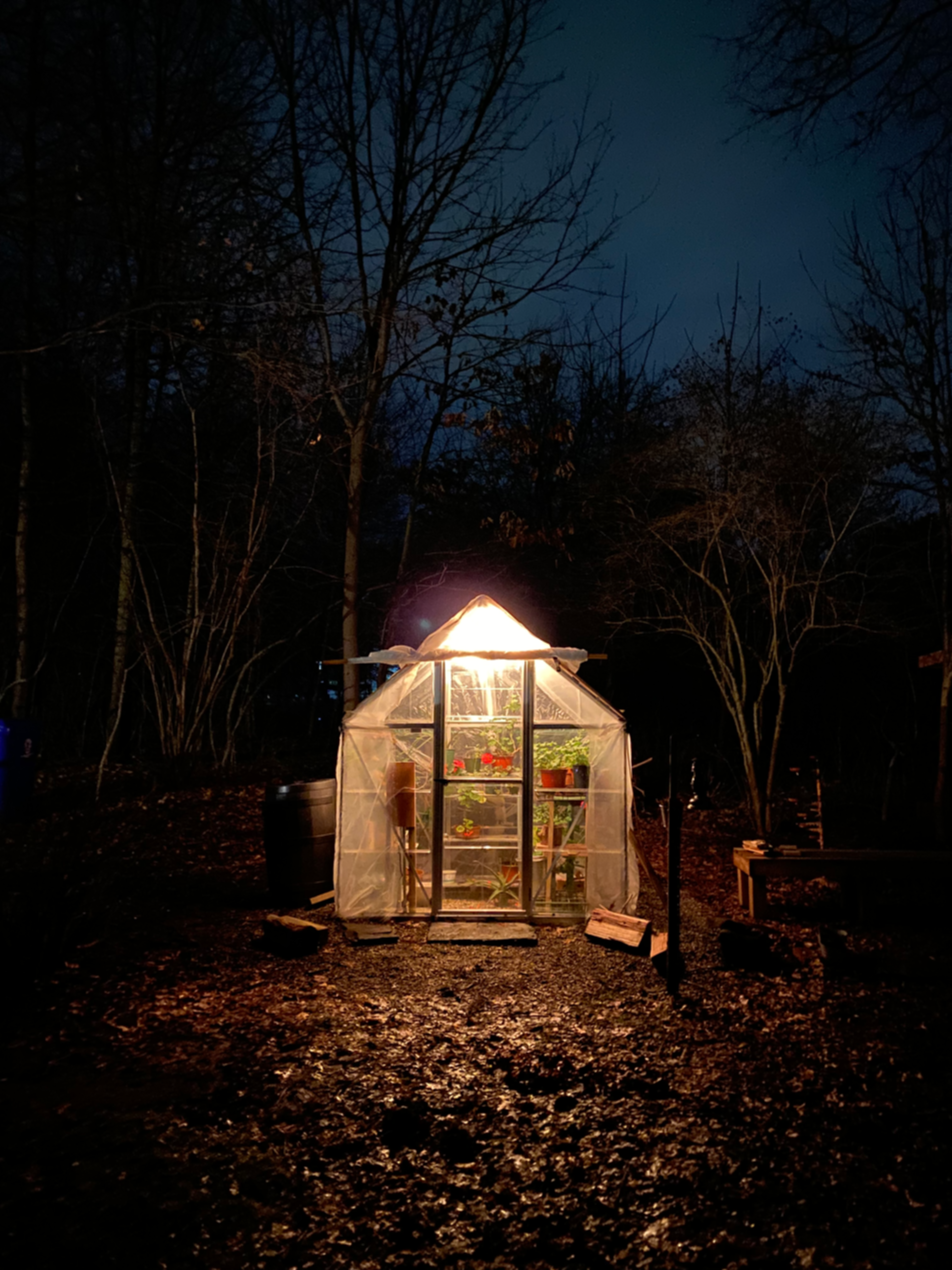
Our greenhouse sits in a southwesterly quadrant in the side yard on a natural slope. It’s bathed in sunlight from October through the end of May, but then, due to tree cover becomes partly shady in the summer. This is not ideal for sun-loving Mediterranean herbs like thyme, oregano, and basil, so they’ll have a designated bed near the veggies up front in full sunlight. But this area around the greenhouse gets all sorts of dappled light throughout the day, and I’ve always envisioned the garden beds in this spot to be full of flowers and native plants.

The 2023/2024 foxgloves on the opposite side of the yard measured between 3′ – 5.5′ feet tall.

There are already a few permanent residents in-ground at the greenhouse – last year’s foxglove starts, two Windflower anemones, a newly established hydrangea, and a burning bush. The burning bush was here when we moved in, and the hydrangea was propagated last summer via a clipping from a friend’s garden. Given how well the foxglove seeds grew on the opposite side of the yard throughout 2023-2024, they’ll be a mainstay in the herb garden too to help attract pollinators and add some overall height to this rather flat patch of ground. Otherwise, it’s a blank canvas to cultivate.

Step Three: Decide What To Plant and Gather Your Seeds…

Thoughts From Adelma: For you, herbs will be green medicines, fragrances, seasoning magic, soft tones and muted colors, textures pleasant to the touch, and names that are good to hear and bear much repeating. (page vi)

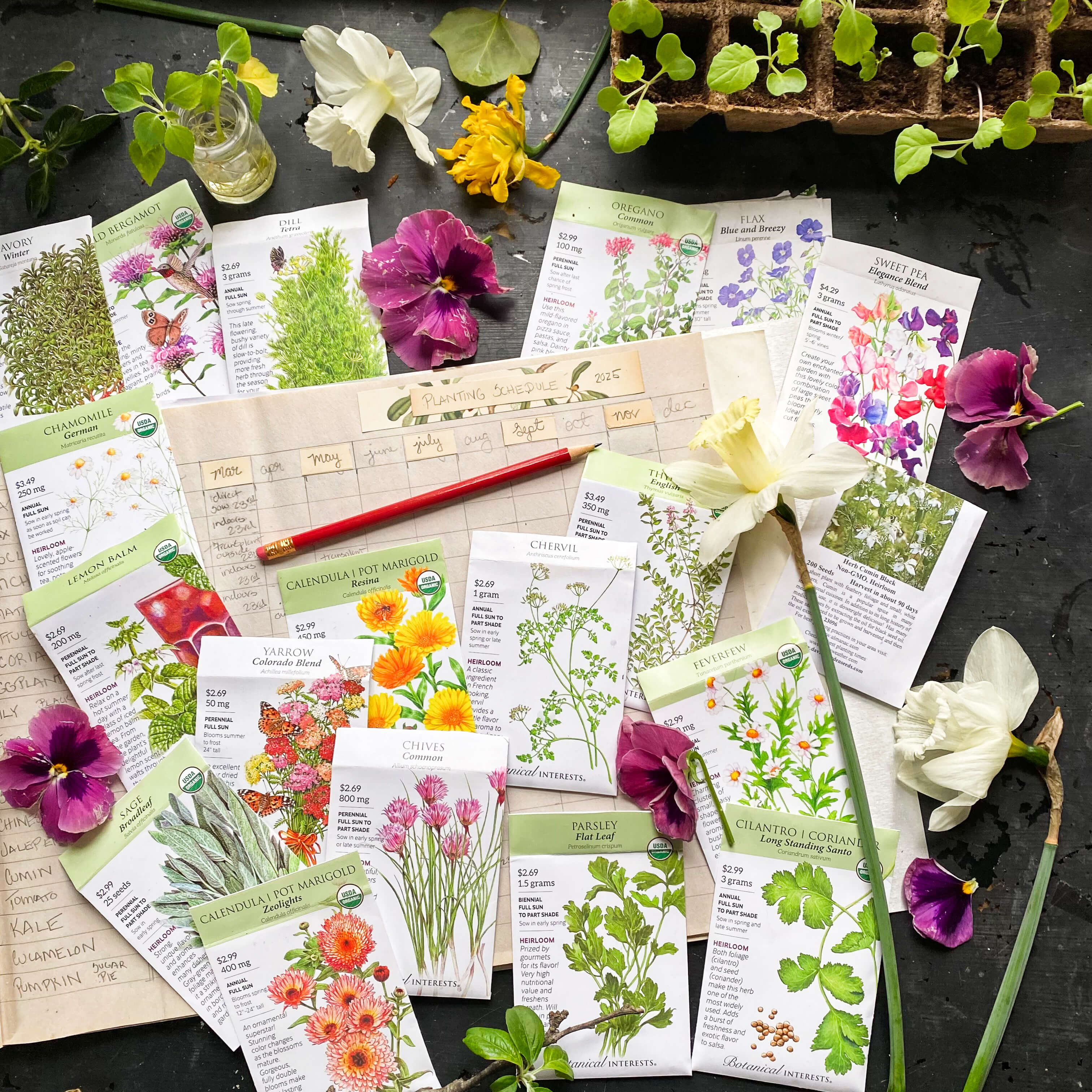
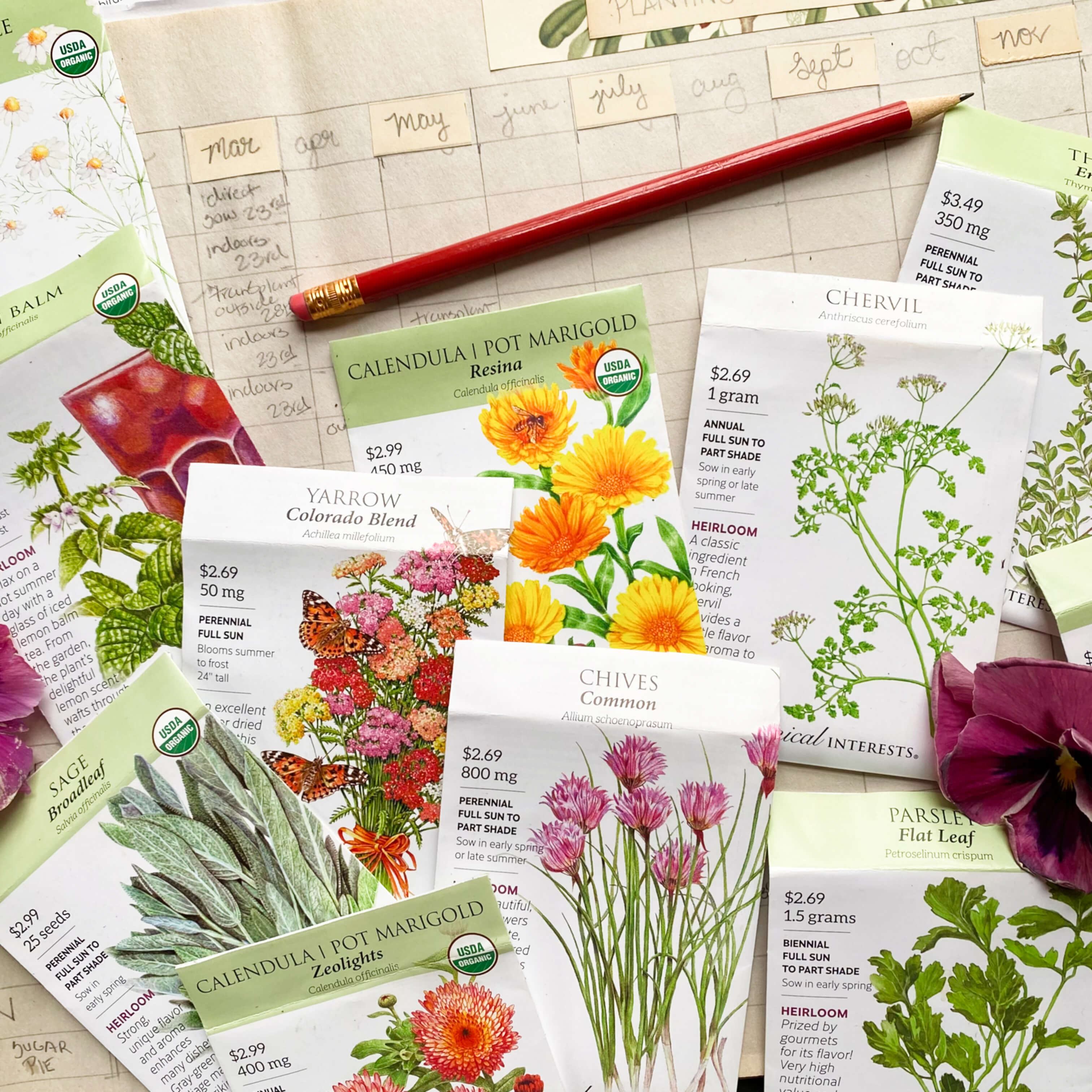
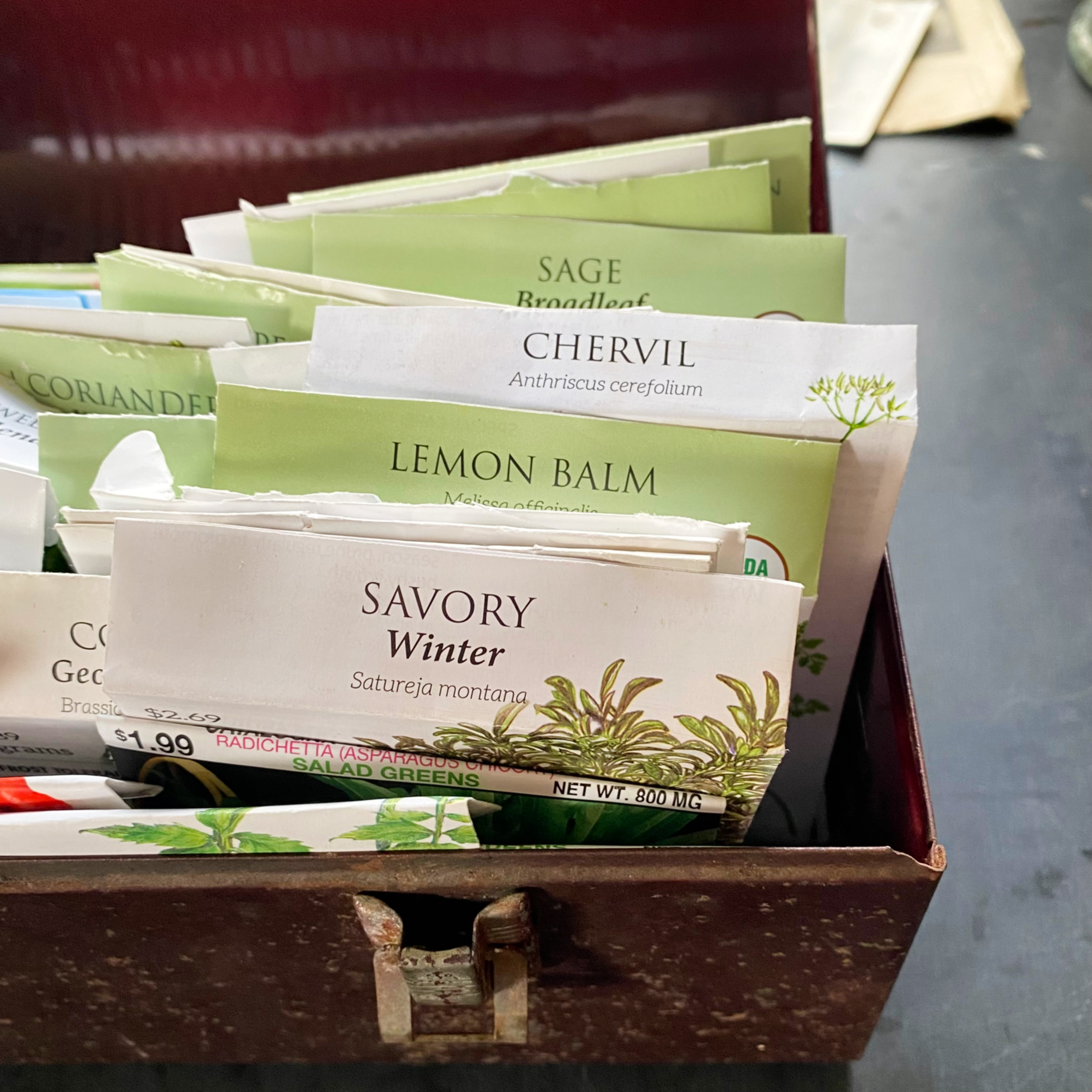
Location and personal preference will determine your selection of seeds, of course, and climate will determine your timing of when to plant what where. Since we are focusing on a larger shady herb garden with a much smaller full-sun patch and generally would like to grow herbs for cooking and drying, I followed Adelma’s list for shade-tolerant varieties.

This year our herb garden will include forget-me-nots, feverfew, wild bergamot, lemon balm, flax, dill, basil, nasturtiums, chervil, cilantro, parsley, oregano, echinacea, winter savory, English thyme, German chamomile, sweet peas, chives, sage, rosemary, yarrow, lavender, phlox and two different varieties of calendula. Everything highlighted in bold will go in the shade garden, the rest will be tucked into the full sun spots in the garden bed up front. Half of this list is a new, first-time growing experience for me, which makes this gardening project an exciting one on all fronts.

Step Four: Create a Planting Map

Thoughts from Adelma: Let the herb garden throughout look old, peaceful and nostalgic with quiet colors and soft textures. (page 17)

When it comes to the planting decisions of what goes where, I recommend sketching all this out on paper with a pencil. At this stage, there is a lot of penciling in and erasing out, second-guessing and revising, dreaming and deciding. Color, size, height, light, and soil requirements are all things to be considered as well as companion plant pairings and general overall garden aesthetic, plus any decorative items or accessories you may want to include. After months of fiddling on paper, my garden layout finally came together. Adelma can rest assured now. I have a plan.

Ideally, I’m striving for a cottage-style herb garden that is full, colorful, and graduated in size. The greenhouse will act as the central focal point, the pea gravel between the fence and the greenhouse will act as a pathway and giant field stones will become stepping stones in the garden beds. To make it visually interesting beyond texture and flower shape, I’ve selected varieties in the pink, purple, blue, white and yellow families to create a unifying color palette that ties in shades from the front gardens as well as a bit of symbolism.

In addition to practical how-to instruction, one of the most interesting aspects of Herb Gardening in Five Seasons is that it is also peppered with stories about folklore and symbolism surrounding herbs throughout history. If you communicated in the language of flowers, it is entirely possible to grow a garden full of patience (chamomile), virtue (mint), everlasting love (baby’s breath), good wishes (basil), humility (bluebell), courage (edelweiss), and ambition (hollyhock). For a complete list of flower symbolism, visit here.

This year, I’m incorporating a specific symbol in the garden – several patches of perennial forget-me-nots for one special reason. They are the flowers that symbolize memories of enduring love, lasting love, tender love. They will be planted all around our pup, Indie, who was buried in one of the beds next to the greenhouse last September. Her unexpected death left a big hole in our lives and in our hearts for sure. I still find myself looking down one of the long paths towards the woods, thinking that she’ll come around the corner any minute like she did a thousand times before after a good chase with a squirrel or two. She was such a big presence here at 1750 House, especially in the yard, we wanted to make sure she was forever a part of the property’s history.

Covered in seed pods after a romp in the woods.

It’s so strange to think that exactly one year ago, on a warm spring evening, not unlike the ones we have been experiencing lately, long before we added the wooden fence around the greenhouse, we were experimenting with building a wattle fence. Indie kept us company all evening that night, watching over our endeavors, sitting pretty much in the same spot where she would come to be buried four months later. I like to think that she is still sitting there just like in the photo, watching over us and the greenhouse and the garden. If I learned anything about colonial gardening in America in the 17th and 18th centuries, it was that American garden design is rooted in nostalgia and a longing for what once was. Like Indie, the forget-me-nots will forever be woven into the fabric of the garden from here on out, self-seeding our little secret language of love and friendship year after year.

Step Five: Start Your Seeds

Thoughts from Adelma: The business of planting seeds should be a simple process, as natural as nature. (page 58)

Adelma recommends seed starting outdoors when the weather is appropriately suited, but she also understands the rush and excitement of trying to get a head start indoors or in a greenhouse. Either way, she’s a fan of keeping the germination stage on the slightly cooler side with nighttime temps between 50-60 degrees. She also recommends as much time outdoors in the fresh air as possible to encourage strong, healthy growth.

Since our experiments of trying to grow cool weather crops in an unheated greenhouse this past winter flopped, instead of pulling out the greenhouse’s winter coat of plastic and outfitting it with a heater rather late in the season, I opted to start everything indoors in a closet that has a lot of natural light and a fair amount of sun thanks to a big window in a small space. I kept the room temperature between 55-65 degrees during the whole germination process, and all the seeds sprouted like the magical little champions that they are. For the past month, almost daily (depending on the outdoor temperature), I transported all the seedlings out to the greenhouse where they could capture the light and a little extra balmy warmth generated by the sun before bringing them back in when the temp dropped below 55.

Calendula and feverfew seedlings

Now that our last frost date has just passed on Wednesday, most of these seedlings will be heading out to the garden within the next week or two. They are a bit smaller in size than if I had started them in the greenhouse over winter with the heater, but like Adelma suggested, this cooler germination method might make them a bit more resilient to fluctuating temperatures as the season gradually warms up and we round the corner into May.

Step Six: Prepare the Garden Beds

Thoughts from Adelma: Work up the soil to a depth of 12 inches using a rototiller or a spade. I recommend three rotillings or diggings: the first to remove the sticks and stones; the second to incorporate well-rotted compost or well-decayed cow manure in soil lacking humus; the third to mix in the garden lime spread on top until the ground is nearly white. (page 55-56)

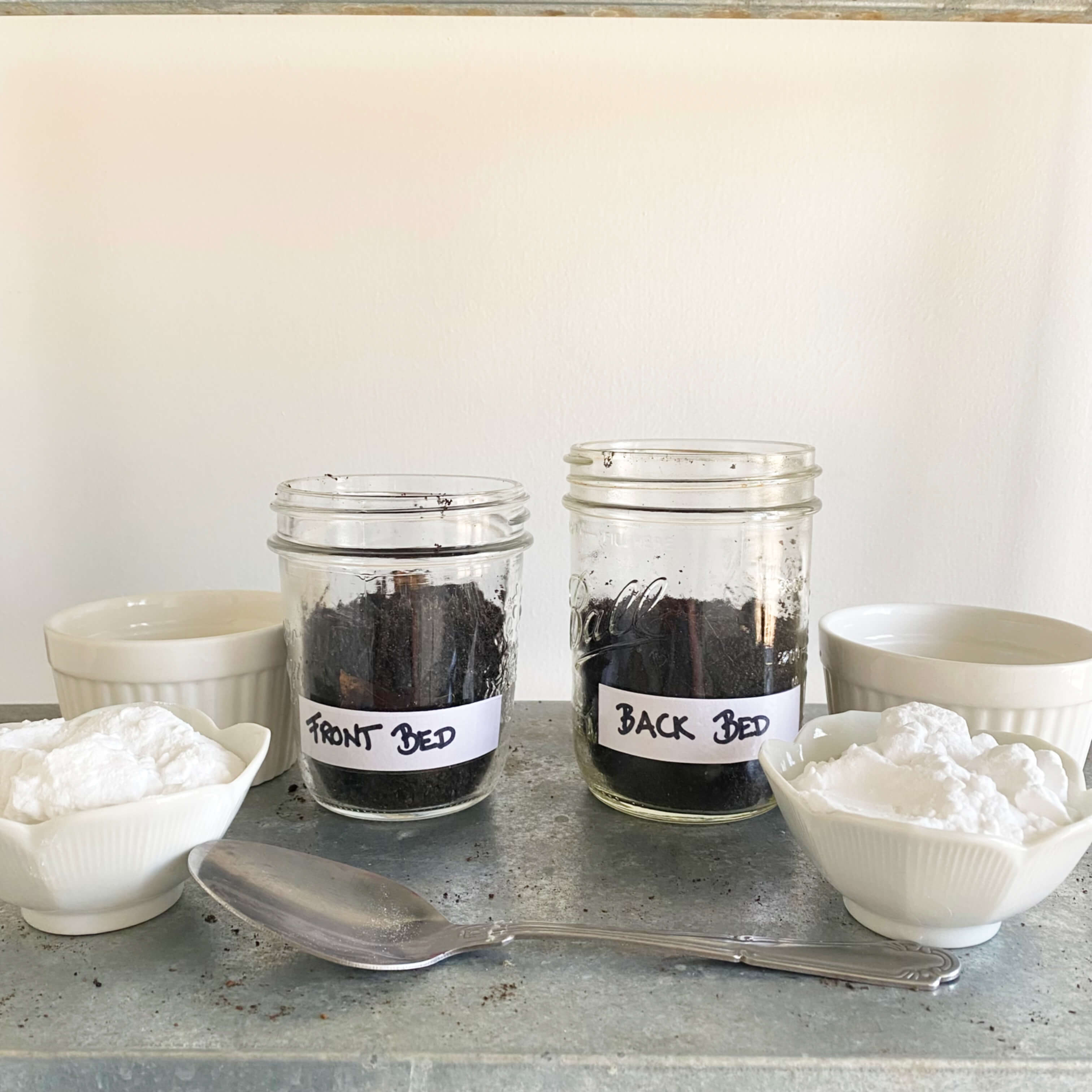
Home soil acidity test using the baking soda/ vinegar method

It’s important to know the acidity level of the soil you are working with since that will determine if you are going to blend in any additives. Adelma recommends turning over the dirt no less than three times and removing all the sticks and rocks that might be present. If your garden beds need some amending, lime and compost are two great additives that will improve the growth of your herbs and strengthen the soil. Compost can be added anytime of year, but Adelma recommends adding lime in the fall otherwise, it could stunt the growth of the plants if added in spring.

Back in mid-March, I did a home soil acidity test recommended by The Spruce, utilizing the baking soda/vinegar method. I’m not sure how accurate this test is, but apparently, if you have acidic soil, the combination of baking soda, vinegar, distilled water, and dirt will cause the samples to really bubble up. Not much happened during my test…

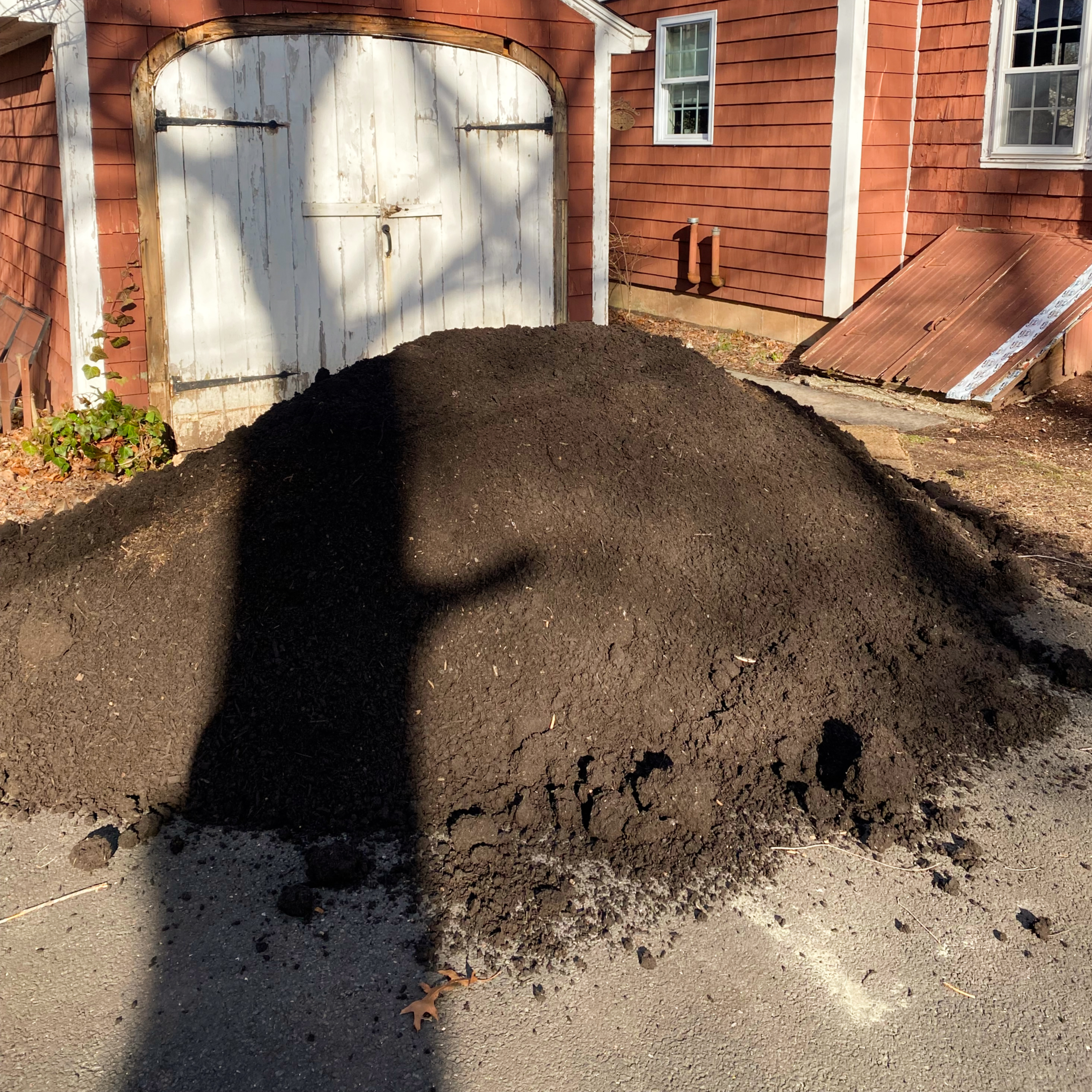
From what I’ve gathered so far, our soil at 1750 House is fairly neutral and, if anything, leans toward a slight acidity, which most plants love. So I’m not adding lime this year. But we did order four yards of organic compost from a local nursery.

Each garden bed received four inches of fresh compost. I’m hoping that will be enough nutrients to start the seedlings off on a good footing. Later in the season, depending on how well everything grows up, I might also add in a seaweed fertilizer and some bone meal. But for now, we’ll see how everything grows in this next month or two before anything else is added.

Step Seven: Enlist Your Helpers

Thoughts from Adelma: “A pleasant summer sound is the hum of bees above a flowering bank of thyme. It is truly the bee’s plant…” (page 67)

Other than a few mentions here and there, Adelma doesn’t discuss the benefits of wildlife much in Herb Gardening in Five Seasons, but as I learned from reading all those gardening books over winter, pollinators depend on all sorts of herbs to help get them through their seasonal travels. Likewise, the herbs depend on them to grow and thrive.

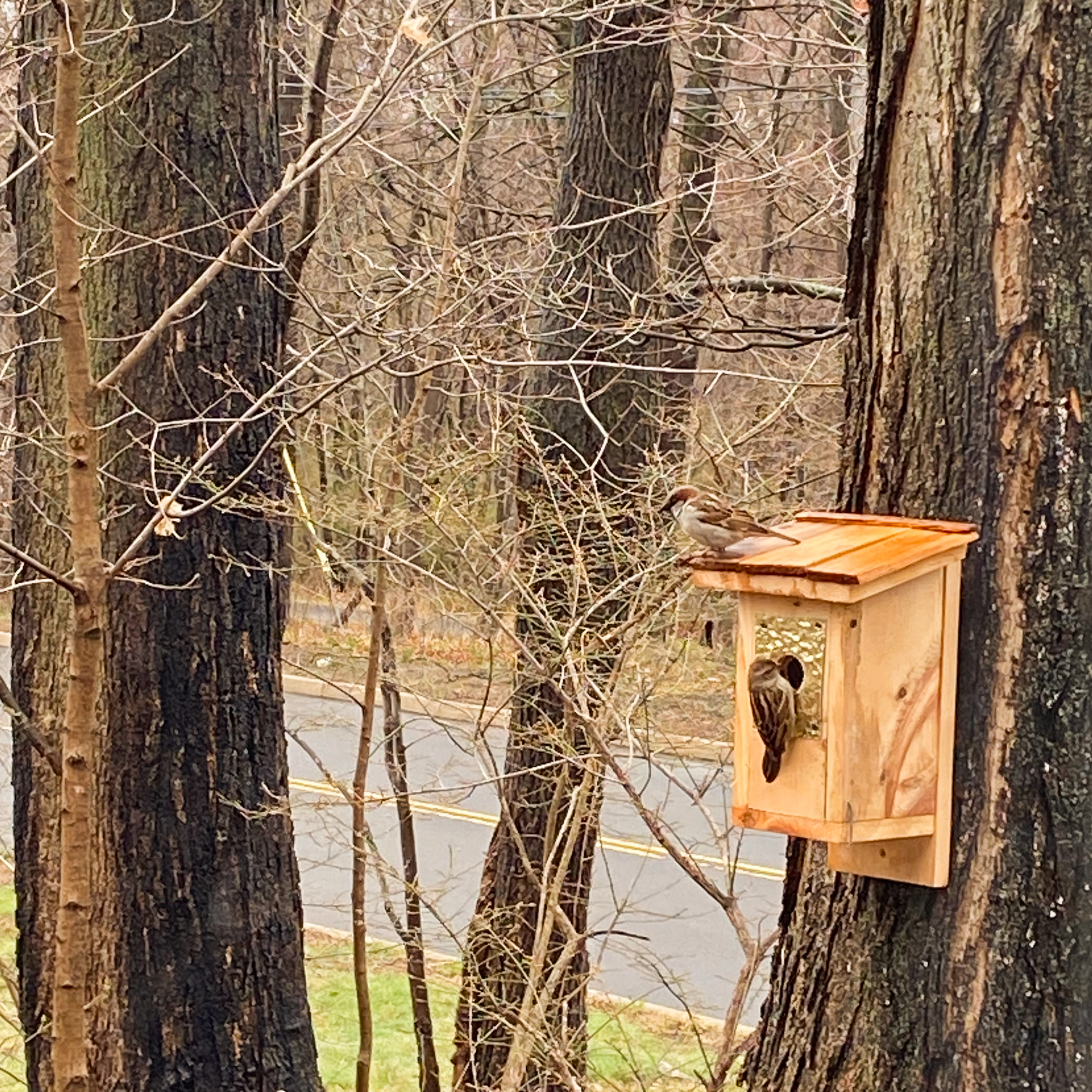
The same goes for the birds. I read recently that the best pest control you can have for your garden is an ample assortment of wild birds. A pair of nesting sparrows alone can eat up to 30,000 insects a week. Just the kind of appetites you want to encourage to help eradicate an overabundance of aphids, scale, beetles, grubs, and a whole host of other winged things that would normally munch on your plants.

We’ve been feeding the birds ever since 2022 here at 1750 House, but last fall we added two new bird feeders and built three new nest boxes this spring to keep encouraging our wild flock. Within a week of putting the nest boxes up, all three houses were occupied by sparrows. It’s so fun to watch them claim their new homes and poke their heads out of the entry holes each morning.

Besides the sparrows, our yard has quite an active bunch of cardinals, mourning doves, chickadees, blue jays, woodpeckers, titmice, nuthatches, bluebirds, juncos, robins, hawks, crows, and occasionally a wild turkey or two. In a future post, later this summer I’ll introduce you to Red, our most sociable cardinal who waits every morning at the feeder for me along with Audi, the one-eared squirrel.

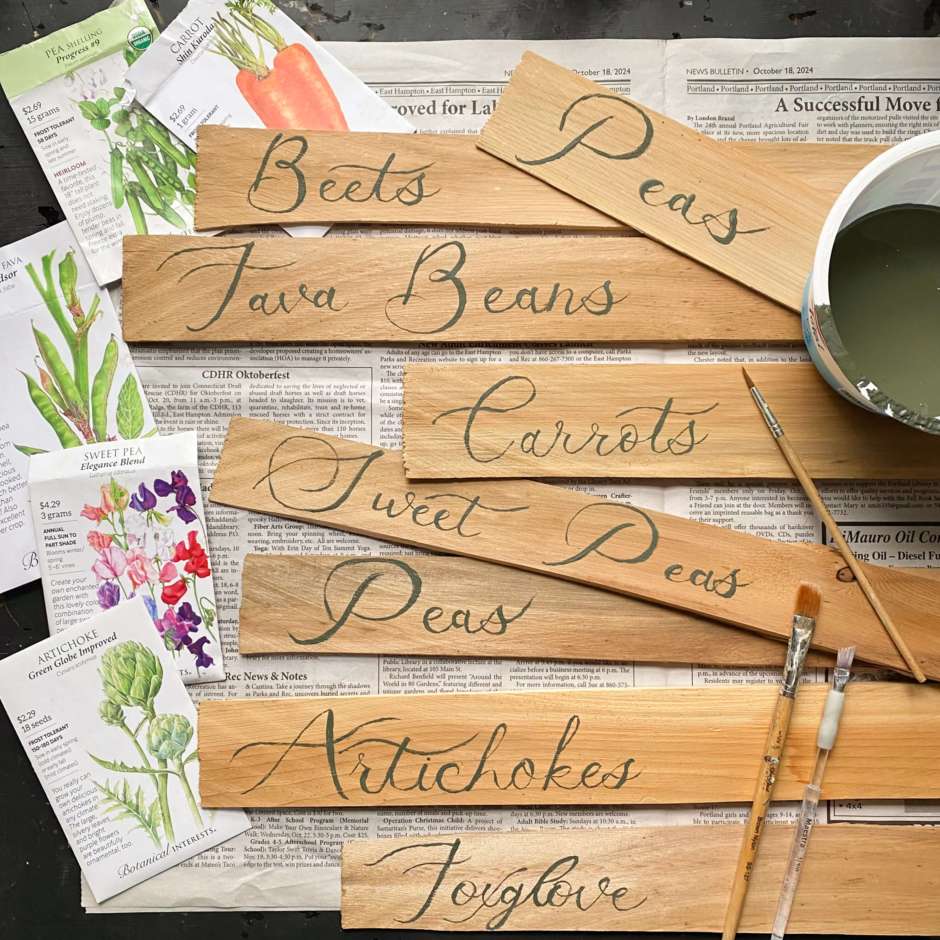
A new batch of hand-painted garden signs to welcome the 2025 season

As of today… the sweet peas are up, the nasturtiums have been transplanted, and the cilantro and echinecea seeds are just starting to sprout under their protective wire covers. My husband built an array of these wire covers in all different sizes and shapes to keep the birds and squirrels from eating the seeds that are directly sown. So far so good.

The preface of Herb Gardening in Five Seasons is titled Herbs are Forever – And For All. I love that turn of phrase. It is such a fitting way to describe the appeal, universality and allure of these tried and true garden reliables. No matter where you go in the world, you can find an herb garden and someone who tends it. Perhaps that is why they are such enduring components to the garden landscape. In the same way, Adelma’s mark on herb gardening has endured too. Long after her death, memories of the beautiful gardens she created at Caprilands still find a place in contemporary conversation. I hope our little herb garden at 1750 House has such a lasting effect. A 275-year-old house deserves the pretty partnership of a timeless garden to travel the years with.

Adelma Grenier Simmons in her later years, as happy as can be amongst her garden paradise.

“Fortunately, the study of herbs touches all aspects of our lives, at all ages, under all conditions. What was rigorous physical experience in youth and middle age may become an absorbing study for the armchair gardener, who halted in activities by age or physical handicap, can still enjoy a fascinating world of legend and history.” Adelma Grenier Simmons, 1964

In the next installment of the Greenhouse Diaries, we will make a spring recipe straight from Adelma’s own kitchen and check in on the seedlings to see how they are growing. In the meantime, cheers to Adelma, to her helpful guidance, and to the act and art of growing a garden.

Malindy Walker’s 1920s Buttermilk Biscuit Recipe

On August 28th, 1963, Martin Luther King Jr. delivered his I Have a Dream speech in Washington D.C. Four decades earlier in 1921, a southern domestic cook named Malindy Walker, locally known as Aunt Malindy, delivered her own inspiring words in Fayetteville, Arkansas. Unlike MLK Jr., Malindy’s words weren’t spoken on a national stage, nor did they reach thousands of admirers. Malindy’s platform was her kitchen and her audience was just a handful of people involved in the publishing industry. But like Martin Luther King Jr., Malindy’s words managed to change the status quo when it came to equality in the kitchen. And she did it with food.

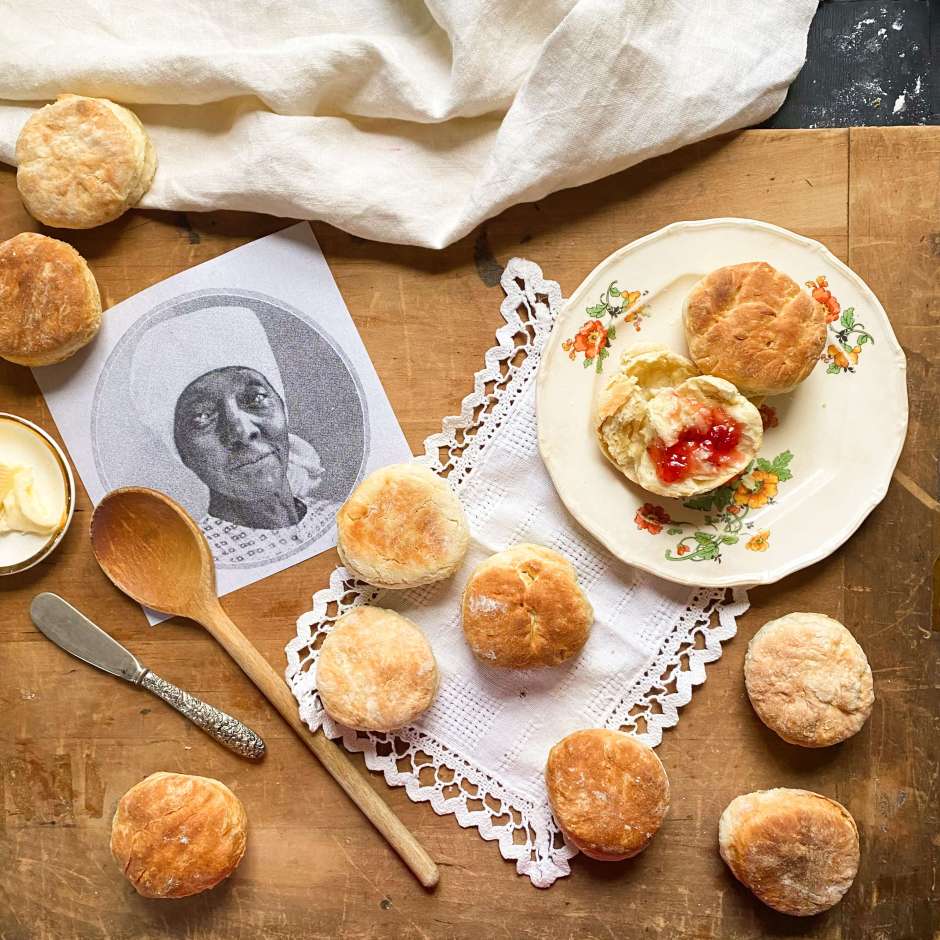
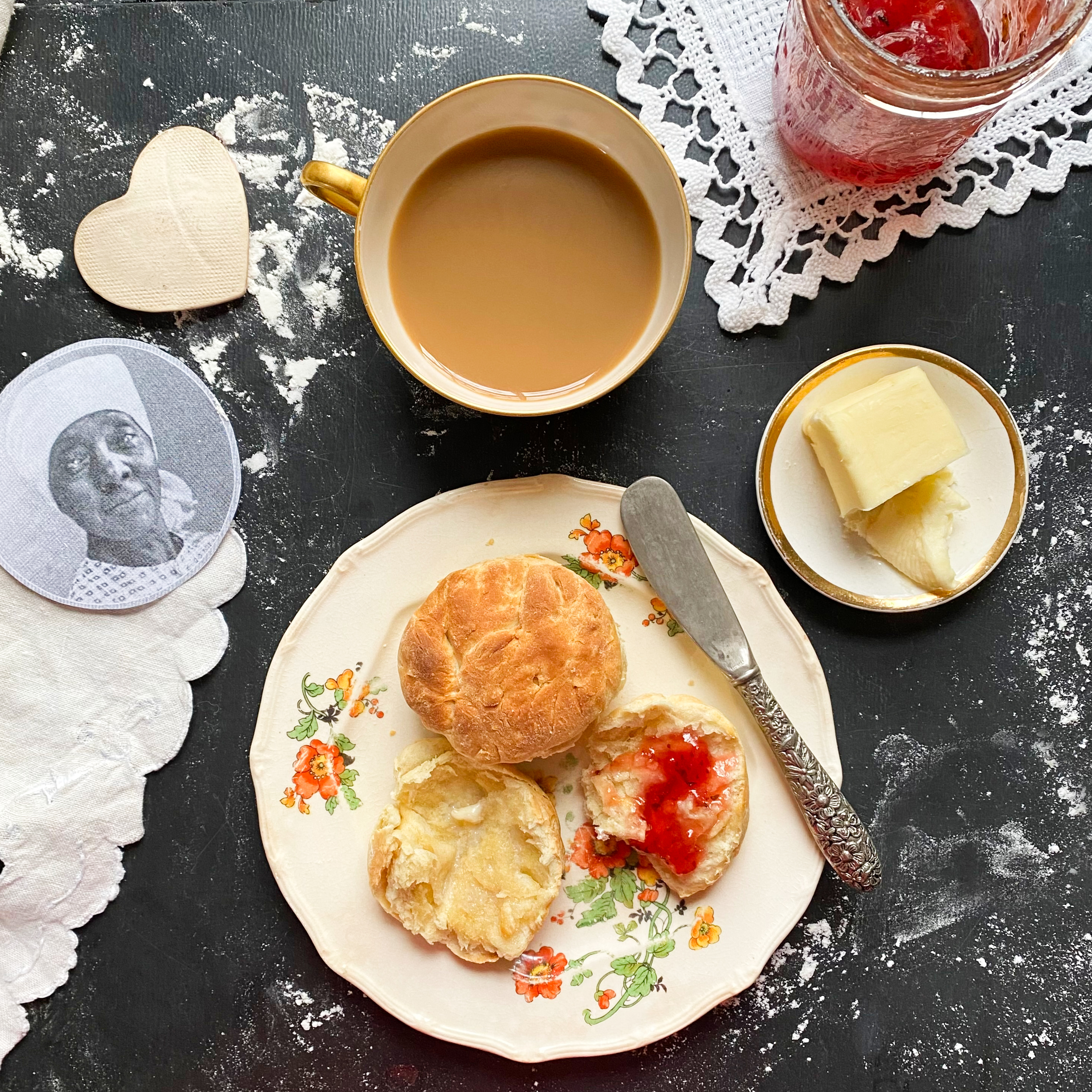
Malindy Walker aka “Aunt Malindy.” Photo courtesy of Good Housekeeping, January 1921

As a longtime domestic cook for the family of Rena Buchanan Shore Duncan, Malindy’s reputation for good cooking was well-known in the Fayetteville, Arkansas area. Featured in the January 1921 issue of Good Housekeeping magazine, in an article written by Rena, Malindy shared cooking secrets for some of her best-loved recipes including Corn Dodger, Southern Chocolate Cake, Fried Chicken, and Buttermilk Biscuits. Enhancing the article was a portrait of Malindy herself, looking confidently at the camera.

At the time, it was unusual for magazines to feature African-American cooks, especially with a portrait included. When Good Housekeeping suggested photographing Malindy at home in her cabin, she said absolutely not. She wanted to be photographed portrait-style just like all the other white cooks had been photographed in previous issues. Malindy was proud of her recipes and she wanted to be treated no differently than any other good cook regardless of her gender or ethnicity.

Good Housekeeping granted Malindy’s request and her portrait was featured front and center in a two-page spread surrounded by her best recipes. I found this little snippet of a story to be so inspiring on several different fronts. First, there was Malindy’s insistence on being treated like everyone else. Second, there was the magazine’s recognition and approval of her request. And third, there were the recipes themselves – examples of beloved southern foods perfected by an African American woman who represented a large swath of kitchen workers that all too often received little to no recognition for their own contributions to the American culinary landscape. In celebration of Martin Luther King Day, we are celebrating Malindy Walker and her courage to dream for an equal place in the kitchen.

This insistence surrounding a specific photography setup might seem like a small win in the big fight for equal rights, but Malindy’s request did set a tone for how she wanted to be viewed and respected. And it made an impact. So much so that the editorial team noted the story surrounding Malindy’s photograph in the article, forever recording in print, her desire for equal treatment.

Apart from the handful of recipes included in the article and bits and pieces of information learned in census records and newspaper archives, details about Malindy’s life are vague. It was believed that she was between 80 and 90 years old when her portrait was taken for the magazine. On her death certificate, her date of birth along with her parent’s names is simply marked unknown. But at the time of her death in 1931, she was rumored to be over 100. She was married and then widowed. At the time the article was published, Malindy lived in the Spout Spring area of Fayetteville. This neighborhood, also referred to as Tin Cup, was established following the American Civil War by formerly enslaved African Americans.

A view of South Fayetteville circa 1890. the Tin Cup neighborhood where Malindy lived is unseen but located just below the rolling hill in the foreground. Photo courtesy of FayettevilleHistory.com

There are so many facets of Malindy’s life that raise curiosity and questions including interest in understanding her own possible enslavement story, her loyalty to Rena’s family, her cooking journey, and whether or not she had children of her own.

Rena Buchanan Shore Duncan (1887-1978)

Following the publication of the Good Housekeeping article, Rena went on to write more about Malindy in future pieces for the Saturday Evening Post in which she received praise for writing in the dialect in which Malindy spoke. Although at the time, this style of storytelling made Rena’s writing popular, her stories would be considered offensive and insensitive today. That makes Malindy’s recipes and the publication of them alongside her portrait all the more important. They mark her place in time, in the world, and in history during a century that saw so much change in the lives of African Americans living in the South.

In that spirit, I’m so pleased to share Malindy’s antique recipe for buttermilk biscuits. Spend any amount of time below the Mason-Dixon line – a day, a week, a lifetime – and you’ll quickly learn that each homemade batch of biscuits has its own way of coming together. All Southerners have their own unique take on what the best biscuit is made of and Malindy was no different. Some recipes call for lard, others call for butter. Some contain a small amount of buttermilk and a large amount of baking powder or a large amount of milk and a small amount of baking soda. There’s yeast, no yeast, double rise, no-knead, flavored, plain, dense, doughy, puffed, pillowy, and light-as-a-feather varieties that come in all shapes and sizes.

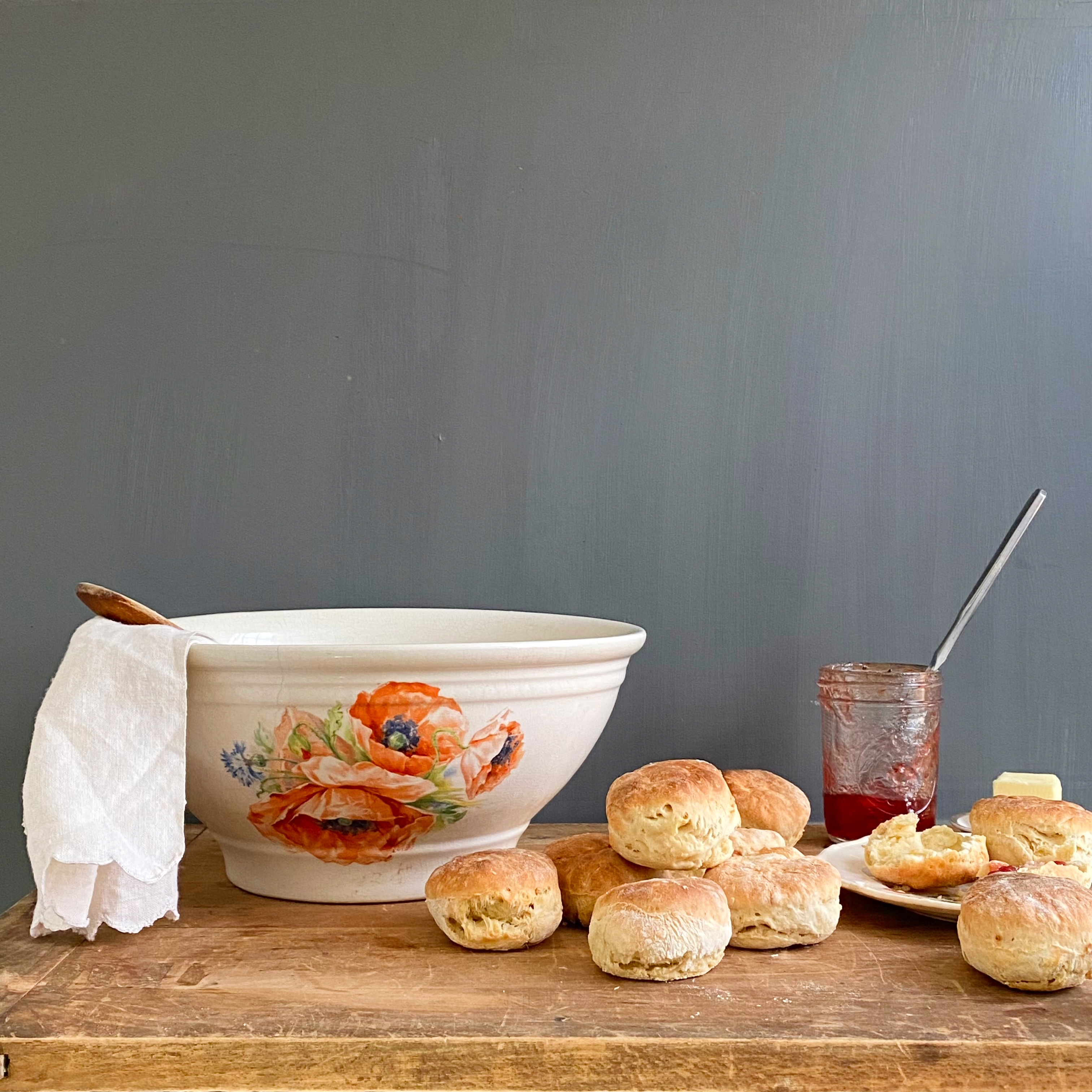
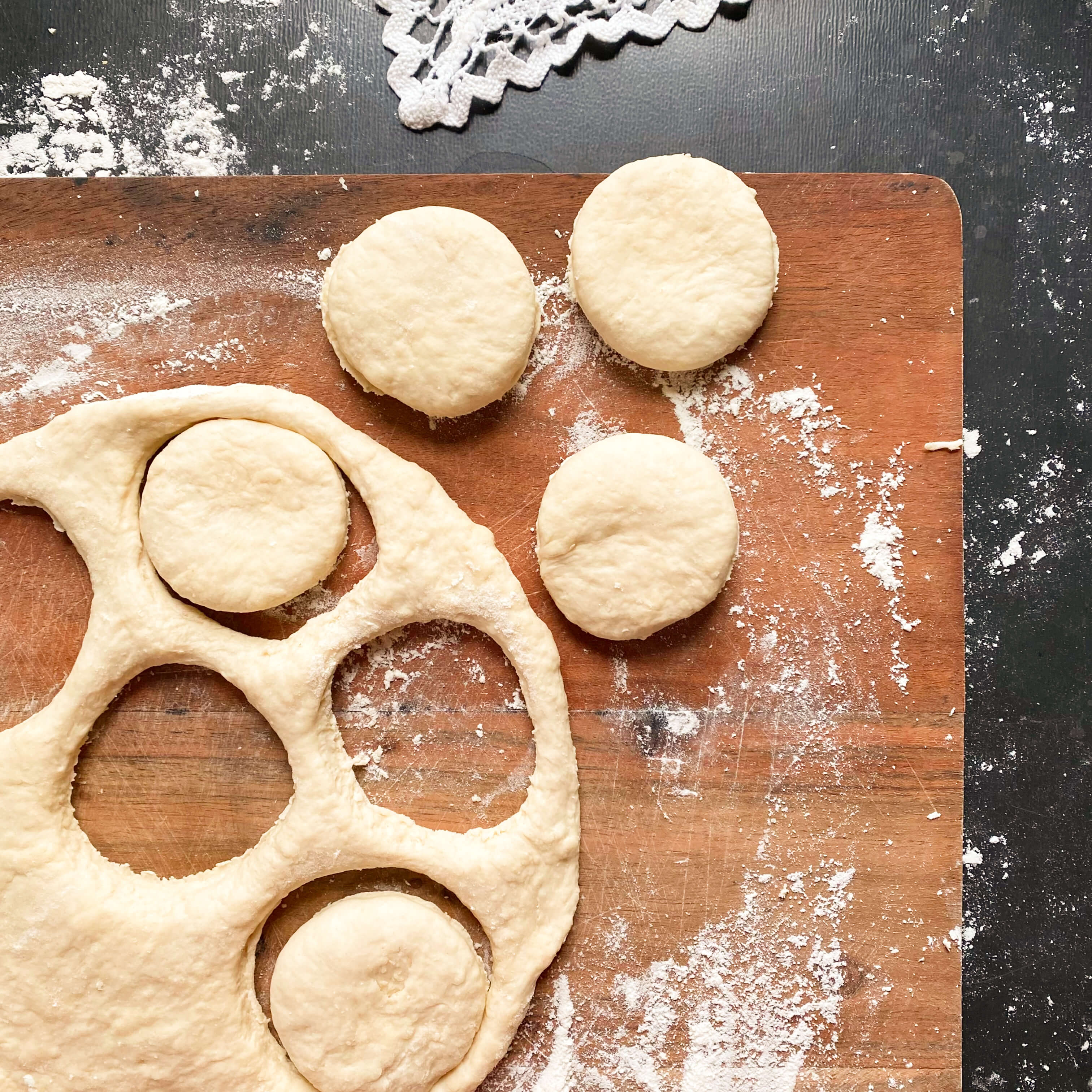
Malindy’s recipe features a small amount of lard, several cups of flour, a pint of buttermilk, and equal amounts of baking powder and baking soda. Although so many home cooks in the south attest to the fact that lard makes a better biscuit, I substituted butter in place of it in this recipe since it calls for so little fat. I wouldn’t be doing much cooking with lard post-recipe, so it would it seem like a waste to buy an entire package of lard just to use two tablespoons. Other than that I made Malindy’s recipe exactly as she suggested and the biscuits turned out beautifully, with a satisfying crunch on the outside and a soft, flaky texture on the inside. Depending on the size of your biscuit cutter, this recipe makes up to two dozen biscuits, which can be stored in the fridge for up to a week and reheated for five minutes in the oven at 350 degrees. Malindy recommended always serving them hot, and I would totally agree, as their composition becomes more dense when they are cold.

Malindy Walker’s Buttermilk Biscuit Recipe circa 1921

4 1/2 cups flour

1 teaspoon baking powder

1 teaspoon baking soda

1 1/2 teaspoon salt

2 tablespoons lard (or butter)

1 pint buttermilk (two cups)

Sift the flour, baking powder, baking soda, and salt together. Mix the lard or butter in well and add the buttermilk.

Knead until very smooth, roll to a half inch in thickness and bake about 15 minutes in a hot oven (450 -475 degrees).

Best when enjoyed straight from the oven, the top and bottom of the biscuits have a nice crunch to them, like toast, but the inside is flaky and pulls apart in lovely little layers. If you are interested in a complete Southern experience, you could serve these with a side of gravy and thinly sliced ham or pile them high on a platter and serve them for breakfast alongside bacon and eggs smothered in cheese. I recommend serving them with butter and jam or a drizzle of honey. On a cold winter’s day, paired with a cup of coffee or tea, it’s a little meal unto itself.

When Malindy passed away in January 1931, her obituary was printed in the St. Louis Argus. In it, they referred to Malindy as a “famous character” and it was noted that she was buried in the “white cemetery” in Rena’s family plot. Tracing African American lineage in the South is such a challenging endeavor when you know few facts about a person. I think that is what makes Malindy’s story so fascinating though. There were actually quite a few details recorded about her life including a portrait of her and information that provided insight into her character. Her love of cooking reached people far beyond her own kitchen and became the tool that helped her feel empowered enough to stand up for herself and what she deemed fair treatment. It would be wonderful to uncover more information about Malindy’s long life, so I’ll keep researching her throughout the year and share any new news I find with an update on this post. In the meantime, we have her biscuits.

Cheers to Malindy for sharing her best recipe and for standing up for equality in the face of marginalization. Martin Luther King Jr. was born just two years before Malindy died, but had he known her in his lifetime, I bet he would have been so proud of her.

Italy’s Chicken Canzanese and The Family of Artists Behind The Recipe

It’s just the start of 2024, but here in the Vintage Kitchen, there is a finish line coming into view. This year we will be wrapping up a five-year project that first started here on the blog in 2020. I’m so happy to say welcome back to The International Vintage Recipe Tour.

international-vintage-recipe-tour

What started out as an intended year-long project of cooking 50 recipes from 45 different countries in 2020 has now taken five years to complete just to the halfway mark. A pandemic, a tornado, a big cross-country move and 1750 House renovations have waylaid plans far more than ever anticipated, but this project has always been such a joy I never wanted to not finish it. So here we are, at the start of 2024 finishing things up from 2020.

For a quick recap and for anyone new to the blog, The International Vintage Recipe Tour takes home cooks and readers on an around-the-world adventure via the kitchen, as we cook our way through a collection of recipes featured in the 1971 New York Times International Cookbook.

the-new-york-times-international-cook-book
The vintage 1971 cookbook that launched the Vintage Recipe Tour.

Throughout the Tour, we are visiting 45 countries via the kitchen and making at least one traditional heritage food from each, sharing both the recipe and the cooking experience here on the blog. To add context to the food we are making, and to spark some new conversations around the table, every visit to a new destination is paired with a unique cultural story from that country’s history.

So far we’ve visited twenty-four countries via the kitchen on this tour… Armenia, Australia, Austria, Barbados, Belgium, Brazil, Canada, Ceylon, China, Colombia, Cuba, Czechoslovakia, Dahomey, Denmark, England, Fiji, France, Germany, Greece, Haiti, Hungary, India, Indonesia, and Israel. It’s been a whirlwind of fun, friendship and delicious food.

Highlights from the Recipe Tour!

We chatted with an author and a food columnist via Armenia, met a descendant of the designer of the Statue of Liberty via Germany, and embraced our inner bula in Fiji. We discussed tropical architecture in Haiti, made floating paper lanterns to celebrate the Hungry Ghost Festival in China and donated funds from shop sales to help save the koalas injured in the Australian wildfires. We discussed women’s fashion in India, interviewed a Cuban-American farmer in Miami, and learned about a long-lost African-American dance in Dahomey. On the food front, we curried in Ceylon, baked Queen Mother’s Cake in Australia, made homemade mustard in Denmark, learned that not all fondue comes in a hot pot in Belgium, and took a much-needed virtual vacation to Corfu via Greece.

A visit to Corfu

Our latest stop on the tour was Israel, which lined up with the 2021 holiday season. To celebrate we made a Hannukah wreath, cooked two recipes for dinner, and dove into the history of both the Jewish flag and the Jewish star. Now, our next stop on the International Vintage Recipe Tour takes us to Italy, one of the most beloved cuisines in the world. Here we’ll make a provincial meal meant for sharing and meet an artist whose family recipes formed the basis of a life-long passion with food. Welcome to Italy.

It’s impossible to write about Italy without writing about family. And you can’t write about this recipe, Chicken Canzanese without writing about a specific family. Like France and China, Italy is one of the largest chapters in the New York Times International Cookbook. There are literally dozens of recipes to choose from, a switch from some countries that had less than a handful.

Besides the long wait to get the Tour started again, the hardest part about starting up again with Italy was which recipe to choose and which cultural treasure to spotlight. Contenders in that department were Stanley Tucci’s gorgeous Searching for Italy show, the multi-generational novel The Florios of Siciliy and the genealogy of the love apple (aka the tomato). There were all the pastas and all the sauces, lovely vegetable side dishes, and quite a few desserts to pick from, but the recipe that I kept coming back to was a one-pot chicken dish that was credited to an artist.

Last fall, while visiting a local bookshop, I discovered a bright yellow 1970s Italian cookbook. To my sheer delight and surprise, it was written by the same artist mentioned in the New York Times International Cookbook. A quick peek inside revealed the same exact recipe that was also featured in the NYTimes cookbook. The same recipe by one artist in two different books. It was a sign. This was the right Italian recipe for the Tour and the right time to tell a story about a creative spirit, who also happened to be an Italian cookbook author.

The artist is Edward Giobbi, a second-generation Italian-American born in Connecticut in 1926. Still painting today from his home studio in Katonah, New York, at the age of 98, Edward’s lived his entire life in pursuit of art and food. The book that made him well-known in the culinary world was his Italian Family Cookbook, first published in 1971. Selling over 30,000 copies by the 1980s, it offered home cooks a sincerity that resonated on multiple levels when it came to preparing economical and creative meals in true Italian style. The recipe featured here today, the one that appears not only in Edward’s cookbook but also in the New York Times International Cookbook, is his Chicken Canzanese, a slow-simmered one-pot made of chicken, herbs, wine, spices, and prosciutto.

A lovely selection for these end-of-winter days when the weather is jockeying back and forth between spring-like temps and snowstorms, this recipe is both light and hearty, depending on the sides that accompany it. It’s easy to prepare, has a warm, rich, earthy fragrance thanks to the prosciutto, garlic, and herbs, and can definitely be labeled a healthy comfort food since it contains no added fat.

The cooking prep is also interesting. There is a cold water brine, a unique set of flavor pairings, and a few very precisely measured spices… twelve peppercorns… six whole cloves… two sage leaves. I always find precise measurements like this fascinating. What was the process that a cook went through to determine that perfect balance of six versus seven cloves or nine versus twelve peppercorns? Would three sage leaves as opposed to two send the whole meal over the edge?

Edward Giobbi, tasting and testing in his kitchen circa 1971. Image courtesy of The News Messenger. Aug 12, 1971

As it turns out, Edward’s style of cooking and how he first learned it was based on quality but also frugality. Growing up during the Great Depression taught him and his family the value of growing your own food and utilizing agricultural resources close to home. Nutrition was key to keeping everyone healthy. Nothing was wasted or under-appreciated. Every bit of joy that you could scrape from an experience mattered. As an adult, Edward approached food in much the same way.

In the NYTimes cookbook, the recipe for Chicken Canzanese is simply attributed to Ed Giobbi, the artist. But in Edward’s cookbook, Italian Family Cooking, it’s attributed to Edward’s mother by way of a woman who lived in Canzano, in the Abruzzi region of Italy.

The Abruzzo region of Italy. Photo courtesy of iStock.

Located in the middle of the boot, Italy’s beautiful Abruzzi/Abruzzo region borders the Adriatic Sea and also the Apennines Mountains, both of which provide ample agricultural opportunity. Canzano is 105 miles east of Rome, and 230 miles southeast of Florence, and although geographically considered central Italy, the culture and food traditions of this area mirror that of Southern Italy.

Abruzzo, Italy. Photo: Sterlinglanier Lanier.

Full of food specialties ranging from provincial fish soups to local lamb dishes to plates of handmade pasta the traditional foods of Abruzzo favor both its maritime and mountain environs. Incidentally, this area of Italy is also known for a food often consumed at weddings here in the US. It’s the birthplace of the pastel-colored, candy-coated Jordan Almond, also called Italian Confetti locally.

All the pretty pastel shades of a Jordan Almond.

Edward’s parents immigrated to the US in the early 1900s first to Pennsylvania and then to Connecticut where they labored in factories and mills. Even though they both just had a third-grade level education, his parents had an appreciation for food, art and music which made a strong impression on Edward during his childhood. The Giobbi family kitchen would come alive at night and on weekends with the scents and flavors of his parent’s home country.

Life with Flowers. Edward Giobbi. 1958

Once he left home to pursue his art, his mom’s heirloom recipes became a vital part of the creative process as he perfected each one in his own kitchen, practicing them over and over again, until they met her standards and his memories. That dedication to good food and good eating, combined with artistic sojourns to stay with extended family in Italy sealed his love of cooking indelibly.

By the time Edward married and had his own family, preparing daily meals was a pleasure equal to painting. In his children, he instilled a similar joy. Art and cooking became a throughline that ran strong in the new generation of the Giobbi family members.

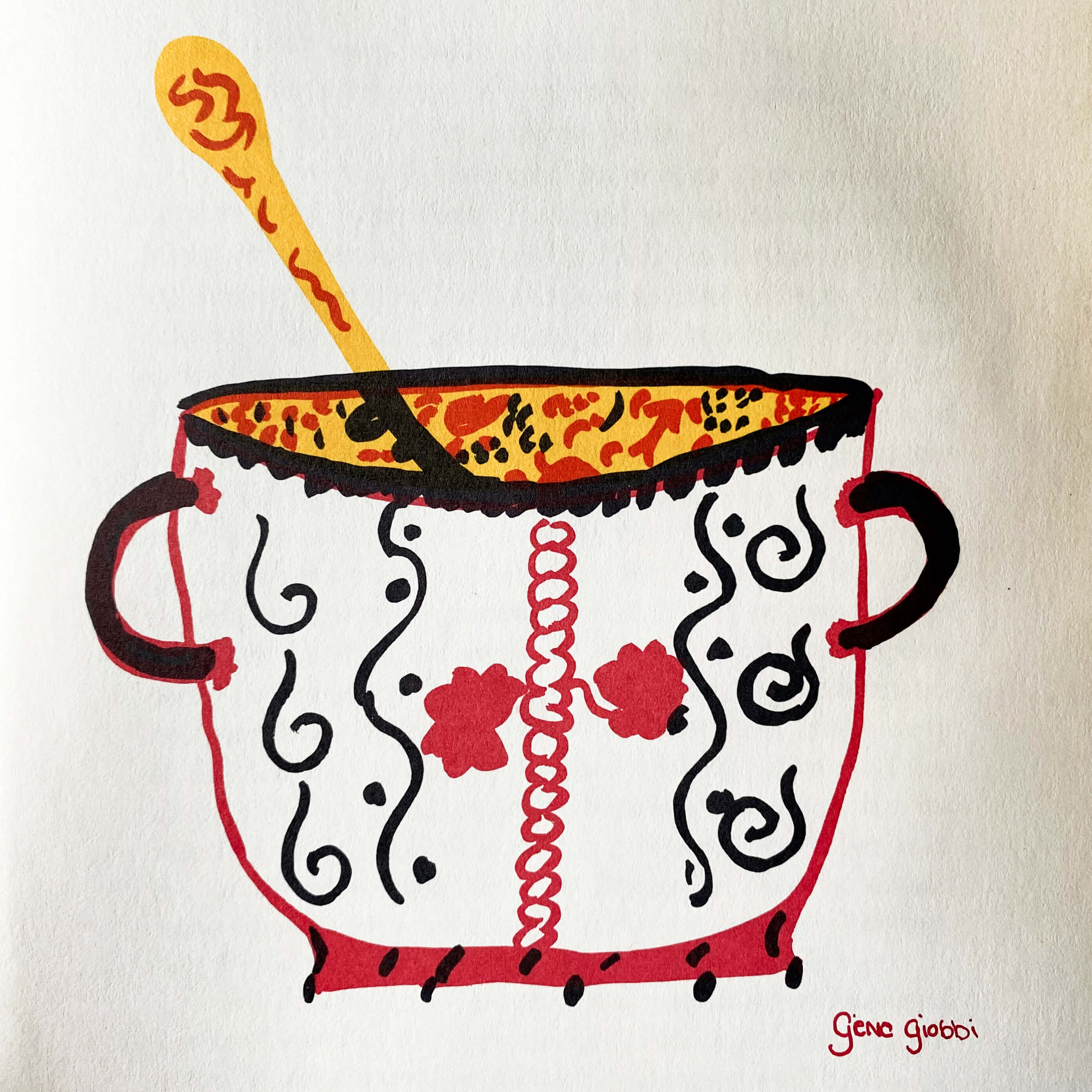
Apart from the myriad of wonderful traditional Italian recipes in Edward’s cookbook, the illustrations stand out with vibrant appeal and eye-catching charm. The art was executed not by a hired freelancer or a publishing industry dynamo. It wasn’t executed by a professional food photographer or a graphic design studio. Instead, the illustrations for his cookbook were illustrated by a collection of painters entirely new to the world – his children, Cham, Lisa and Gena who at the time ranged in age from six to nine.

Edward gave his kids no direction when he asked them to paint pictures for the cookbook other than to say “draw a fish, or a soup pot or a bottle of wine.” Each of his artists offered their own interpretation.

Whimsical and sweet, Edward Giobbi’s Italian Family Cookbook was indeed, in all ways, a family affair from kids to parents to extended relatives. It didn’t stop at this cookbook either. Edward went on to write another successful cookbook, Eat Right, Eat Well: The Italian Way (1985) and his band of illustrators grew up to pursue their own careers in art, dance, music and food science.

In keeping with the Giobbi clan’s combined love of the kitchen, nothing seems more fitting than presenting this recipe on a Sunday night when family dinner rules the kitchen in most Italian households. Named for the town in which it hails, Chicken Canzanese is a meal intended for communal family dining. Simple to make, it’s a two-step process that involves a one-hour wet brine and forty minutes of cooking time. True to Edward’s nature and his mother’s style of cooking, it’s made of simple ingredients and offers a bevy of creativity in the side dishes in which you choose to serve with it. More on those thoughts follow the recipe.

Edward Giobbi’s Chicken Canzanese

Serves 4

One 3 lb chicken, cut in pieces

2 sage leaves

2 bay leaves

1 clove garlic, sliced lengthwise

6 whole cloves

2 sprigs fresh rosemary or 1/2 teaspoon dried

12 peppercorns, crushed

1 hot red pepper, broken and seeded (optional) or 1 teaspoon dried red pepper flakes

1/4 lb prosciutto, sliced 1/2 inch thin or one 4oz package of pre-sliced prosciutto*

1/2 cup dry white wine

1/4 cup water

Salt for brine (see note)

Place the chicken pieces in a mixing bowl and add cold water to cover and salt to taste. *Note: I used a large mixing bowl and 1/8 cup of sea salt to 6 cups of water. Cover with plastic wrap and store in the fridge for 1 hour.

Drain the water and rinse the chicken pieces completely before patting dry with paper towels.

Arrange the chicken pieces in one layer in a skillet. Add the sage, bay leaves, garlic, whole cloves, rosemary, peppercorns and red pepper. Cut the prosciutto into small cubes and sprinkle it over the chicken. *Note: If using pre-sliced prosciutto, remove all the paper or plastic sheets between each slice. Stack the prosciutto one on top of the other, and cube the whole stack at once.

Add the wine and water. Do not add any additional salt, since the prosciutto will season the dish. Cover and simmer 40 minutes. Once the chicken has cooked to an internal temperature of at least 165 degrees. Uncover and cook briefly until the sauce is reduced slightly. Serve hot.

Rustic and earthy, Chicken Canzanese is tender and full of subtle flavors. The broth itself is fairly salty on its own thanks to the simmered prosciutto, but soak it up with a piece of crusty bread, and the briny flavor mellows. There were no serving suggestions mentioned in Edward’s recipe nor the NYTimes, but the broth would be lovely tossed in a warm bowl of pasta, spinach, peas, potatoes or mushrooms. If you are feeling decadent you could add a dash of cream to the broth to balance all the flavors. As Edward says in the introduction…”Cook the food in this book with a free hand, using your own creativity with the freshest ingredients you can get.”

Collected by museums and galleries around the world, throughout Edward’s long art career his style has varied…

Summer Shower, Pescara, Italy. Edward Giobbi. 1951

Dried Flowers #14. Edward Giobbi. 1999

Hanover, Triptych. Edward Giobbi. Exact date unknown – possibly 1970s.

He dislikes labels or being lumped into a certain type of painting, but he one thing Edward consistently strives for in his art instead is honesty. The same could be said for his cooking. All of his recipes are celebrations of local eating. They reflect riding the highs and lows of economy, of balancing cooking constraints with bounty, and the importance of identifying local resources. His recipes are interesting, creative, nourishing. They are of the earth and of the moment. I think that’s what makes Italian food so appealing. It’s a cuisine rooted in a waste-not culture that appreciates what’s right there in front – all the bounty that the earth can offer.

Fall Still Life- Edward Giobbi. Photo courtesy of Chroma Fine Art Gallery. Find out more about this painting here.

My favorite piece in Edward’s catalog of work is this one. I think it’s the most food and family-like of all his art. In my interpretation of it, I can see his whole entire world. His whole lineage in mixed media. There are blue fish in the sea at the bottom right. A mountainous landscape in the middle. There’s red for blood, life, wine and energy. I see flowers, woodland foraging, and garden soil. In my mind, that blob of brown represents all the possibilities that might grow from a simple swatch of ground. And the tree. The beautiful, exuberant tree surrounded by dots of confetti-like splatters and stars. That’s the Giobbi tree. The one that represents the vitality of nature, the sparkle of life, of wife, of children all rolled up in one. I could be reading too much into it. Maybe it’s just what the title says - Fall Still Life. Maybe it’s an autumn landscape in Canzano, Italy. Or a pairing of items Edward arranged in his home studio in Katonah, New York. Maybe it represents a lot more or even possibly a lot less. Or maybe… just maybe… it’s the word, the work, that Edward’s been striving for all along.. honesty.

Cheers to Edward for sharing his family’s Italian heritage with us here in America via books, art and storytelling. Cheers to his kids, Cham, Lisa and Gena for their fantastic illustrations. And finally, cheers to the unnamed woman in Canzano, who passed this recipe along. I wish we knew your name so we could credit you properly for the delicious dish.

If you’d like to catch up with the recipe tour from the very beginning days in 2020, start here or click on any of the country links mentioned above to visit those specific posts.

Next up on the International Vintage Recipe Tour, it’s a trip to Jamaica via the kitchen. Hope you’ll join us!

Welcome To A Fragrant Year: The Greenhouse Diaries Return for New Growing Adventures

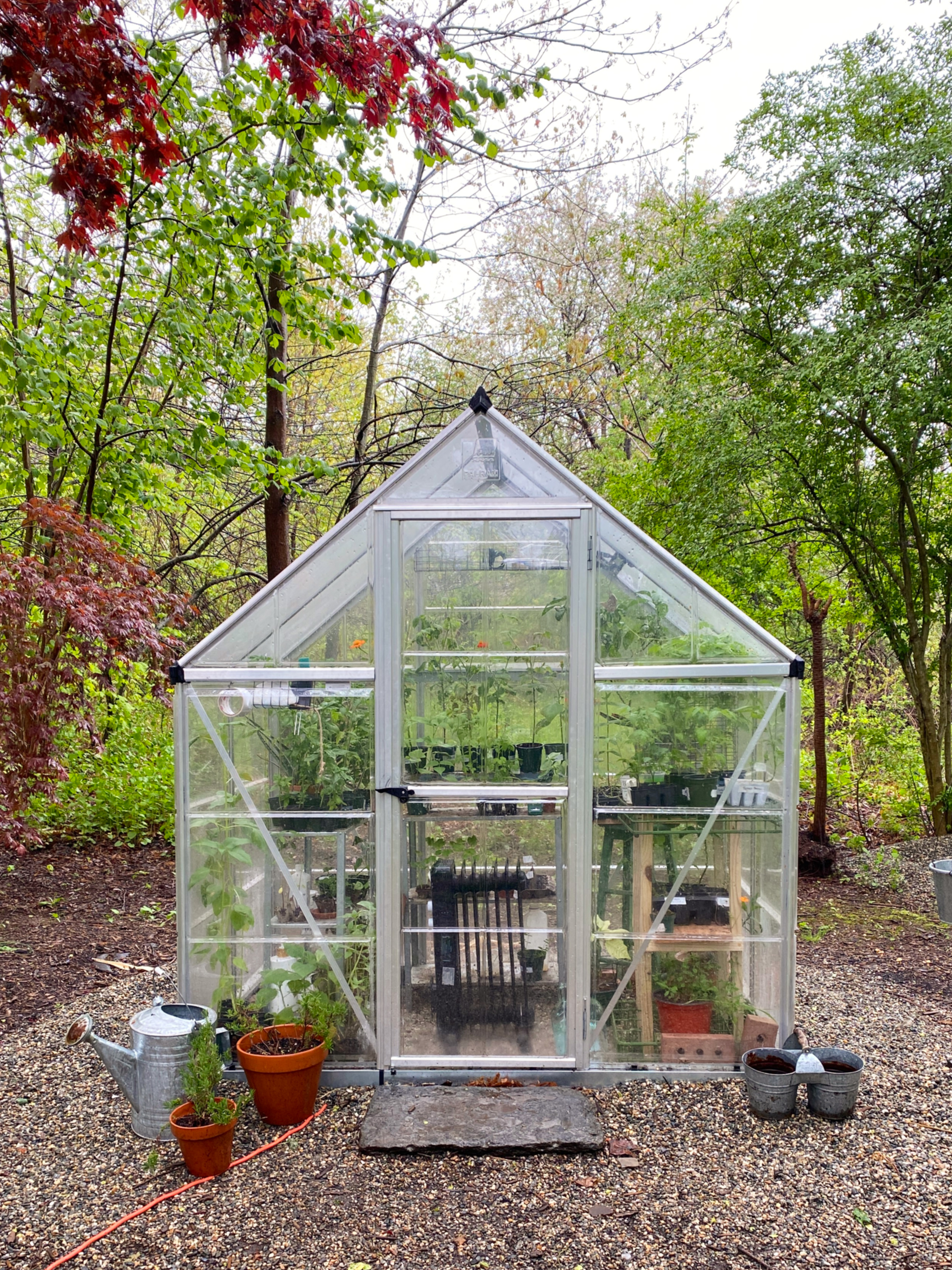
The Greenhouse Diaries are back with new inspirations and a whole new year of growing adventures to explore and discover. Like last year, these new diary entries center around what can be grown in a petite 4×6 greenhouse in our four-season New England climate, but starting this month there is a brand new theme, different from last year, that is guiding our gardening goals in 2024.

Our mighty, mini greenhouse in 2023

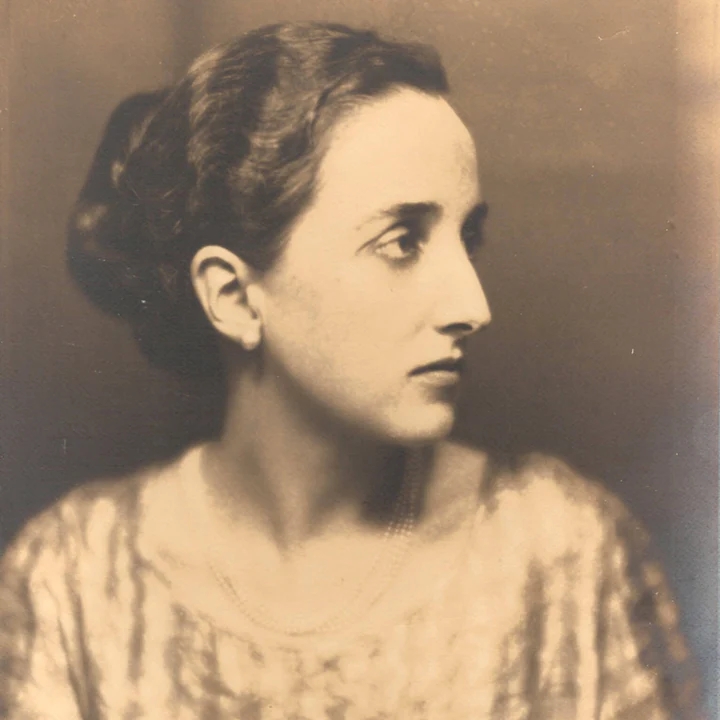
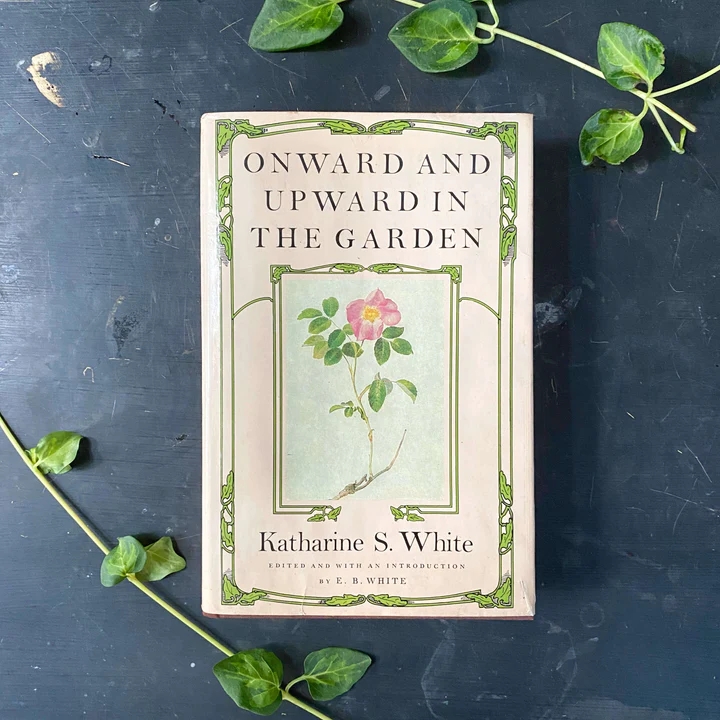
Last year, our first year as greenhouse owners and New England residents, we focused on winter gardening from December through May and all the possibilities that a warm greenhouse could offer in a cold landscape. We drew inspiration from Katharine Sergeant Angell White, a lifelong lover of the natural world who also happened to be a marvelous writer, a founding editor of the New Yorker magazine, and the beloved wife of E.B White.

Katharine Sergeant Angell White (1892-1977)

Her 1977 book Onward & Upward in the Garden, featured a collection of horticultural essays that highlighted her ability to embrace challenges by finding joy and solace in the certain uncertainties. Something that all gardeners must face when it comes to designing a pleasing landscape, in Katharine’s case, it was the long Maine winters that were a struggle for her spirit which yearned to be out in the garden digging and clipping, pruning, and propagating. She also had much to say about the confusing advice of garden experts and her own thoughtful attempts of trying to create the garden of her dreams. Her writing was full of spirit, humor and opinion when it came to detailing plans, recommending books and seed catalogs, and offering advice on growing plants and flowers both indoors and out. She was inspiration enough for us to start experimenting with our first winter growing season. Cold weather aside, we had Katharine on our side, lending a unique empathy and encouragement that fueled our desire to get out and grow things regardless of the weather, our experience level or the unseasonability of what we most wanted to achieve.

Our plan last year was to get a head start on establishing garden beds for 1750 House, so we focused mainly on forcing seeds and plants to sprout, bud and bloom early. Using 33 different plants, flowers and herbs as trial-run guinea pigs, we accomplished our goals with a fair amount of success and a few setbacks as we tested the physical capabilities of the greenhouse and grew our garden knowledge.

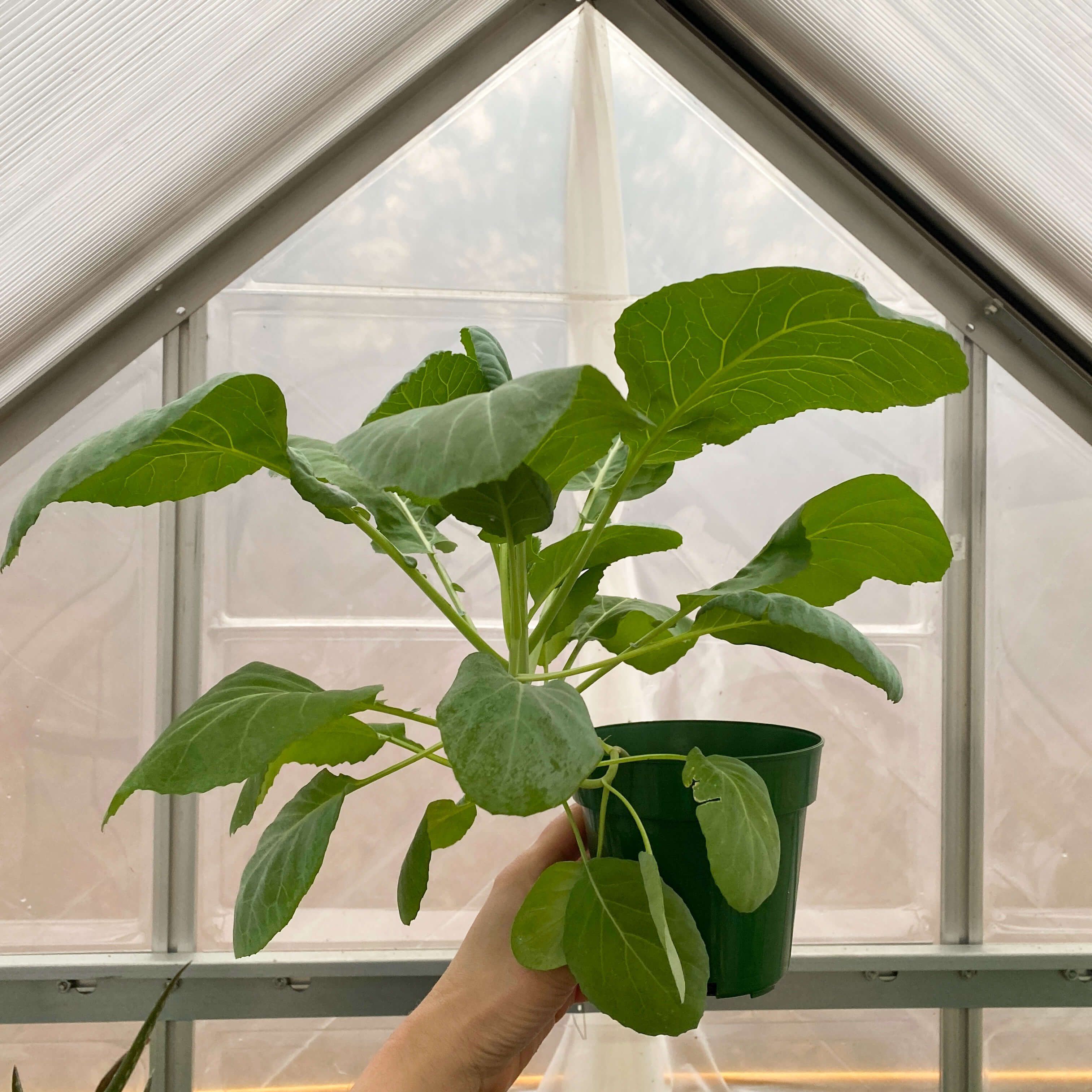
A greenhouse success – the joy of growing collard greens in 2023

This time, a year wiser, we are reducing the number of overall plants in the greenhouse to just focus on the proven winners that grew well both in the greenhouse and in the garden beds last spring, summer and fall. And to keep things interesting, we are launching a new experiment. This year, we are leaving extra room in the greenhouse to try our hand at growing a new type of perennial garden for year-round enjoyment… a landscape full of plants, flowers and trees that carry a scent.

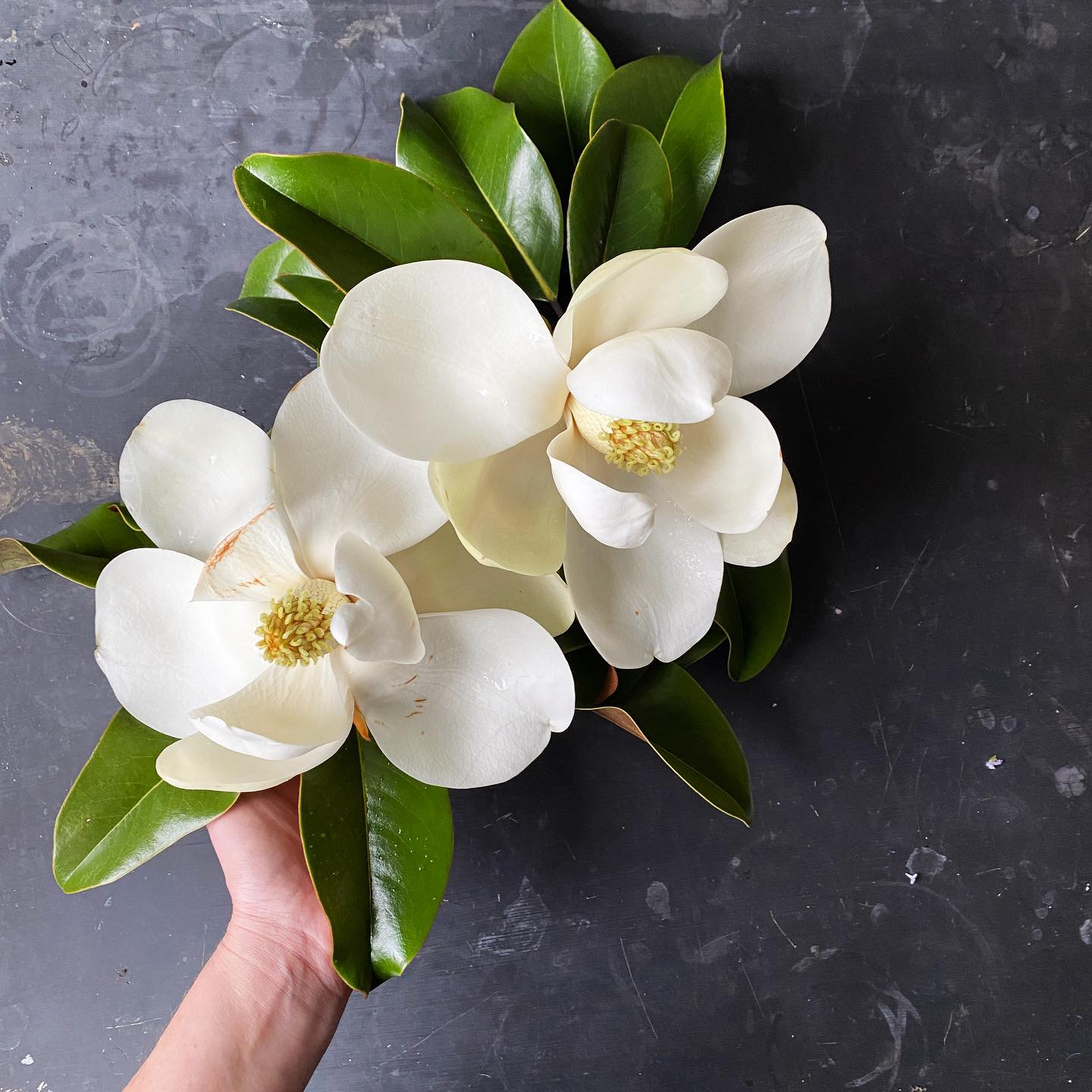
Marvelously scented magnolia blossoms dotted our landscape down South.

When we lived in the South, we were surrounded by a wide variety of aromatic flowers that made our time there all the more memorable because of the beautiful perfume that continuously lingered in the air. The scent of night-blooming gardenias and fragrant magnolias swirled around our dinner parties. The heat of summer brought heavy humidity but also the delicate, sweet aromas of climbing Carolina jessamine. Roses in every scent and shade toppled and tumbled over hedgerows and brick walls. It was a lovely layer of landscape design that I had never really thought about until we had experienced it firsthand. Of course, we won’t be able to recreate an exact aromatic Southern garden here in New England since it’s a very different climate from there to here, but there are plenty of other options in the Northeast to explore for similar effect thanks to our new inspiration.

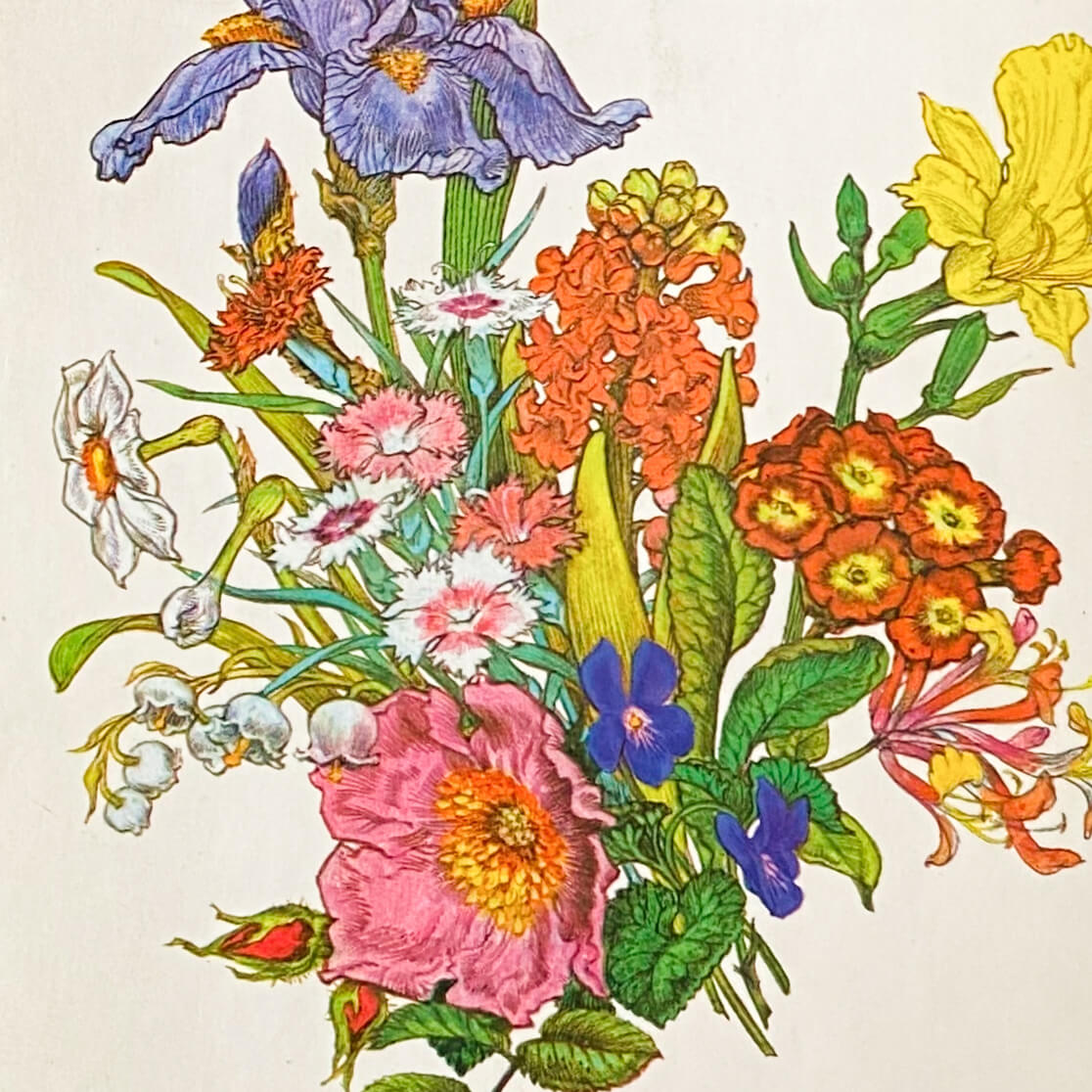
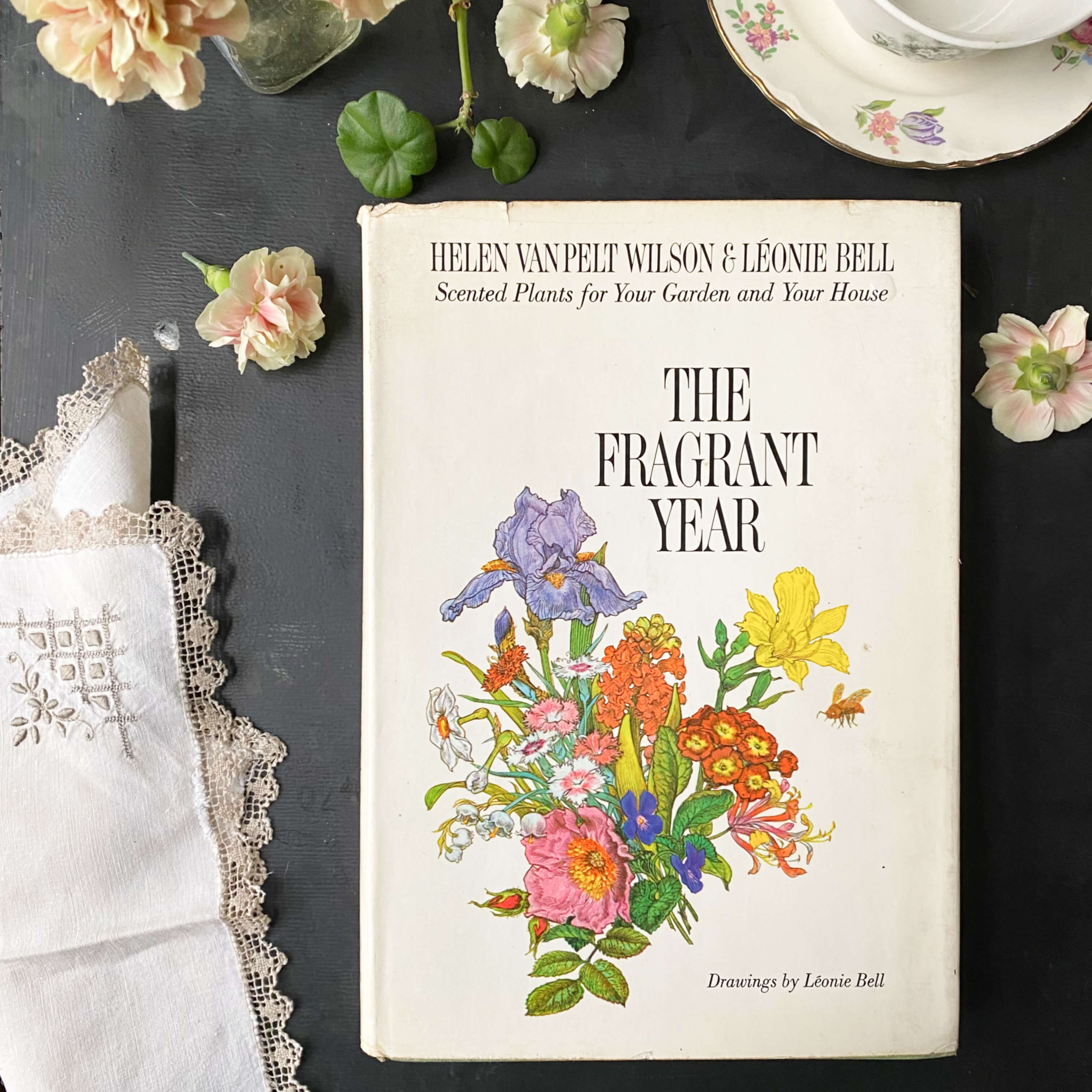
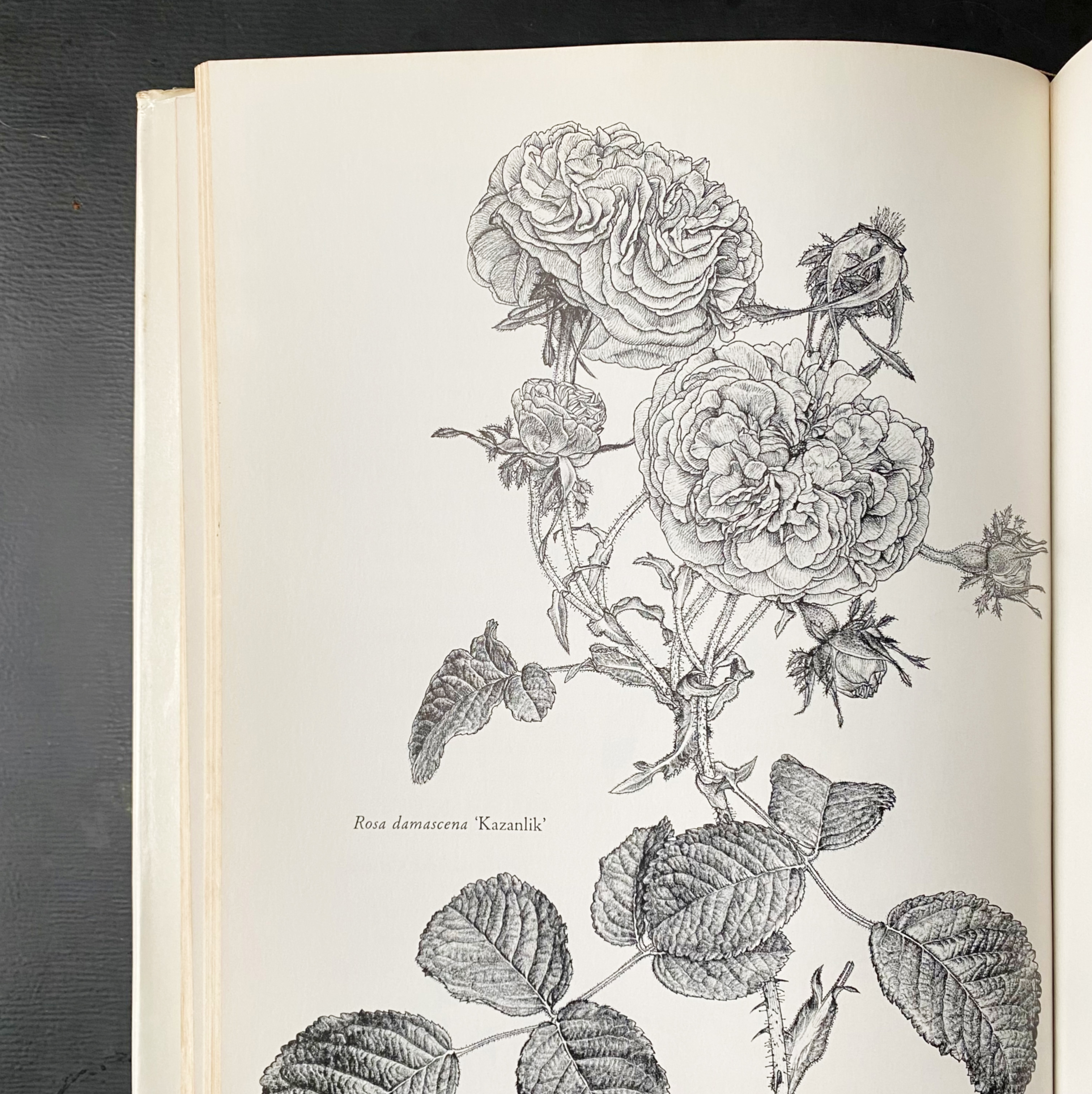
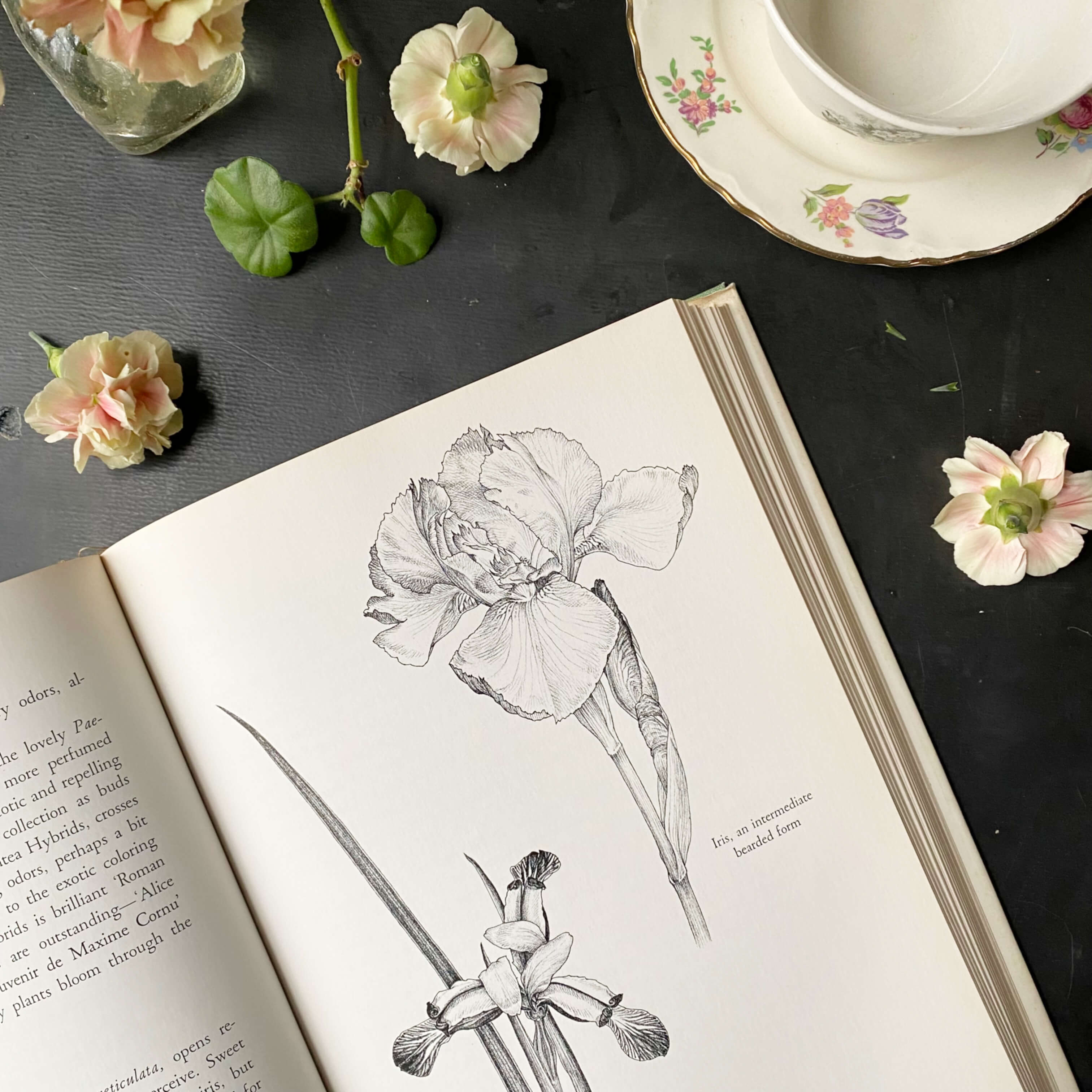
Here to guide the 2024 Greenhouse Diaries in our aromatic endeavors is the 1967 book, The Fragrant Year by Helen Van Pelt Wilson and Leonie Bell. Month by month, in words and drawings this book details how to grow specific types of plants and flowers that will continuously unfold new scents in the garden season by season, even in the winter months.

Praised for being the first of its modern kind, The Fragrant Year was lauded both for its scope and its practical application, as well as its healthful benefits. In the opening chapter Helen writes… “if our gardens today were more often planned as fragrant retreats and our rooms were frequently perfumed with bowls of spicy pinks, bunches of aromatic herbs, vases of fragrant roses, and jars of potpourri, perhaps we would not have to depend so much on tranquilizers to hold us together in this frantic, fast-paced world.”

Helen wrote that in 1967 but it is still so applicable today. The world is still frantic and fast-paced. People still look to medicine to calm their nerves. But we think Helen’s theory is pretty wise – there is something much more natural, more gentle, more joyful in tackling frantic nerves and fast paces with this sort of approach instead. It is lovely to think that by selecting a few handfuls of scented botanicals and thoughtfully adding them to the landscape we might not only help create a more calm environment for ourselves but also for the community around us. Who knows what sort of impact that small gesture could have on a greater world.

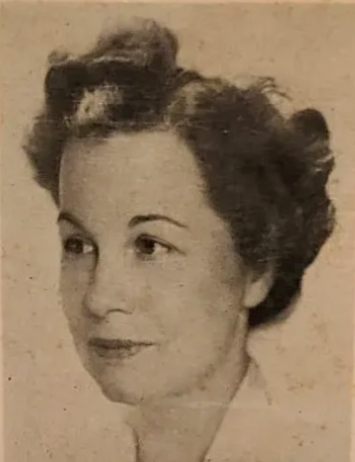
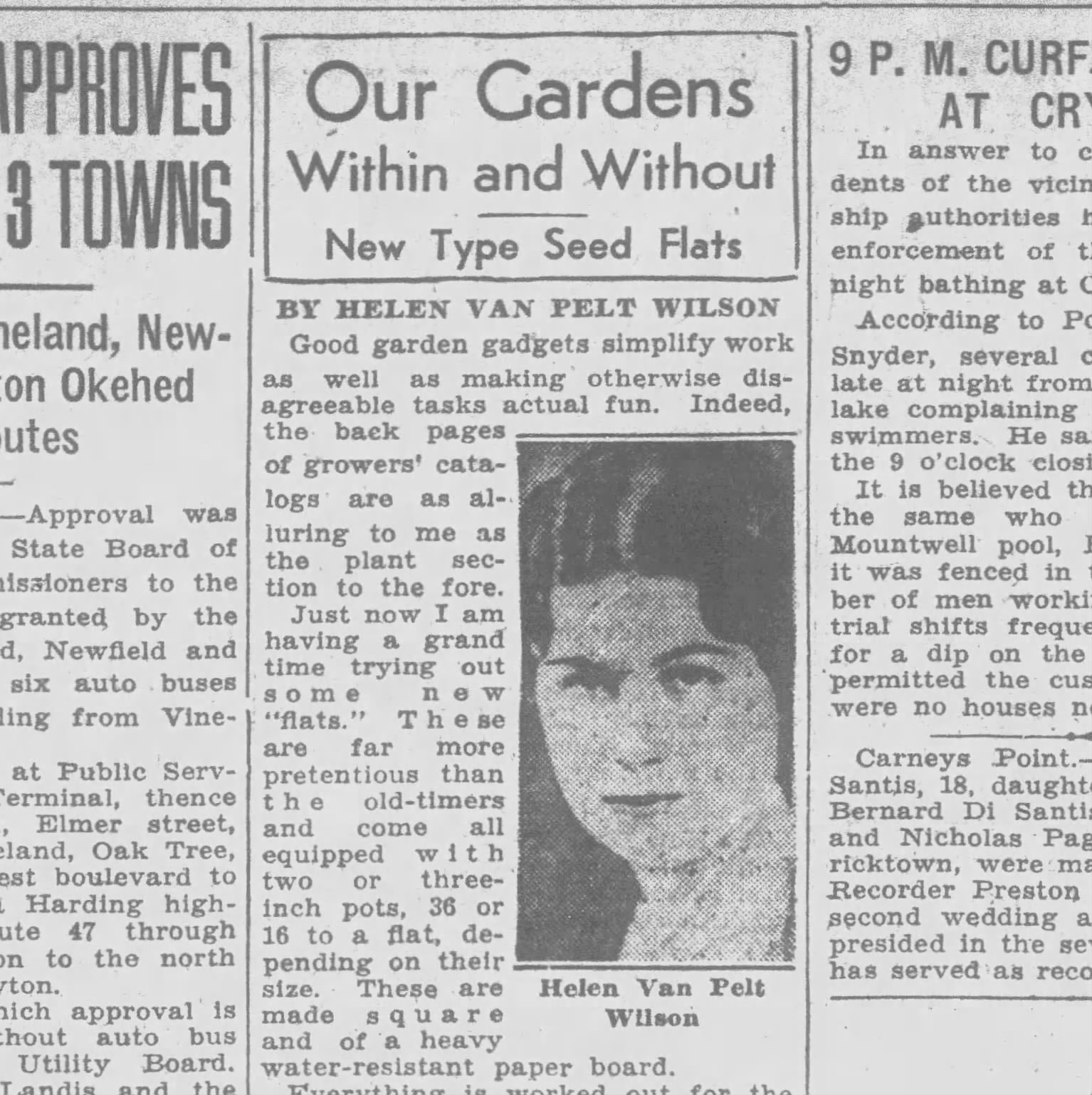
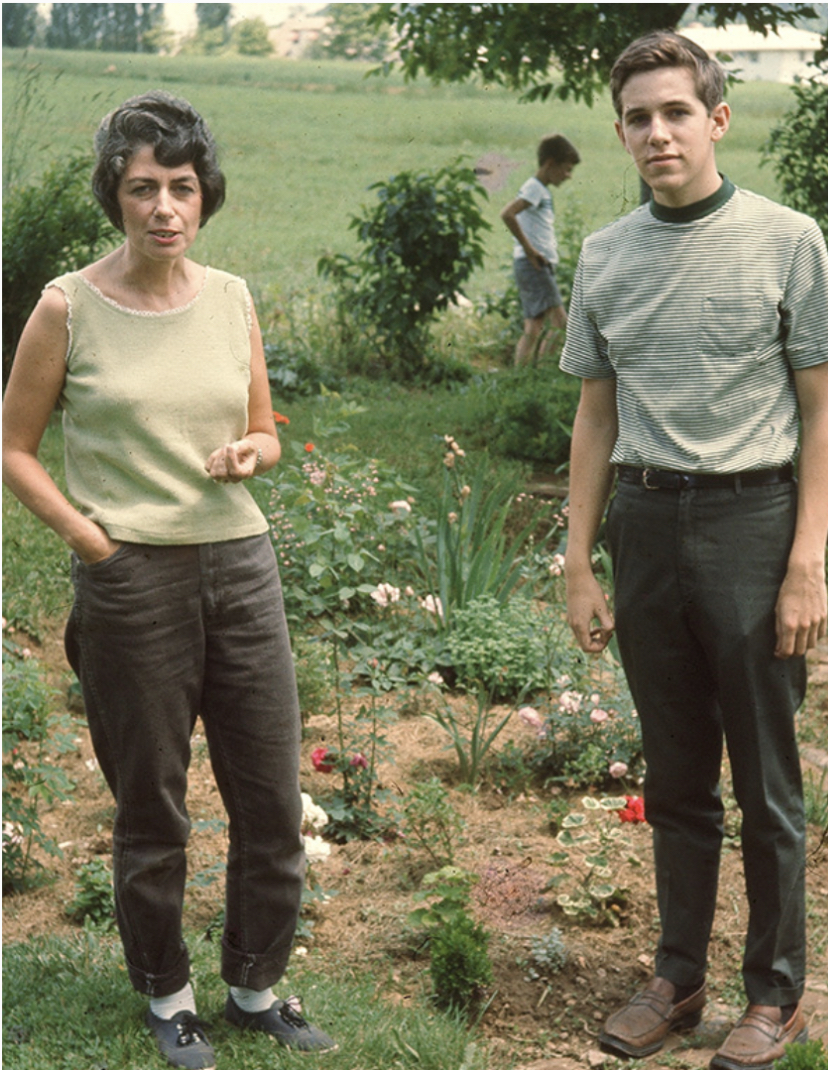
Helen Van Pelt Wilson (1901-2003)

A prolific writer of gardening books throughout the 20th century, Helen was no stranger to the power of plants. Along with penning a newspaper column titled Our Gardens Within and Without during the 1920s and 1930s, she also wrote for all the well-known women’s magazines including House & Garden, Cosmopolitan, Better Homes & Gardens, and House Beautiful. In between all that she wrote/edited over fifty books on various gardening topics throughout her long and lengthy career.

The Courier Post – July 30th, 1935

Born in New Jersey, Helen spent the majority of her life in Philadelphia, PA and Westport, CT where she experimented with gardening projects of all sorts both indoors and out. Her most well-known book was one on caring for African violets published in the 1940s but she was a beloved and trusted authority on a variety of horticultural topics throughout her life. Working with Leonie on several different projects, it was in the 1950s that they learned they shared a mutual love of aromatic botanicals. Upon discovering this, the idea for The Fragrant Year was quick to spark but it took Helen and Leonie ten years of dedicated research and trial-and-error gardening experiments before their book was finally published.

Leonie Bell in the garden. Photograph courtesy of monticello.org by way of Rev. Douglas T. Seidel

Like Helen, Leonie Bell (1924-1996) lived and gardened in suburban Philadelphia. In addition to being a well-respected botanical illustrator, she was also known as a rose expert. Contributing her expertise to several rose garden books published during the 20th century, Leonie was often referred to as a rose genealogist since she had a knack for discovering/uncovering heirloom roses from the past that had been misnamed or believed to be no longer in existence. At one point, her own personal garden contained over 200 different types of roses, most of them old-fashioned heirloom varieties.

If you are ever in Virginia, you can see the impact Leonie made at the Leonie Bell Rose Garden at Thomas Jeffferson’s Tufton Farm, which features a tribute to both Leonie’s legacy and the history of North American rose breeding.

Much sought after in the world of botanical illustration, what’s interesting about Leonie’s art is that she was self-taught. Her intrinsic knowledge of the anatomy of plants combined with her studies at the School of Horticulture in Ambler, PA led her to closely look at botanical subjects from all angles. That well-rounded vantage point carried through to her drawings which shine with scientific detail but also personality.

Excited to share a year full of fragrance here on the blog, each month we’ll feature a new scented flower or plant recommended by Helen and Leonie and detail our gardening experiences as we incorporate twelve new aromatic additions into the landscape at 1750 House. Hopefully, you’ll find this information equally inspiring and insightful too. It would be lovely if we could all experience the calming nature of a scented garden together.

Our next Greenhouse Diaries post will introduce our first fragrant botanical, but in the meantime, here’s a quick update on improvements we made to the greenhouse over the summer and a current list of what’s growing in the greenhouse now…

January color in the greenhouse

Current Occupants

As of mid-January, the greenhouse is halfway full with overwintering geraniums, vinca vine, and dracaena spikes from the summer garden. Six different types of succulents, a coffee plant, a pineapple sage cutting from our summer plantings, and Liz Lemon (our six-year-old lemon tree) fill out the rest of the space alongside a batch of newly started seeds… collards, broccoli, beets and four different types of salad greens.

Winter Plastic Wrap

This isn’t a new improvement, but we are on Year No. 2 of dressing the greenhouse in a winter coat – aka wrapping it entirely in a layer of thick plastic – to keep the heat in and protect the plants from drafts during rain, sleet, and snowstorms. The plastic, a temporary solution for the coldest months gets removed in early spring, folded up, and stored in the basement. Once the temperatures drop below 45 in the fall, we put the plastic back on for the season. Aesthetically, it’s not the prettiest site but it gets the job done and keeps our overwintering plants and new seedlings happy and warm. We weren’t sure how the plastic was going to hold up from year to year, but so far it’s nice to see that it is still working just as well. To learn more about this winterization system, see last year’s post here.
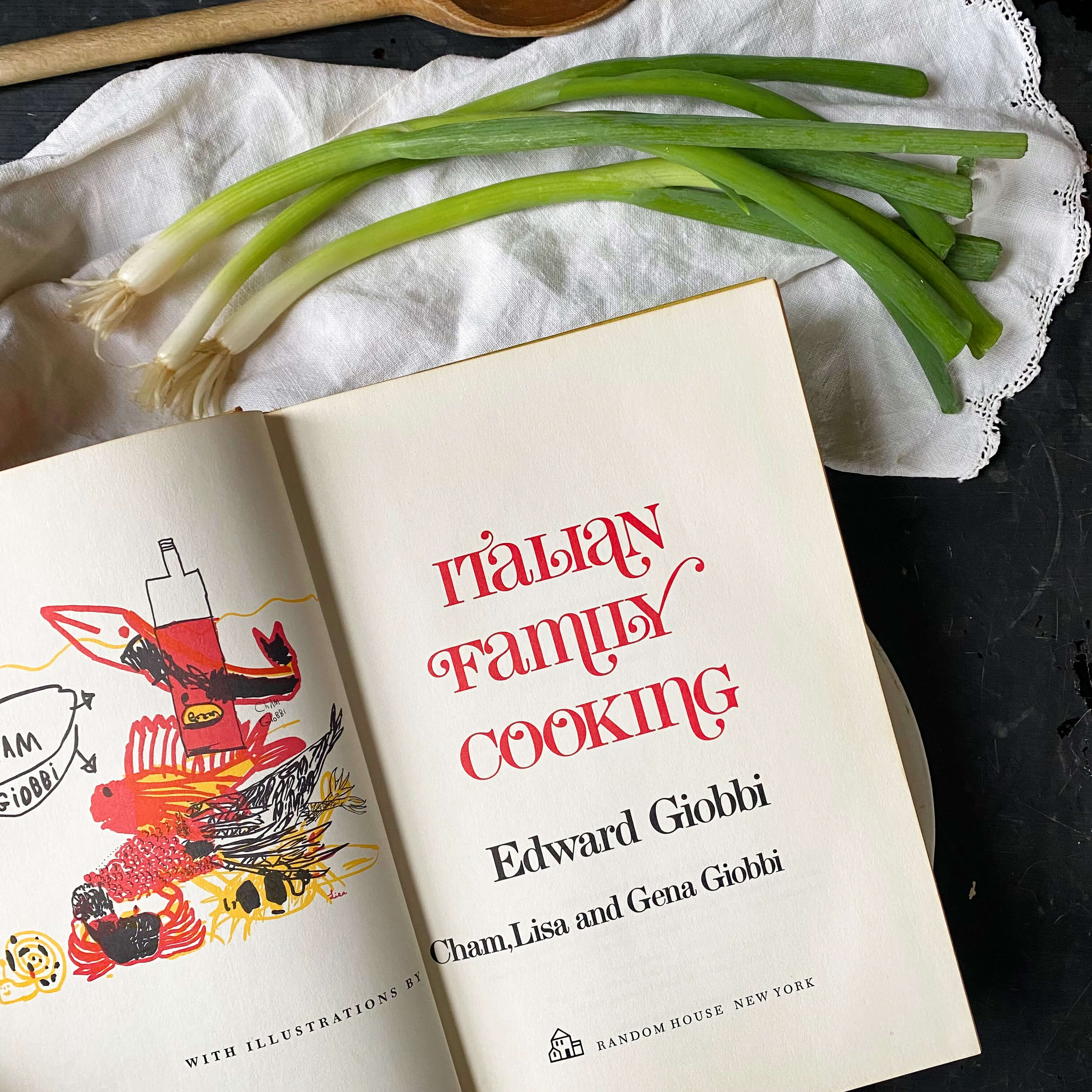
Thanks to the plastic wrap, everything stayed warm and dry inside during our most recent January 2024 snowstorm.

New Electrical

Over the summer we added an electrical outlet inside the greenhouse and buried the wiring underground. This was a big (and much safer) improvement from running an extension cord across the yard between the greenhouse and the workshop, which is how we handled things last winter. This new addition is an outdoor-rated 110V 15 amp circuit box which is just what we need to power the heater and lights.

A New Heater

A new mini space heater replaced the tall radiator-style heater used last winter. This smaller size opens up more room to move around the greenhouse and fits nicely on a bottom shelf tucked out of the way when not in use. It has a safety feature that turns the heater off automatically if it tipples over or if any excess moisture drips inside. When the greenhouse reaches a certain temperature, it also automatically turns off to save energy and to keep the plants from overheating.

Normally the heater sits on the pea gravel floor of the greenhouse so that it efficiently heats all areas from bottom to top, but to photo it for this post I put it on one of the higher shelves for a better view. Please note: your greenhouse heater should never be this close to any plants as the proximity to the heat will cause the leaves to shrivel and could become a fire hazard. Any greenhouse heater should have a wide radius that is completely free and clear of other objects.

By using this smaller unit, we don’t have to run out and adjust the heat as the temperature changes over the course of the day, like we had to do last year. Also, we readjusted our required heat temperature in the greenhouse. Instead of keeping it in the mid-70s like last year, we lowered it to 55 degrees, in hopes that the cooler temp will keep spider mites at bay. We learned first-hand last winter how much they just adore a hot greenhouse. The new heater also blows warm air around the space instead of radiating it, so we have continual air movement swirling around inside this year, which I also hope will help with any pests. The final great benefit of this small little worker is that it has an additional fan option too, so in summer we’ll be able to grow our herbs inside the greenhouse without the temperature getting too hot or the air too stagnant.

New Lights

My most favorite new enhancement to the greenhouse came this fall when we added bulb lights to the interior roofline. The lights make it so much easier to work at night, especially in the winter when it can get dark as early as 3:30pm if we have an especially cloudy or rainy weather day. 

These bulb lights are a tad too big for the space, so they’ll be swapped out for something a bit more petite this spring, but we had these already on hand and wanted to make sure we liked the light idea before we committed to several sets. At night it looks especially festive. Once all the landscaping is in place around the greenhouse, it will provide a nice light source for outdoor dining during the warm weather days. By then we’ll be at least five months into the fragrant year and the garden will hopefully be on its way to becoming a perfumed paradise. Just dreaming about it now, I can see and smell the summer already.

If you’d like to catch up on the trials and tribulations of our first year of greenhouse gardening start at entry #1 here. Otherwise, it’s on to 2024 and all the delightful aromas that await each new season.

Cheers to ever-evolving garden adventures, to a scent-sational year ahead and to Helen and Leonie for inspiring this new set of diary entries centered around the life and times of one mighty but mini New England greenhouse.

A Monumental Story of Real-Life Serendipity Told Over Many Parts: Chapter 4 – One Last Journey

The view from seat 21A

{Spoiler Alert: This is a series of blog posts detailing the real-life story of a 100-year-old item that was lost over a decade ago and how it found its way home in 2024. Follow along from the beginning of this story at Chapter 1: It Arrives.}

This part of the lost item story is about numbers. Not numbers relating to complex math or phones or registry digits, but numbers that have to do with time and distance. So far, with the unfolding of each chapter of this Monumental Story of Real-Life Serendipity Told Over Many Parts, we have learned bits and pieces about the lost item and how it came to wind up in the hands of the Vintage Kitchen. We learned how it arrived, who sent it and what part of history it involves. But we haven’t yet discussed the numbers, and they are quite important to the overall timeline of this intriguing item. So let’s look…

  • 104 – that’s the age, in years, of the lost item
  • 6,544 is the number of miles the item has traveled
  • 7 is the number of states that the item has spent time in
  • 3 is the number of major life-altering world events that could have completely destroyed the item and any link to its history over the past 100 years (those being the Great Depression, World War II and the Covid pandemic)
  • 25 – that’s the number of people that are all connected to the item
  • 29 is the number of months it took for the Vintage Kitchen to arrange to get the item to the place where it belongs
At the airport

Transportation to its final destination was another set of numbers. That involved 3 cars, 1 plane, 1 bus and 1 boat. In its original cardboard mailer of medium thickness tucked inside a cloth shoulder bag, the item traveled in seat 21A on the plane and Lane 1 on the boat. This last round of Vintage Kitchen transporting from here to there required 5 different types of travel tickets, 1 Airbnb, 3 highway tolls, 2 parking garages, 1 security checkpoint and 1 wild landscape. But the most important set of numbers in this whole post are 2008 when it was lost and 2024 when it finally made its way home.

On the boat

On 01-02-24, after 29 months spent in the hands of the Vintage Kitchen and 13 years spent in the care of kind-hearted Angela, the item embarked on its final journey via car, plane, bus and boat. Four days later it found the place where it belonged. It finally found its home.

Which city was the item headed to? For all you armchair detectives out there, our final destination is included in the Departure board.

Time is a weird and wonky master. It controls, records, rewards everything in our lives. Whether it’s minute with the tick, tick, ticking of seconds slowly passing by or an expansive stretch of milestones that cast long shadows over the course of a lifetime, time is always there to mark the moment. In this case of the lost item, timing, like the cliche suggests, is everything. It’s numbers on a clock, numbers on a calendar and numbers in a family. Without time, this story wouldn’t have been as meaningful. Without a significant sets of numbers all related to time and to fate, this situation from history wouldn’t have been remarkable. It’s the numbers, the time, the distance traveled that make this story of the item lost and finally found, notable.

This is your last chance to guess what the mystery item might be. Feel free to speculate in the comments section below or send us a private message with your ideas. Join us next time for Chapter 5, where we reveal the mystery item and connect all the dots that complete this story from start to finish. We cannot wait to share the ending with you. Stay tuned.

Update!

Chapter 5 is now available. Continue reading here.

First glimpse of the final destination leading towards home.

A Monumental Story of Real-Life Serendipity Told Over Many Parts: Our 2021 Blog Series Is Finally Back with New Chapters

It’s been two years and five months since this story began unfolding on the blog. Back then, the blog series with the impossibly long title – A Monumental Story of Real-Life Serendipity Told Over Many Parts detailed, in installments, the story of a mysterious package that was sent by a random stranger to the Vintage Kitchen in the summer of 2021.

Inside the package was a valuable 100-year-old item that had been found in a Southern city suburb by the random stranger in 2008. The item was connected to the Vintage Kitchen but did not belong to the Vintage Kitchen.

In 2021, the story had been rolling out at a nice clip. There was one blog post a month – one chapter a month – dropping hints and clues as to what the package’s contents could be and how it came to be connected to the Vintage Kitchen. In addition to the hints, Chapter One, Chapter Two, and Chapter Three also included historical information surrounding the lost item’s importance.

Chapter 4 was next on the horizon with details of how the lost item would be transported to its final destination. Then the lingering pandemic stalled the publication of that post. Our move to New England prolonged it even further. But now the timing has lined back up again and we are back on track to finish this story and reveal the contents of the package in Chapters 4 & 5 coming to the blog this month. These last two chapters will officially wrap up the whole remarkable story of how a lost 100-year-old item finally found its way home after traveling through 13 years, four states and one century.

I realize that if you are a new reader to the blog this information is absolutely confusing. And perhaps, if you are a regular reader you might need a recap to remember what exactly this story was all about in the first place. Two and half years is a long time to keep a good mystery going so I’m including links to the first three blog posts below so that everyone can catch up before we continue on to Chapter 4, which I promise is coming in a few days (not years).

So here we are… links to each. Click on the photos or the highlighted chapter title links below and they will take you to the original posts laid out chapter by chapter.

Chapter One, titled It Arrives highlights the arrival of the mystery package and introduces some key information about the contents of the package.

Chapter Two, Meet Angela introduces the random stranger who sent the package to the Vintage Kitchen. It also highlights her research journey of how she wound up connecting the item to the Vintage Kitchen.

Chapter Three, The Time Period, highlights the era that surrounds the package’s contents – the 1920s and features several hidden clues as to what the mystery item might be.

Coming up next, it’s Chapter Four – One Last Journey – where transportation of the mystery item will be discussed as the item embarks on its final adventure to the place where it belongs.

While the story continues to unfold, there is still time to take a guess as to what the mystery item might be. Feel free to post your speculations in the comments section below. I can’t wait to share the rest of the story with you, so stay tuned for Chapter Four coming soon!

Bar Hemingway’s Ritz 75: A Vintage Champagne Cocktail from Paris

The history behind Bar Hemingway’s Ritz 75 runs long. If a cocktail could talk this one would tell many stories. Included in its 100-year lifespan are snippets about several greats – Ernest Hemingway, a New York nightclub, a French hotel and the best bartender in the world. And those are just tips of the ice cube. Even more stories lay below the gin line.

This cocktail’s core combination of ingredients – champagne, lemon juice, sugar and ice date back to the early 1900s when it was known as a French 75. Named after WWI field artillery, the drink was likened on first sip, to the quick jolt of a particular French canon’s blast. That immediate burst of flavor was the combination of champagne and lemon juice – the signature components that gave this cocktail a powerful little pucker.

The Stock Club in New York City circa 1944. Photographed here are filmmaker Orson Welles (bottom left corner smoking a cigar), talk-show host Morton Downey (bottom right corner), club owner Sherman Billingsley at center table, actress Margaret Sullivan (at table just above Orson Welles cigar) and Broadway producer, Leland Hayward to the right of Orson Welles’ shoulder.

In the 1920s, it took on a new sense of depth, flavor and revelry when gin was added to the sugary juice mix. That mixture was then tossed with ice in a cocktail shaker and finished in a glass topped off with champagne just before serving. Sparkly and citrusy, that was how the popular French 75 was prepared at New York City’s most famous nightspot, The Stork Club. From 1929-1960s, you could pretty much see every sort of movie star, politician, society maven, sports figure and writer all enjoying the cocktails provided by the club’s owner, Sherman Billingsley, a former bootlegger turned Manhattan business maverick. There, the French 75 made its fans.

The Hotel Ritz Paris on Place Vendome. Photo by Frederic de Villamil.

In Paris, in the late 20th century, the cocktail took on a new persona and a new name thanks to the elegant Ritz hotel and its beloved bartender, Colin Peter Field. Colin presided over Bar Hemingway, the snug drinking nook located inside the Ritz for thirty years up until this past summer 2023.

Bar Hemingway at Hotel Ritz, Paris. Photo by Pablo Sanchez.

Named after Ernest Hemingway, who frequented the hotel and drank many a martini there from the 1920s-1950s, when it was called Le Petite Bar, Bar Hemingway is filled with memorabilia featuring the writer’s life and literary works, many of which were curated by Colin himself. Model Kate Moss even added some vintage typewriters to the decor to compliment the aesthetic.

Under Colin’s hand, Bar Hemingway became a popular spot in the hotel and also the city, frequented by Hemingway lovers who wanted to walk in the footsteps of the literary giant. Ultimately though it was Colin who really stole the show each night. With his attentive presence, discreet mannerisms, head for literature and eye for art, Colin mixed up passion, dynamic conversation, and elegant drinks at Bar Hemingway night after night for three decades. He was so successful at his job, so devoted to his trade, that he was deemed the Best Bartender in the World by several leading travel magazines and won numerous awards throughout France for his bartending skills.

In 2001, Colin wrote a cocktail book containing recipes that he served at the bar along with interesting stories that surrounded them. Delightfully illustrated by Japanese artist, Yoko Ueta, this book is both a primer on how to be a thoughtful, intuitive mixer of drinks and a historical story guide detailing the origin stories of many classic cocktails.

Colin Peter Field as illustrated by Yoko Ueta.

Included in the book is Colin’s version of the French 75. It features freshly squeezed mandarin orange juice in addition to the already called for lemon juice, sugar, gin and champagne. The mandarin brightens the color of the cocktail from a hazy lemon yellow to a pale orange, similar to the flickering flame of candlelight. A garnish of both lime and mandarin rind at the edge of the glass adds a little extra flair. Renamed, this version is now known as the Ritz 75.

With a taste similar to Orangina, Ritz 75 is a refreshingly crisp and clean cocktail. The champagne adds an extra bit of sparkle and a festive air to the season. Without being syrupy sweet, and given its light citrus notes, it’s lovely as an aperitif for cocktail parties or for pre-dinner welcome drinks. It is also an excellent partner to hors d’oeuvres that lean towards the rich and buttery side of the palate like cheese trays, charcuterie boards and anything tucked inside a puff pastry. Just like its cousin, the Mimosa, the Ritz 75 is easily adaptable to all sorts of occasions beyond the holiday season too. It could be served at brunch, or perhaps your next book club meeting when Hemingway is on the list, or when the weather turns warm, it easily transitions out of doors for picnics and garden parties.

Illustration by Yoko Ueta

I don’t think Colin would mind what time of year you served the Ritz 75, just as long as it accompanied a good story and a pleasant environment. Ernest would definitely second the story part. Together, the two I’m sure would be happy to clink glasses and call it a festive night, so we’ll do the same. Cheers to the holiday season and to Colin and to Ernest whose books continue to capture our attention. Here’s to hoping your December is full of flavor, merriment, and a little something sparkly.

Ritz 75

From Cocktails of the Ritz Paris by Colin Peter Field circa 2001. Serves two.

1 1/2 oz lemon juice

1 1/2 oz mandarin juice, freshly squeezed

1 teaspoon of sugar

1 1/2 oz gin

Champagne to finish

Mandarin and lime rinds to garnish

Mix the lemon juice, mandarin juice, and sugar in a cocktail shaker. Fill with ice, and then add the gin. Shake a few times. Pour the mixture evenly into two glasses, then fill the rest of the glass with champagne. Garnish with slices of lime and mandarin. Add a cherry (optional) for additional color.

Cheers!

The Handmade Tablecloth: A 1916 Immigration Story

Every family has some tales when it comes to history and the lineage that connects us to ancestors who lived a long time ago. If we are lucky, they are long-winded stories full of color and detail and a relatable sentimentality that can carry our imaginations far across cities and centuries connecting us to relatives we never met.

Other times, there are family histories that are just one-liners. Snippets of stories punctuated with the sparest amount of context and detail. Enough to give you some ideas about who this or that ancestor might have been, or where they came from, or how they experienced life, but beyond that no other information is known. I’m always most intrigued by these slim snippets of genealogical detail. The ones that aren’t flushed out yet enough to form a complete story with a defined beginning, middle, and end. The ones that could have been recited so many times they are now legend tumbled and tossed through generations yet never gaining new insight or understanding. We have quite a few in my family – a great aunt who was a Rockette, a lost family fortune buried somewhere on the island of 18th century Manhattan, a doughnut shop in the Pacific Northwest still waiting to be found. Those quick glimpses into all types of family biography are ripe for more storytelling and a deeper understanding of the experiences that makes up the unique histories of American lives.

In today’s post, we are sharing a 100 year-old-family story brought to the Vintage Kitchen in the form of an heirloom. It did not come with one of the long-winded stories like we mentioned above, the ones full of color and life and detail. Instead, it falls into the latter category. The opposite one. This heirloom came with just a few facts. Vague yet weighty snippets of a story that lightly scratched the surface of a much larger experience.

It starts with an antique tablecloth. Folded up it weighs just over a pound and a half. It’s delicate but also strong, with a heft to its weight like rope. Featuring a hand-crocheted pattern of circular medallions and spider-like stars, it’s executed in thread that is the color of bones. In appearance, it’s not unlike a lot of similar tablecloths that were popular during the 20th century, but this one tells a very specific American story that is very fitting for the 4th of July holiday.

Sent by a woman named Linda, who is a vintage collector in New Mexico, this tablecloth was a family heirloom belonging to Ann, her ex-mother-in-law. When passing down items from her life, Ann requested that this particular linen be handled with respect and appreciation. Although Linda admired the beauty of this tablecloth and the story it represented, she contacted the Vintage Kitchen to see if we might be able to give it a new home.

Arriving in the mail shortly after, the cloth came with a note detailing a few facts surrounding its history.

  • It belonged to Linda’s ex-husband’s mother, Ann who had recently passed at the age of 87
  • It was passed down through Ann’s family with the understanding that it came to America by way of an Italian ancestor named Catherine who had traveled by boat from Sicily to Ellis Island in the early 1900s and then went on to Chicago to settle.
  • According to family lore, the tablecloth was handmade while on the boat waiting to dock in the US

Even though I had a dozen more questions for Linda upon receipt of the cloth, and had requested a photo of it’s maker, unfortunately, Linda and I lost touch shortly after the package arrived. So here it was, this pretty antique tablecloth wrapped up in a handful of intriguing little story snippets just waiting for something more to be told about it.

After a bit of genealogy work and a hunt through Ellis Island immigration records, Linda’s ex-grandmother-in-law’s story burst into colorful life just like a 4th of July firework. It begins here on Ellis Island in March 1916…

Ferry boats carrying immigrants from transatlantic steamer ships that initially docked in lower Manhattan arrive here at Ellis Island’s Immigration Station where their paperwork was completed. Photo courtesy of the New York Public Library.

Even though it was the very first day of Spring, it was a chilly 34-degree March day when the Caserta arrived in New York Harbor. Carrying immigrants from Naples, Italy, the steamer ship coasted into the harbor on choppy waters passing the welcoming sight of the Statue of Liberty. Her torch was not yet electrified, it would be another nine months before that happened, but to the arriving immigrants, she signaled a bright future ahead regardless. Aboard the ship was 20-year-old rosy-cheeked, chestnut-haired Caterina from the seaside town of Bagheria, Sicily.

Caterina’s ship manifest.

Most Italian immigrants during the 1910s were fleeing to America to escape economic depravity in their home country. Depending on weather, war, quarantine, detainments, and ship reroutings, the voyage from Naples to New York could last anywhere from twenty-one days to three months. When Caterina came over it was the middle of WWI, and Italy was involved in the battle of Austria-Hungary. Traveling with her older sister Maddalena, we don’t know specifically why these two girls left Italy, but we do know that Caterina paid her own passage and carried $25.00 extra in her pocket along with a crochet needle and a bundle of thread.

Of medium height and good health, Caterina would have no trouble passing through the medical checkpoint before she was allowed access to her new country. Her $25 dollars in savings would not be an issue either as she brought an amount deemed substantial enough by the US government to successfully start afresh in the New World. With intentions to stay with her cousin, Filippo, in the Midwest, Caterina’s final destination was the bustling city of Chicago.

A 1916 map of Chicago IL courtesy of the Library of Congress

According to Linda’s family story, while waiting to dock in New York Harbor, Caterina took her crochet needle from her pocket and put her hands to work. She soothed her anxious nerves by crocheting this 82″ x 52″ inch delicately threaded tablecloth featuring a series of interlocking circles and stars.

I loved this part of Linda’s story for two reasons… 1) I didn’t realize that immigrants had to wait for any extended period of time to gain entry into the US. I assumed that most were docked and processed in the same day. So it was interesting to think that Caterina’s boat could have been detained for a significant amount of time – one in which an entire tablecloth could have been made by hand. 2) The other reason I loved Linda’s story was for the amount of comfort that this tablecloth must have brought. The calming effect of repetitive motion and the focus and attention to detail required to make a circle then a star, a circle then a star intertwining each until there was a cloth over 4′ feet long and 3″ feet wide.

I loved this artistic glimpse into one woman’s life and that I could hold in my hands a tangible item that combined thread with all the emotions of a new adventure – excitement, uncertainty, nervousness, fear, and awe experienced over 100 years ago. I wondered about Caterina, there on the boat, stuffed full with people from her home country all experiencing a cacophony of feelings while she sat calmly making this piece. Was she dreaming of the future table in which she would display her needlework? Did she think about it becoming not only a practical household item for her new home but also a tangible reminder of the journey that she chose to take? Did she know then, that it would eventually become an artifact proving that she, Caterina of Bagheria, Sicily and now of the United States had lived?

The closing of other U.S. ports, the rerouting of ships during WWI, and the threat of communicable diseases could have been some of several reasons why Caterina got hung up in New York Harbor long enough to hand-stitch a linen for her new life. After much research, I couldn’t find anything that would attribute to the delay around that date, but I did learn that four days later, the ship she arrived on, the Caserta, was on its way back to Italy loaded with war-time ammunition for the Italian government.

That led me to wonder if the details of Linda’s family story had gotten a little muddled over the past 100 years. Maybe, Caterina made the tablecloth on the voyage over and finished the last pieces of it while she was waiting to dock. Or maybe in fact, she was on a quarantined boat, arriving in New York days or weeks before the immigration officer officially stamped her papers with the date March 20, 1916. Or maybe she just happened to be a master, faster crocheter that indeed had plenty of ample hours in an ample amount of days to complete such a creative undertaking.

I can imagine that this waiting period at Ellis Island whether brief or lengthy, spent while you are between your old life and your new life, would be a pretty intense time. There is something incredibly marvelous and moving about Caterina documenting her stay in these New York waters under the reassuring gaze of Lady Liberty with her crochet needle and some Italian thread. A simple household item made during a magnificent moment with skill enough to make it last a lifetime. And then some.

Linda’s initial recount of the situation began and ended at Ellis Island, but a bit more research uncovered Caterina’s complete life story. She did make it to Chicago. There she became known as Catherine, the Anglicized version of Caterina, and a little over a year later she met and married Alberto, a fellow Sicilian who had immigrated to America just a few years before her.

Alberto was in the grocery business, successful enough to own three delis in the Chicago area during the early to mid-1900s. Catherine and Alberto had two boys – Anthony and Joseph. Joseph served in the US Air Force during WWII and Anthony in the US Navy. The deli trade was never far from Anthony’s heart and upon return from the war, Anthony followed in his dad’s footsteps and worked in the grocery industry for the rest of his life – first in Chicago and then in California where he opened a deli shop specializing strictly in Italian fare. After Anthony married Ann, a former customer of his dad’s shop back in Chicago, they also had two children – Albert and Diane. Albert a young groom in the 1960s, married Linda, the vintage collector who sent us the tablecloth.

Clockwise from top left: Linda, Albert, Anthony, and Ann. Photo courtesy of Pleasant Family Shopping blog

As for Caterina, she passed away in Los Angeles in 1987, at the age of 92. Living a majority of her life in the US made her geographically much more American than Italian, but she never ventured far from her Italian roots nor the chance to pass on her cultural pride to her boys who then passed it on to their families. A part of all that was this tablecloth. The heirloom made en route from old Italy to new America. The cloth that wove together two parts of one woman’s life. A woman who chose to settle in the United States, to become a citizen, to raise a family of boys who then fought for the US during WWII and then saw her children’s children grow the branches of their family trees in America all the while contributing to the vibrancy of our country’s dynamic landscape. Caterina’s story is a small leaf on the big tree of immigration, but I felt so honored to be able to tell her story and attach it to the tablecloth, her tablecloth, that still lives bright and beautiful in the world today.

I couldn’t ever find a photo of Caterina, so I wrapped her tablecloth around a mannequin and photographed the two together. It’s the closest I could get to visually communicating that the cloth was made by an actual person. Hopefully one day, I’ll come across a photograph of Caterina so that we can know her face. Until then, this portrait will have to do.

Cheers to celebrating all the immigration stories that make our country culturally vibrant this Independence Day. To slim snippets, that form big stories. And most importantly, cheers to Linda and to Ann and to Caterina for sharing their family’s American experience. Important stories lie in everyday objects.

However you choose to commemorate the 4th of July, we hope it’s a memorable one!

Special note: While researching this post, I came across two pieces of media that were especially insightful when it came to understanding the very human and very humbling experience of immigrating to America.

An oral history interview with Italian immigrant Filomena Latta…

https://heritage.statueofliberty.org/oral-history-library

A tour of the Ellis Island Immigration Museum with National Park Ranger Peter Urban…